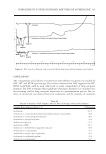
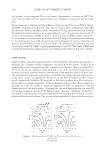
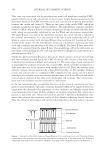
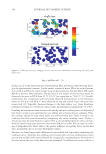
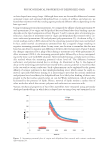
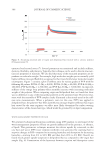
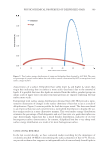
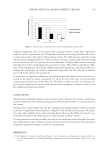
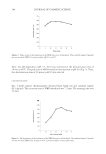
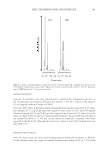
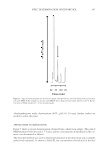
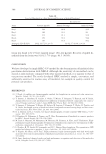
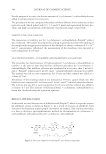
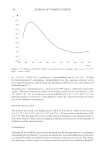
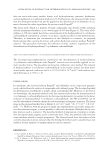
JOURNAL OF COSMETIC SCIENCE 338 and glycerol in the compared CPs is not known. Nevertheless, according to INCI, Eu- cerin contains (Table I) more glycerol than urea Allpresan contains less glycerol than urea. Figure 6 presents a simulation of the infl uence of A factor and B factor on TEWL. Trends in TEWL development for Eucerin® (Fig. 6A) are equal to those of Allpresan® (Fig. 6B), the difference between the values of the two products being small, whereas that between the minimum and maximum values is approximately twice. At zero urea content and 1 h of action of the products, TEWL is about 13.0 g/m2/h. Lower TEWL values ( 10.0 g/m2/ h1) are evident at the addition of more urea (above 6%) and, in fact, are not much affected by the duration of action of the preparations, and at additions of urea less than 6% and with the duration of the creams’ action exceeding 15 h. At maximum addition of urea and 1 h of action of the CP, TEWL equals approximately 8.0 g/m2/h1. The lowest TEWL was recorded for both forms of application at zero addition of urea after 26 h of action of these. CONCLUSION Diabetes affects some functional properties of the epidermis and dermis and may be re- sponsible for a number of skin complaints associated with the disease. Using CPs of proper composition can prevent possible complications like these. Skin care has positive effects on the overall condition of the skin and is one of the fundamental preventative routines of diabetic patients, thereby contributing to the improved quality of their lives. The instrumental techniques used permit, via identifi cation of the selected characteristics of the skin’s surface, an appropriate description of the level of hydration effects of the tested commercially available CPs designed for the care of diabetic foot. The level of hy- dration effect is strongly dependent on the formulation of the product. Even a single ap- plication of a CP can induce a temporary regenerative effect in relation to selected characteristics of the skin’s surface. Although the observed hydration effect of each CP was similar, comparing the tested CPs (Beline®, Ziaja®, Eucerin®, Allpresan®, DiabeCare®, and Scholl®) containing effective humectants against the ointment base in which any mois- turizing substances were absent. This occurred after application of these at monitored time Figure 6. Model dependence of TEWL on CP action time and urea content. (A) Eucerin® (B) Allpresan®

MOISTURIZING EFFECT OF TOPICAL COSMETIC PRODUCTS 339 intervals (1–26 h) using factorial ANOVA evaluation, signifi cant differences were dem- onstrated. It was confi rmed that the ointment base has no signifi cant effect on hydration of the skin. The effect of hydration is thus signifi cantly dependent on the formulation of the product. The same follows from the statistical surveys conducted and dedicated to exploring the differences between Eucerin® and Allpresan®, for which the urea content declared by the producer was 10%. The values of hydration for Eucerin® were higher, by up to half, within the fi rst 2 h immediately after application compared to Allpresan®. It is also obvious that Eucerin® tends to exhibit hydrating effects, whereas Allpresan® favors more barrier properties. A maintained or restored adequate barrier function, as expressed in TEWL, is ensured with urea content above 6% in the CPs, regardless of the duration of their action or lower additions of urea below 4% accompanied by a longer period of CP action. ACKNOWLEDGMENT The study was funded with the support of the Internal Grant Agency/Faculty of Technology/ 2013/016 project. REFERENCES (1) I. Ahmed and B. Goldstein, Diabetes mellitus, Clin. Dermatol., 24, 237–246 (2006). (2) H. Seirafi , K. Farsinejad, A. Firooz, R. M. Robati, M. S. Hoseini, A. H. Ehsani, and B. Sadr, Biophysical characteristics of skin in diabetes: A controlled study, J. Eur. Acad. Dermatol. Venereol., 23, 146–149 (2009). (3) P. Pithova and L. Jaresova, Skin changes in diabetes mellitus from the viewpoint of the diabetologist, Dermatol. Pract., 1, 168–171 (2007). (4) S. Sakai, K. Kikuchi, J. Satoh, H. Tagami, and S. Inoue, Functional properties of the stratum corneum in patients with diabetes mellitus: Similarities to senile xerosis, Br. J. Dermatol., 153, 319–323 (2005). (5) N. Papanas, D. Papazoglou, K. Papatheodorou, and E. Maltezos, Evaluation of a new foam to increase skin hydratation of the foot in type 2 diabetes: A pilot study, Int. Wound J., 8, 297–300 (2011). (6) C. Braham, D. Betea, C. Pierard-Franchimont, A. Beckers, and G. E. Pierard, Skin tensile properties in patients treated for acromegaly, Dermatology, 204, 325–329 (2002). (7) F. Hashmi, J. Malone-Lee, and E. Hounsell, Plantar skin in type II diabetes: An investigation of protein glycation and biomechanical properties of plantar epidermis, Eur. J. Dermatol., 16, 26–32 (2006). (8) J. S. Ulbrecht, P. R. Cavanagh, and G. M. Caputo, Foot problems in diabetes: An overview, Clin. Infect. Dis., 39, 73–82 (2004). (9) L. Dalla Paola L and E. Faglia, Treatment of diabetic foot ulcer: An overview strategies for clinical ap- proach, Curr. Diabetes Rev., 2, 431–437 (2006). (10) A. J. Boulton, The diabetic foot: Grand overview, epidemiology, and pathogenesis, Diabetes Metab. Res. Rev., 24, 3–6 (2008). (11) N. Papanas and E. Maltezos, The diabetic foot: Established and emerging treatments, Acta Clin. Belg., 62, 230–238 (2007). (12) N. Tentolouris, C. Voulgari, S. Liati, A. Kokkinos, I. Eleftheriadou, K. Makrikalis, K. Marinou, and N. Katsilamvros, Moisture status of the skin of the feet assessed by the visual test neuropad correlates with foot ulceration in diabetes, Diabetes Care, 33, 1112–114 (2010). (13) A. Chakrabarty, R. A. Norman, and T. J. Philips, Cutaneous manifestations of diabetes, Wounds, 14, 267–274 (2002). (14) T. Pavicic and H. C. Korting, Xerosis and callus formation as a key to the diabetic foot syndrome: Der- matologic view of the problem and its management, J. Dtsch. Dermatol. Ges., 4, 935–941 (2006). (15) A. Foster, An evaluation of nice guidelines on foot care for patients with diabetes, Nurs. Times, 10, 52– 53 (2004).
Purchased for the exclusive use of nofirst nolast (unknown)
From: SCC Media Library & Resource Center (library.scconline.org)