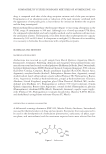
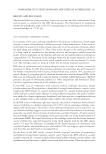
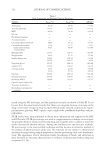
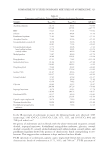
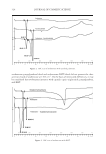
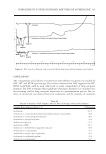
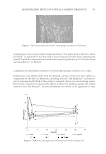
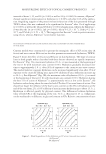
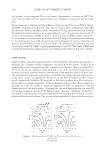
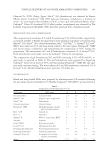
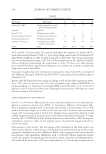
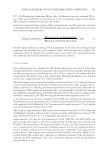
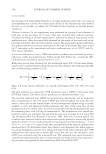
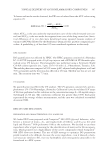
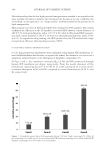
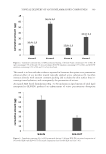
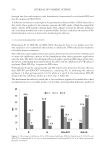
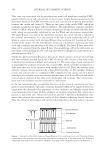
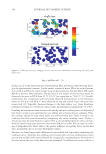
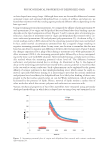
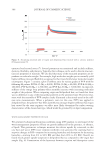
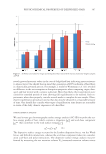
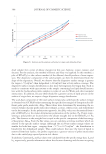
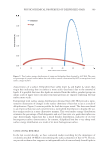
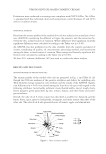
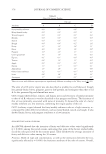
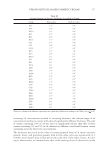
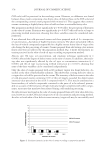
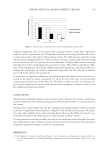
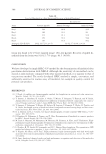
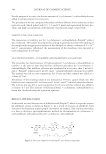
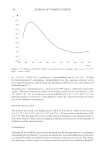
JOURNAL OF COSMETIC SCIENCE 350 through the skin with respect to the formulation characterized by not loaded SLN and free SG suspension (SLN-OUT). A different mechanism could explain the permeation enhancer effect of SLN observed in this study. Once applied to the stratum corneum the SLN, made of high biocompatible lipids, can fuse with stratum corneum lipids. This collapse of structure liberates permeant into a medium in which the active is poorly soluble. In these conditions an increase of SG thermodynamic activity is observed so facilitating the delivery. IN VIVO ANTI-INFLAMMATORY ACTIVITY Formulation D, G, SLN-IN, and SLN-OUT, showing the best in vitro profi le, were fur- ther studied in vivo to determine their ability to inhibit the UVB-induced skin erythema on healthy human volunteers. Skin refl ectance spectrophotometry was used to determine the extent of the erythema and to assess the inhibition capacity of the formulations after their preventive application onto the skin. The AUC was determined for each subject plotting ΔEI values versus time. An inverse relationship was found between the AUC and the inhibition of UVB-induced erythema (Table III). Fig. 4 reports the PIE values. Formulations D and G, containing SG and DG respectively, showed to be more effective than SLN-IN and SLN-OUT formulations, containing SG, in inhibiting the induced erythema 1 h after gel removal (p 0.05), while at 3 and 6 h, the formulation SLN-IN showed the best inhibitory ability (p 0.05 Fig. 4, Table III). The mechanism described to justify the in vitro evidences appears to be useful also to fi nd an explanation of in vivo results. In fact, soy lecithin, increasing skin hydration, produced Figure 4. Percentage of inhibition of the UVB-induced erythema (PIE) by formulation D, SLN-IN, and SLN-OUT containing SG (0.5% w/w) or with formulation G containing DG (0.5% w/w). Data represent the mean for 10 subjects.

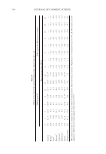
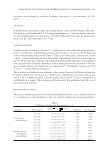
Table III AUC0–52Values Obtained Pretreating Skin Sites With Formulation D, SLN-IN,and SLN-OUT Containing SG (0.5% w/w) or With Formulation G Containing DG (0.5% w/w) and Applying UVB Radiations After 1 h (=1), 3 h (=3), or 6 h (=6) From Their Removal Subjects AUC0–52 t = 1 t 3 t = 6 Control D G SLN-IN SNL-OUT D G SLN-IN SNL-OUT D G SLN-IN SNL-OUT A 690.1 747.3 1218.6 928.6 1019.2 1128.3 918.2 1116.3 1278.2 1266.5 796.2 1201.2 1418.2 B 715.3 791.2 1200.4 900.3 1115.6 1215.6 924.3 1022.4 1266.3 1288.4 774.3 1210.2 1575.6 C 628.6 801.3 1229.3 1017.1 998.2 1117.3 896.2 1128.3 1215.9 1321.3 726.5 1204.3 1449.8 D 657.8 816.1 1244.8 949.4 1011.2 1198.3 865.4 1129.4 1298.8 1304.5 748.6 1198.6 1320.6 E 731.4 788.4 1197.3 1000.3 1103.9 1088.3 928.3 1138.2 1299.5 1316.6 702.1 1192.1 1146.8 F 726.9 809.3 1208.1 921.3 1088.2 1156.2 919.3 1100.1 1264.6 1324.9 721.2 1194.3 1294.3 G 697.1 826.4 1224.3 916.2 963.4 1228.4 926.2 1099.6 1228.1 1288.6 716.4 1218.4 1421.2 H 701.3 747.3 1281.6 928.4 943.1 1103.6 888.2 1098.4 1300.4 1216.5 698.6 1221.6 1318.3 I 721.4 768.1 1291.5 896.5 995.9 1163.2 826.3 1122.2 1318.2 1284.4 688.5 1244.3 1221.1 L 654.1 724.4 1196.3 886.4 912.2 1212.8 849.5 1211 1294.6 1296.3 788.4 1198.6 1393.0 Mean 696.66 788.38 1232.88 939.79 1026.52 1155.47 899.16 1106.1 1274.44 1290.19 730.27 1209.44 1355.9 TOPICAL DELIVERY OF ANTI-INFLAMMATORY COMPOUNDS 351
Purchased for the exclusive use of nofirst nolast (unknown)
From: SCC Media Library & Resource Center (library.scconline.org)