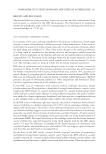
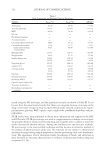
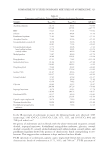
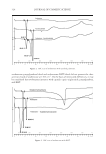
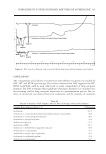
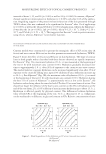
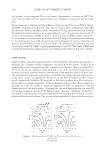
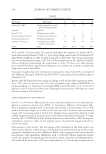
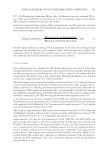
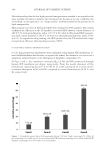
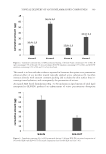
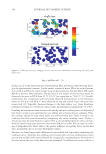
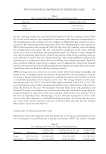
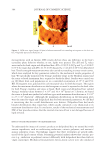
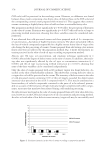
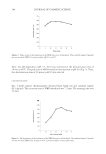
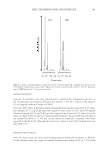
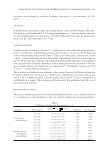
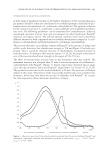
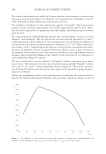
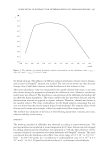
JOURNAL OF COSMETIC SCIENCE 348 Notwithstanding that the hot high pressure homogenization method is recognized as the most suitable procedure to produce lipid nanoparticles because of its easy scalability, the US method, in our experience, is a “cheap and fast” method suitable for the production of lipid nanoparticles. Mean particle size data of SG-loaded SLN were obtained by PCS analyses. The results confi rmed the effi ciency of the US method: not loaded SLN showed a mean diameter of 280.9 ± 25.4 nm (polydispersity index: 0.237 ± 0.03) while for SG-loaded SLN a popula- tion with a mean diameter of 185.4 ± 12.8 nm was obtained (polydispersity index: 0.395 ± 0.01). As regards the drug loading, the SLN produced by the US method had a high incorporation effi ciency showing drug recovery of 88%. IN VITRO PERCUTANEOUS ABSORPTION STUDY In vitro skin permeation experiments were performed using human SCE membranes in- stead of full-thickness skin because, as reported by others, the dermis in vitro can act as a signifi cant artifi cial barrier to the absorption of lipophilic compounds (23). In Figs 1 and 2, the cumulative amounts (Q24) of SG and DG permeated through human SCE membrane are shown, respectively. From the results obtained, all the formulation containing Lecinol® S-10 (H, D, G, and C) produced an increase of per- cutaneous absorption of SG and DG compared to control formulations (F, B, E, and A), respectively. Figure 1. Cumulative amount (Q24) of SG permeated during 24 h from F (gel containing 0.5% of SG), H (gel containing 0.5% of SG and 1% of soy lecithins), B (O/W emulsion containing 0.5% of SG), and D (O/W emulsion containing 0.5% of SG and 1% of soy lecithins).

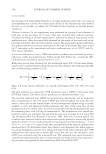
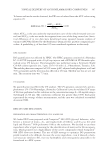
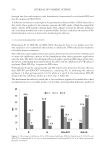
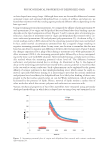
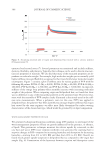
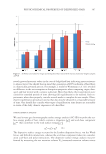
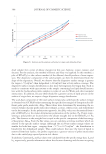
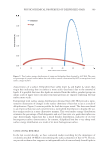
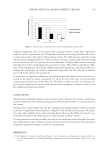
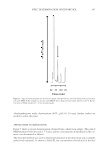
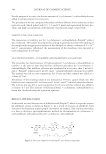
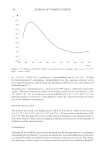
TOPICAL DELIVERY OF ANTI-INFLAMMATORY COMPOUNDS 349 This result is in line with the evidences reported in literature that point out a penetration enhancer effect of soy lecithin toward topically applied active substances (6). Lecithin interacts directly with stratum corneum packing and occludes the skin surface thus in- creasing tissue hydration, and consequently, the permeation of actives. As regards SLN based formulations (Fig. 3), SG inclusion in lipid matrix of solid lipid nanoparticles (SLN-IN) produced an enhancement of active percutaneous absorption Figure 2. Cumulative amount (Q24) of DG permeated during 24 h from F (gel containing 0.5% of SG), H (gel containing 0.5% of SG and 1% of soy lecithins), B (O/W emulsion containing 0.5% of SG), and D (O/W emulsion containing 0.5% of SG and 1% of soy lecithins). Figure 3. Cumulative amount (Q24) of SG permeated during 24 h from SLN-IN (viscosized suspension of SG-loaded SLN) and SLN-OUT (viscosized suspension of not loaded SLN and “free” SG).
Purchased for the exclusive use of nofirst nolast (unknown)
From: SCC Media Library & Resource Center (library.scconline.org)