JOURNAL OF COSMETIC SCIENCE 360 (approximately 0.3 g of 3.5-in. long hair) to square Plexiglas plates using Duco cement, leaving 1.5 in. of fi bers between the tabs. The hair was wetted, then shaped into an omega loop using a Tefl on rod, and allowed to dry at 50% RH for 12 h. Mechanical measure- ments were carried out with a Texture Analyzer (Stable Micro Systems, Godalming, United Kingdom). We fi rst examine untreated hair, then we reinsert a Tefl on rod in the omega loop so that treatment with styling resins may be administered. Polymer-treated omega loops are allowed to dry for 12 h at 50% RH followed by measurements. STREAMING POTENTIAL ANALYSIS In this study, we used streaming potential instrumentation, referred to as a dynamic elec- trokinetic and permeability analyzer, manufactured by Better Cosmetics, LLC (Bethel, CT) (8). This custom-built device allows for the collection of electrokinetic parameters (streaming potential and conductivity) as well as permeability of fi ber plugs. The dy- namic electrokinetic and permeability analyzer consists of a streaming potential cell, valve assembly controlling the fl ow of liquids, conductivity meter, pH and temperature meter, pressure controller, test and treatment solution reservoirs, and electronic balance fl ow meter. INVERSE GAS CHROMATOGRAPHY SURFACE ENERGY ANALYSIS All analyses were carried out using an inverse gas chromatography surface energy analyzer and the data were analyzed using both standard and advanced SEA Analysis Software. For all experiments, between 1.5 and 2.0 g of hair samples (entire strands) were packed into an individual silanized glass column (300 mm long by 4 mm inner diameter). The sam- ples were run at a series of surface coverages with both alkanes (undecane, decane, nonane, octane and heptanes only four alkanes were used for calculations) and polar probe mole- cules (ethanol, acetone, ethyl acetate, dichloromethane, and acetonitrile) to determine the dispersive surface energy as well as the acid–base free energy of desorption. In this study, each column was preconditioned for 1 h at 25°C and 30% RH with helium carrier gas to normalize all samples at a humidity representative of ambient conditions. At no time were the samples exposed to dry helium conditions, as not to induce irreversible changes to the hair fi bers. All experiments were carried out at 25°C and 30% RH with a 10 sccm total fl ow rate of helium, and using methane for dead volume corrections. MATERIALS The majority of the experiments were performed on Asian hair purchased from Interna- tional Hair Importers and Products, Inc., Glendale, NY. Hair tresses were prepared by gluing 2 g of fi bers to a 1.5-in × 1.5-in Plexiglas tab with Duco Cement. The resulting dimensions of the hair tresses were 6.4 inch in length and 1.25 inch in width. Hair tresses were precleaned with a 3% ammonium lauryl sulfate solution and rinsed thoroughly before use in the experiments. Rinse-off treatments were administered with polyquaternium-55 and quaternium-26, which are commercial products by Ashland, Inc. (Covington, KY)

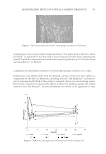
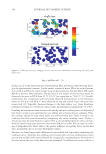
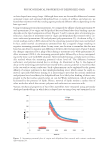
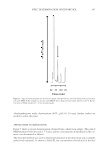
PHYSICOCHEMICAL PROPERTIES OF DELIPIDIZED HAIR 361 sold under the trade names Styleze W and Ceraphyl 65, respectively. Styling treatments consisted of various molecular weights of PVP manufactured by Ashland, Inc. under the tradenames of PVP K-15 (Mw = 8,000), PVP K-30 (Mw = 60,000), PVP K-60 (Mw = 400,000), PVP K-90 (Mw = 1,300,000), and PVP K-120 (Mw = 3,000,000). RESULTS AND DISCUSSION We investigated the physicochemical properties of hair contributed by its free lipid com- ponents. By subjecting hair to a series of solvent extractions, we were able to effectively remove noncovalently bound lipids and, thus, make comparisons with virgin hair con- taining its normal lipidic components. Many of the techniques used in this study yielded results demonstrating that noncovalently bound lipids infl uence various properties of hair. INVESTIGATION OF HAIR BIOPHYSICS/BIOCHEMISTRY The chemical compositional changes including lipid loss, protein conformation, and water binding capacity were monitored by FTIR spectroscopic imaging (6). In our ex- amination of cross sections of hair, we generate images that qualitatively show the dis- tribution for selective wavelength regions of the infrared spectrum that correspond to a biophysical feature of hair morphology. For example, by monitoring the lipid band at 2850 cm-1 (methylene asymmetric stretching), we can generate an image of the cross section of hair that shows the distribution of lipid in the cuticle, cortex, and medulla. In virgin hair, we generally see most of the lipids are concentrated in the medulla. When we extract hair with n-hexane we fi nd that surface lipids are removed, but lipids within the internal structure of hair remain. It is not until hair is rigorously extracted with chloroform/methanol (70:30) that all of the lipids are removed. FTIR spectro- scopic images of the lipid distribution in hair cross sections are shown in Fig. 3. As depicted by the scale, dark colors in the image (blue) indicate lower concentrations of lipid while brighter colors (yellow/orange/brown) are due to higher concentrations of lipid. In virgin hair, especially of Asian origin, we note that the greatest concentration of lipids tends to be in the medulla region of hair. This was discussed in greater detail in a previous publication (6). Examining Fig. 3, we can clearly see that delipidized hair contains much lower concentrations of lipid across the entire fi ber cross section than virgin hair. HAIR SURFACE ANALYSIS To probe the surface properties of hair we used dynamic contact angle analysis, mechani- cal combing measurements, and AFM. Changes in the molecular properties of materials lead to changes in their macroscale properties. For example, the wetting properties of a surface can change due to chemical modifi cation. We measured the DCA using single fi ber (Wilhelmy) methodology. In this technique, a hair fi ber is anchored to a microbal- ance then immersed in H2O. On the basis of the wettability of the fi ber in water, contact angle determinations can be made using the following equation:
Purchased for the exclusive use of nofirst nolast (unknown)
From: SCC Media Library & Resource Center (library.scconline.org)