JOURNAL OF COSMETIC SCIENCE 380 (2) A. Monclus, “Natural Oils and Fats,” in Cosmetic Raw Material Analysis and Quality, Hydrocarbons, Glycerides, Waxes and Other Esters, International Federation of Societies of Cosmetic Chemists. (Micelle Press, Weymouth, United Kingdom, 1994), Vol. 1, pp. 1–12. (3) M. Rieger, Selected natural oils and fats used in cosmetics, Cosméticos Nuevos., 2, 11–20 (1996). (4) B. Salka, Choosing emollients: Four factors will help you decide, Cosmet. Toiletries, 112, 101–106 (1997). (5) G. Zocchi, “Skin Feel Agents,” in Handbook of Cosmtic Science and Technology, 3rd Ed. A. Barel, M. Paye, and H. Maicach. Eds. (Informa Health Care, New York, 2009), Chapter 34, pp. 357–370. (6) R. Schueller and P. Romanowski, “Oil of Nature,” in Beginning Cosmetic Chemistry, Allure books, 3rd Ed. (Carol Stream, Illinois, 2009), pp. 117–128. (7) P. Viola and M. Viola, Virgin olive oil as fundamental nutritional component and skin protector, Clin. Dermatol., 27, 159–165 (2009). (8) European Pharmacopoeia, 4th Ed., Eds. (Directorate for the Quality of Medicines of the Council of Eu- rope, EDQM, 2011), pp. 1664–1665. (9) British Pharmacopoeia, Vol 4., Eds. (British Pharmacopoeia Commission Offi ce, 2004), A84. (10) United States Pharmacopeia 28, National Formulary 23, Eds. (United States Pharmacopeial Conven- tion, INC, 2005), pp. 3043–3044. (11) T. López Luengo, The olive tree, Therapeutic Properties, Offarm, 25(11), 56–59 (2006). (12) Martindale: The complete drug reference, K. Parfi tt.Ed. 32nd Ed. (Pharmaceutical Press, Tauton, 1999), p. 1610. (13) A. Ruiz, J. Arias, and V. Gallardo, “Skin Creams Made with Olive Oil,” in Olives and Olives Health and Disease Prevention. V. Preedy and R. Watson. Eds. (Academic Press, Elsevier, Tucson, 2010), pp. 1133– 1141. (14) B. Vanaclocha and S. Cañigueral, Phytotherapy, vademecum prescriptions, 4th Ed. Masson S.A., Barcelona, 2003), pp. 384–387. (15) B. Arief, et al., Protective effect of topically applied olive oil against photocarcinogenesis following UVB exposure of mice, Carcinogenesis, 21, 2085–2090 (2000). (16) J. Bruneton, Pharmacognosy, Phytochemistry Medical Plants, 2nd. Ed. (Intercept Ltd., Londres, 1999), pp. 143–144. (17) R. M. Duran, Relationship between the composition and ripening of the olive and the quality of the oil, Acta Hort., 286, 441–452 (1990). (18) A. K. Kiritsakis, Flavor components of olive oil—A review, J. Am. Oil Chem. Soc., 75, 673–681 (1998). (19) F. Angerosa, Infl uence of volatile compounds on virgin olive oil quality evaluated by analytical ap- proaches and sensor panels, Eur. J. Lipid Sci. Technol., 104, 639–660 (2002). (20) R. Aparicio and J. Harwood, Manual of the olive oil (Mundiprensa, España, 2003), p. 614. (21) M. Uceda, M. P Aguilera, and I. Mazzuchelli, Manual tasting and pairing of the olive oil (Almuzara, España, 2010), p. 155. (22) A. Romer, J. Tous, and L. Guerrero, “The sensory analysis of virgin olive oil,” an Introduction to Sensory analysis of food, J. Sancho, E. Bota, and J. J. de Castro. Eds. (Universitat de Barcelona, España, 1999), pp. 183–197. (23) COI, “Sensory analysis of olive oil. Standard. Guide for the selection, training and monitoring of skilled virgin olive oil tasters.” International Olive Council COI/T.20/Doc. No. 14/Rev.2 (2007). (24) COI, “Sensory Analysis of Olive Oil. Method for the Organoleptic Assessment of Virgien Olive Oil.” International Olive Council, COI/T.20/ Doc. No. 15/Rev. 4 (2011). (25) COI, “Sensory analysis of olive oil. Standard. Glass for oil tasting.” International Olive Council, COI/T.20/Doc. No. 5 (1987). (26) Skin Care Formulary Contents, Cosmet. Toiletries., 118 (7), 70–101 (2003). (27) Skin care Formulary, Cosmet. Toiletries., 123 (1), 87–92 (2008).

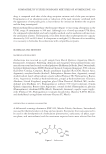
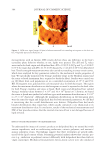
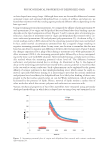
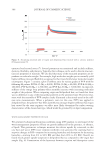
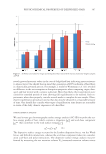
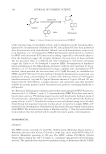
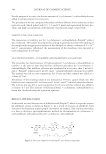
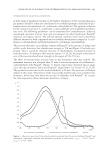
J. Cosmet. Sci., 64, 381–389 (September/October 2013) 381 Determination of hinokitiol in skin lotion by high-performance liquid chromatography–ultraviolet detection after precolumn derivatization with 4-fl uoro-7-nitro-2,1,3-benzoxadiazole YASUHIKO HIGASHI and YOUICHI FUJII, Department of Analytical Chemistry, Faculty of Pharmaceutical Sciences, Hokuriku University, Kanazawa 920-1181, Japan. Accepted for publication February 28, 2013 Synopsis Hinokitiol, a potent, broad-spectrum antibacterial agent, is a component of various personal care products. In this study, the concentration of hinokitiol in skin lotion was analyzed by means of high-performance liquid chromatography–ultraviolet detection (380 nm) after precolumn derivatization with 4-fl uoro-7-nitro-2,1, 3-benzoxadiazole (NBD-F). A standard curve was obtained after derivatization of the authentic compound with NBD-F in borate buffer (pH 9.0) at 60°C for 10 min. The retention time of NBD-hinokitiol was 7.2 min. The calibration plot was linear in the range of 0.2 to 4 mg/ml with an r2 value of 0.9985, and the lower limit of detection was 0.05 μg/ml (at a signal-to-noise ratio of 3, absolute amount of 0.33 ng/20 μl injection). The coeffi cient of variation was less than 9.4%. It was found that the amount of hinokitiol in the tested skin lotion was 194 ± 14 μg/ml (range: 180–212 μg/ml). Recovery in addition-recovery tests was within the range of 84.5% to 98.0%. This system is simple, sensitive, and convenient, and should be suitable for routine quality assessment of personal care products containing hinokitiol. INTRODUCTION Hinokitiol (β-thujaplicin, 4-isopropyl-2-hydroxycyclohepta-2,4,6-trien-1-one Fig. 1) is a naturally occurring toxic compound belonging to the class of tropolones that contain an unsaturated seven-membered carbon ring. The compound is found in heartwood of several cupressaceous plants, such as western red cedar (Thuja plicata), eastern white cedar (T. occidentalis), hinoki cypress (Chamaecyparis obtusa), and hiba (Thujopsis dolabrata) (1,2). Since hinokitiol has potent antibacterial activity (minimum inhibitory concentration of 0.2 μg/ml for Staphylococcus epidermidis and Daedalea dickinsii) (2,3), it is often added to skin lotions, body soaps, and other personal care products. Direct determination of hinokitiol, by means of gas chromatography (GC) or high- performance liquid chromatography (HPLC) is diffi cult because of the chelating activity Address all correspondence to Yasuhiko Higashi at y-higashi@hokuriku-u.ac.jp.
Purchased for the exclusive use of nofirst nolast (unknown)
From: SCC Media Library & Resource Center (library.scconline.org)