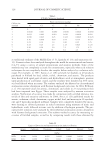
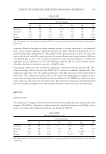
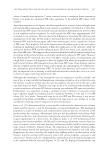
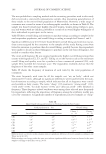
JOURNAL OF COSMETIC SCIENCE 128 inductively coupled plasma optical emission spectroscopy. Also in 2009, Corazza et al. (28) published nickel, cobalt, and chromium measurements in 52 toy make-up kits sold in Italy, including 29 eye shadows, 22 lip products, and 1 nail polish. These au- thors also analyzed their samples by electrothermal atomization atomic absorption with Zeeman background correction following an acid digestion with nitric and hydro- fl uoric acids and hydrogen peroxide. The authors noted that fi ltration was carried out when necessary. More recently, in 2012, Volpe et al. (18) published results for 20 eye shadows purchased in Italy, of which 4 were manufactured in the United States, 4 in Italy, and 12 in China. Similarly, these authors also used nitric and hydrofl uoric acids to digest the samples and analyzed the analytical solutions by either fl ame atomic ab- sorption or inductively coupled plasma-mass spectrometry (ICP-MS). Very few authors mention the use of boric acid, which is sometimes required to dissolve precipitated fl uorides following a digestion that includes hydrofl uoric acid. The U.S. Food and Drug Administration (FDA) developed and validated a method for determining lead content in lipsticks and applied the method to a small survey of 20 lipsticks available on the U.S. market in the fall of 2007 (6). This work was followed by an expanded survey of 400 lipsticks available on the U.S. market in the spring of 2010 (7). Both surveys measured total lead content obtained by using microwave- assisted digestion with nitric and hydrofl uoric acids, dissolving any resulting pre- cipitate with boric acid, and analysis by ICP-MS. The initial study also measured extractable lead content obtained by using nitric acid to decompose all components except refractory mineral pigments such as titanium dioxide and mica. The results not only demonstrated the varying presence of ingredients such as mica in lipsticks but also demonstrated the inability to obtain consistent results for lead by simple acid extraction. Therefore, FDA reported only total lead content in the expanded survey. Added concerns about other potentially harmful elemental contaminants in a variety of cosmetic products besides lipsticks led to this study, which was aimed at assessing the total content of seven elements (arsenic, cadmium, chromium, cobalt, lead, mercury, and nickel) in 150 cosmetic products, of various product types (eye shadows, blushes, lip- sticks, three types of lotions, mascaras, foundations, body powders, compact powders, shaving creams, and face paints), sold on the U.S. market. Adverse reactions compelling recall of some face paints (34,35) as well as consumer concerns regarding face paints (36) prompted FDA to include those products in this study. The elements were chosen for their prevalence in the environment and known toxicity (arsenic, cadmium, lead, and mercury) or allergenicity (chromium, cobalt, and nickel) (1). Arsenic, cadmium, chromium, Table IV. Mean Recoveries of Elements from Certifi ed Reference Materials Mean % recovery Arsenic Cadmium Cobalt Chromium Mercury Nickel Lead Conostan Custom Oil 93 99 103 100 — 106 106 Spex Custom Oil — — — — 75 — — NIST 695 96 93 99 100 98 99 102 NIST 2702 99 103 92 90 104 94 98 NIST 1573 LOQ 91 95 90 96 96 Not certifi ed

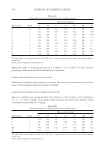
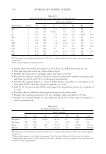
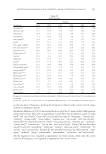
SURVEY OF COSMETICS FOR SEVEN INORGANIC ELEMENTS 129 cobalt, lead, and nickel were determined by ICP-MS. Mercury was determined by cold vapor atomic fl uorescence spectrometry (CVAFS) because it offers higher sensitivity and reduced interferences relative to ICP-MS for mercury determinations. The analyses were conducted by Frontier Global Sciences (Frontier, Bothell, WA), a private laboratory under contract with FDA. T able V. Elemental Results for 30 Eye Shadows from 19 Manufacturers Manufacturer Brand Mean results (mg/kg)a As Cd Cr Co Pb Hg Ni A a 0.36 0.070 18 5.5 5.0 NF 16 A b 0.62 NF 8.5 7.9 4.4 NF 16 A c 0.65 0.14 15 8.1 3.9 TR 20 B a 0.38 TR 3.8 1.9 4.7 0.0070 2.9 B b 0.50 NF 7.7 4.0 3.4 NF 9.4 C a 0.19 NF 2.0 0.35 0.05 NF 0.91 C b 0.78 NF 7.7 1.6 6.5 0.0080 3.1 C c 0.36 NF 12 3.7 0.66 0.040 8.2 C d 0.63 0.36 8.3 1.7 6.7 0.0075 4.8 C e 0.24 NF 4.5 0.88 4.7 TR 2.5 C f 0.25 TR 11 5.3 0.77 0.030 42 D a TR NF 3.9 1.3 3.1 NF 4.8 E a 0.45 TR 21 2.8 5.7 0.030 9.6 E b 0.62 NF 18 5.5 4.1 0.0085 15 F a 0.62 NF 9.6 2.1 3.6 0.0060 7.5 G a 0.30 NF 1100 2.7 4.2 NF 13 H a 0.41 NF 7.4 2.4 3.4 0.010 8.8 I a 1.0 NF 11 1.6 5.9 NF 10 J a 0.36 TR 12 7.8 27 TR 32 K a 0.33 NF 16 0.94 3.9 0.020 12 K a 0.69 TR 420 4.9 8.6 0.0085 10 L a 1.7 TR 350 64 2.1 TR 1600 M a 0.47 TR 22000 1.1 2.4 NF 17 N a 0.26 0.11 6.6 6.8 2.8 0.020 14 N b 0.07 NF 4.7 0.31 2.2 NF 5.0 O a 0.79 TR 3500 2.9 7.5 0.015 16 P a 0.29 NF 40 13 4.2 TR 18 Q a 0.48 TR 5.1 2.4 5.7 TR 9.4 R a 1.2 TR 32 0.64 14 0.0040 9.0 S a NF NF 1.1 0.11 0.11 NF 1.3 NF: Not found, or less than detection limit TR: Trace, or greater than detection limit, but less than quantitation level. a Mean results of duplicate determinations.
Purchased for the exclusive use of nofirst nolast (unknown)
From: SCC Media Library & Resource Center (library.scconline.org)