J. Cosmet. Sci., 66, 305–306 (September/October 2015) 305 Research Letter Twelve-hour skin hydration after a single application of a lamellar moisturizer STEPHANIE J. NISBET and PETER DYKES, GSK Consumer Healthcare, Weybridge, England, UK, (S.N.), and Cutest Systems Ltd, Cardiff, Wales, UK (P.D.). Accepted for publication June 12, 2015. Dear Editor, Dry skin is a common condition that can cause tightness, itchiness, and fl aking (1). We have developed a face cream with a patented complex of skin-similar lipids arranged in an ordered lamellar structure designed to mimic the extracellular lipid layer surrounding the corneocytes in the stratum corneum. The test moisturizer contained 7.5% glycerin, and a total lipid concentration of 17.2%. This study was designed to assess the hydration potential of this lamellar moisturizer relative to a control (nonlamellar) moisturizer. This was a single-center, evaluator-blind study conducted in healthy subjects with self- assessed dry skin, aged 19–50 years, with Fitzpatrick skin type I–IV, conducted in ac- cordance with International Conference on Harmonisation Good Clinical Practice guidelines and the Declaration of Helsinki. The protocol, informed consent form, and other relevant study documents were reviewed by an independent ethics committee. Af- ter providing written informed consent and being deemed eligible to participate in the study, subjects entered a 5-day wash-out period, during which they were required to avoid application of any cleanser or moisturizer to the volar forearm. They were provided with a standard soap bar to use on the volar forearms for cleansing during this period. Hydration of the stratum corneum was assessed using a Corneometer CM820 (Courage + Khazaka Electronic GmbH, Cologne, Germany). The three sites were marked on the dom- inant volar forearm using a skin marker pen. Corneometry measurements were taken at baseline, 1 and 12 h following application (approximately 2 μl/cm²) of the lamellar mois- turizer and control moisturizer to the volar forearm. Measurements were also taken at an untreated site. Subjects were acclimatized for a minimum of 20 min in a climate-controlled room (20° ± 2°C and 40–50% relative humidity) prior to all corneometry measurements. Address all correspondence to Stephanie Nisbet at Stephanie.J.Nisbet@gsk.com.

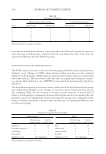
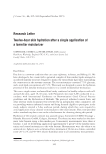
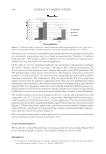
JOURNAL OF COSMETIC SCIENCE 306 The sample size calculation assumed that the standard deviation for change from baseline on corneometry measurement was 6 a.u. based on previous data. Therefore, 30 subjects would provide 90% power to detect a difference of 5 a.u. between the treated and un- treated areas at a two-sided 0.05 level of signifi cance. Of the subjects, 32 were randomized with the two moisturizers and untreated, randomly allocated to the three sites for each subject. All subjects had evaluable measurements for all test sites at all time points and, thus, comprise the intent to treat (ITT) population. The ITT population had a mean age of 37 (19–50) years. The change in corneometry values from baseline to 1 h (±5 min) and to 12 h (±30 min) was calculated for the study products and the untreated (control) site. The nonparametric Wilcoxon Signed-Ranks Test was a preplanned analysis and was used for pair-wise comparisons of the three test sites (lamellar and control moisturizers, and untreated). It was selected as the method of analysis because prior data had suggested that the corneometry values may not be normally distributed. Differences were con- sidered signifi cant if p 0.05 (two-sided test). Statistical analysis was carried out using Unistat for Windows version 6.0 in excel overlay mode (Unistat Ltd., London, United Kingdom). The median baseline corneometry readings at the test, control, and untreated sites were comparable (36.52, 37.39, and 37.04 a.u., respectively). Although both moisturizers pro- vided a signifi cant level of moisturization 1 h after application, the sites treated with the lamellar moisturizer had a signifi cantly higher improvement than the control moisturizer (Figure 1). Twelve hours after application, only the sites treated with the lamellar mois- turizer showed a signifi cant level of moisturizing, and also a signifi cantly higher improve- ment than the control moisturizer (Figure 1). This study demonstrates that a single application of a lamellar moisturizer signifi cantly increases hydration of the stratum corneum for 12 h. ACKNOWLEDGMENTS We would like to thank Harpreet Jassy for assistance with the clinical study, Bharat Patel for providing the graph in Figure 1 and Angelica Tobery for critical review. REFERENCE (1) F. A. Simion, E. S. Abrutyn, and Z. D. Draelos, Ability of moisturizers to reduce dry skin and irritation and to prevent their return, J. Cosmet. Sci., 56, 427–444 (2005). Figure 1. Hydration data for untreated, control moisturizer and lamellar moisturizer sites. Data are pre- sented as change from baseline. Asterisks represent a statistically signifi cant difference (p 0.0001).
Purchased for the exclusive use of nofirst nolast (unknown)
From: SCC Media Library & Resource Center (library.scconline.org)