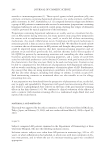
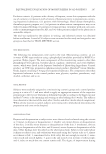
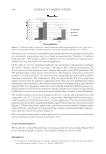
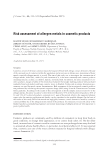
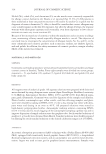
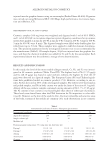
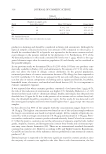
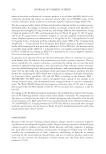
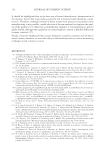
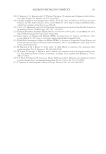
Table III Allergen Metal Concentrations in Different Cosmetic Products Cosmetics N Ni (μg/g) Cr (μg/g) Co (μg/g) Mean ± SD (range) a Mascara 5 8.21 ± 8.20 (1.75–19.02) 3.62 ± 4.17 (0.51–10.15) 3.94 ± 3.83 (0.16–10.18) Eye shadow 12 5.74 ± 2.03 (3.03–9.40) 6.33 ± 4.91 (1.62–19.04) 3.11 ± 1.97 (1.21–7.09) Eyeliner 7 14.92 ± 14.50 (3.79–37.95) 11.12 ± 11.64 (1.42–31.03) 14.96 ± 18.98 (0.28–48.19) Lipstick 6 3.17 ± 1.33 (1.65–4.10) 54.74 ± 8.03 (44.61–62.19)b,c,d 0.58 ± 0.50 (0.15–1.44) c Blusher 4 7.65 ± 1.73 (6.54–10.23) e 40.76 ± 12.01 (28.84–55.79)b,c,d 3.05 ± 2.23 (0.32–5.05) Nail polish 10 1.26 ± 0.23 (0.93–1.48)b,c,d,e,f 17.48 ± 12.63 (6.67–40.13)b,c,e,f 0.44 ± 0.28 (0.18–0.88)c,d,f Body lotion 4 NDa 7.12 ± 7.26 (1.64–17.82)e,f,g 0.53 ± 0.23 (0.30–0.81) c a Non-detectable values were not taken into account for statistical analysis. b p 0.05 versus mascara c p 0.05 versus eye shadow d p 0.05 versus eyeliner e p 0.05 versus lipstick f p 0.05 versus blush g p 0.05 versus nail polish. ALLERGEN METALS IN COSMETICS 317

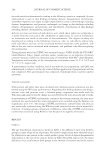
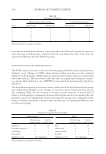
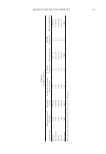
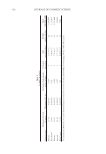
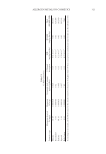
JOURNAL OF COSMETIC SCIENCE 318 phase in the safety evaluation of a cosmetic product is to calculate the MoS, which is cal- culated by dividing the lowest no observed adverse effect level (NOAEL) value of the cosmetic substance under study by its estimated systemic exposure dosage (SED) (19). We also compared safety limits of these metals with estimated intakes to evaluate poten- tial health risks. According to previous studies, on average, women used lipsticks 2.35 times per day and applied 10 mg at each use, and average daily use was estimated as 24 mg of lipstick products (20). We used maximum detected Ni (4.10 μg/g), Cr (62.19 μg/g), and Co (1.44 μg/g) levels in lipstick samples to calculate highest estimated intake values. Highest exposure was determined as 0.10 μg/day for Ni, 1.49 μg/day for Cr, and 0.03 μg/day for Co. Compared with the tolerable daily intake (TDI) of Ni, 2.8 μg/kg body weight (bw = 70 kg) derived from European Food Safety Authority, highest estimated intake of Ni from lipstick was quite low, which is 0.05% of TDI (21). On the basis of the acceptable daily intake (ADI) of 1.4 mg/day for Co, our sample included almost about 0.002% of ADI and according to ADI of 0.2 mg/day for Cr, even in highest exposure, Cr levels in our lipstick was 0.75% (22). In general, local adverse effects are the most prevalent effects of cosmetics in contact with human skin. In addition, skin penetration may lead to systemic exposure. The sys- temic availability of a cosmetic substance is estimated by taking into account the daily amount of applied fi nished product, the concentration of the substance under investiga- tion, the dermal absorption of that particular substance, and a mean human body weight value (19). In this study, risk assessment of the investigated cosmetic products was per- formed by calculating the SED, which was calculated according to Scientifi c Committee on Consumer Safety guideline (19) and the MoS, according to the formula, MoS = NOAEL/SED. The MoS value is used to extrapolate from a group of test animals to an average human being, and subsequently from average humans to sensitive subpopula- tions. The World Health Organization proposes a minimum value of 100, and it is gener- ally accepted that the MoS should at least be 100 to conclude that a substance is safe for use (19). According to the EU Risk assessment documents, the available data indicate that absorp- tion of Ni following dermal contact with either soluble or metallic Ni compounds can take place to a limited extent and 0.2% dermal absorption value should be used for risk characterization (23). MoS value for Cr was calculated based on the dermal absorption of 3% and NOAEL of 2.5 mg/kg bw/day for Cr (VI) (24), which is associated most strongly with skin sensitization (4). As shown in Tables IV and V, the MoS value for Ni and Cr was found greater than a factor of 100. CONCLUSION Because of the increase of allergy-related diseases, allergic metal in cosmetics might be a problem for the safeguard of public health. Despite dermal penetration of metals from cosmetics such as eyeliner, eye shadow, blush, mascara, and body cosmetics is negligi- ble, local effects such as irritation, sensitization, or allergy are widely seen (15). Addi- tionally, the continuous use of these cosmetics, swallowing of lipsticks or during sweating for the facial makeup, abraded skin, and use of cosmetic product under sun- shine can also increase the absorption of these metals into the body from cosmetic products (25,26).
Purchased for the exclusive use of nofirst nolast (unknown)
From: SCC Media Library & Resource Center (library.scconline.org)