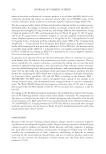
JOURNAL OF COSMETIC SCIENCE 314 Nickel (Ni), cobalt (Co), and chromium (Cr) are the metals most commonly responsible for allergic contact dermatitis (4). Duarte et al. reported that 33.5% of 1208 patients in their study had at least one positive reaction to Ni and/or Co and/or Cr in patch test for diagnosis of contact dermatitis (5). Also, it should be consider that contact allergens may cause a mild response on the fi rst few exposures, but after the allergy develops, the response worsens with subsequent exposures and eventually, even short exposures to low concen- trations can cause very severe reactions (6). Because of the increased use of cosmetics within the population and an increase in allergy cases, monitoring of heavy metals especially allergen metals is crucial. The objective of our study was to investigate the concentration of allergen metals, Ni, Co, and Cr, in the most commonly used cosmetic products such as mascara, eyeliner, eye shadow, lipstick, and nail polish. In addition, for safety assessment of cosmetic products, margin of safety (MoS) of the metals was evaluated. MATERIALS AND METHODS SAMPLING Commonly used makeup products were purchased randomly from local markets and large cosmetic stores in Istanbul, Turkey. Forty-eight samples were divided into seven groups: mascara (n = 5), eye shadow (12), eyeliner (7), lipstick (6), blush (4), nail polish (10), and body cream (4). REAGENTS All reagents were of analytical grade. All aqueous solutions were prepared with deionized water obtained by using ultrapure water system (Aqua-Nova Hepta Distillated, resistivity 0.34 M×cm, Kristianstad, Sweden). HNO3 (65%) and HF (40%) from Merck supra- pure grade (Darmstadt, Germany) were used for digestion of the samples and dilution. Plastic bottles, autosampler cups, tefl on vessels, vials for collecting samples, and glass- ware were cleaned by soaking in HNO3 (10% v/v) for a day, rinsing four times with ultra- pure water and drying in an oven at 40°C. All prepared solutions were stored in high-density polypropylene bottles. Autosampler washing solution containing HNO3 (0.2% v/v) was used to avoid clogging of the autosampler sampling capillary tip and to improve dispersion of sample solution onto the graphite tube. Stock standard solutions of analytes (1 g/l each) were obtained from Merck. Standard solutions were freshly prepared by diluting the stock standard solutions to the desired calibration ranges in 0.2% HNO3. APPARATUS An atomic absorption spectrometer (AAS) technique with a Perkin Elmer AS-800 AAS (MA), equipped with transversely heated graphite furnace (BO 504033), a longitudinal Zeeman background correction system, and an autosampler, was used for metal determi- nation. Argon was used as inert gas for graphite furnace measurements. Samples were

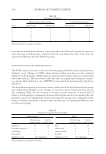
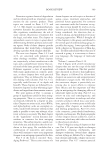
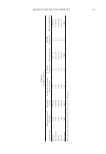
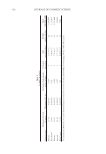
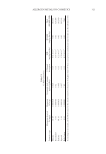
ALLERGEN METALS IN COSMETICS 315 injected into the graphite furnace using an autosampler (Perkin Elmer AS-800). Digestion was carried out using Milestone MLS 1200 Mega high-performance microwave diges- tion unit (Shelton, CT). MEASUREMENT OF CR, NI, AND CO LEVELS Cosmetic samples (100 mg) were wet weighted and digested with 3 ml of 65% HNO3 and 1 ml of 40% HF in microwave digestion system (digestion conditions for microwave system were applied as 2 min for 250 W, 2 min for 0 W, 6 min for 250 W, 5 min for 400 W, 5 min for 650 W, vent: 8 min). The digested samples were fi lled with double-glass dis- tilled water up to 5.0 ml. These samples were applied to AAS for element determina- tion. The operation parameters for the investigated elements were set as recommended by the manufacturer (Table I). Of sample aliquot, 20 μl was injected into the graphite fur- nace, and then the chemical modifi er was added for Cr and Co by the autosampler. Each experimental datum was the arithmetic average of two determinations. RESULTS AND DISCUSSION In this study, the level of the most notable allergen metals, Cr, Ni, and Co was investi- gated in 48 cosmetic products (Tables II and III). The highest level of Ni (37.95 μg/g) and Co (48.19 μg/g) was found in same eyeliner, whereas the highest Cr level (62.19 μg/g) was detected in a lipstick sample. The European Union (EU) and Turkey legisla- tions have prohibited nickel in cosmetic products (7,8). However, according to our re- sults, Ni was detected in 69% of the investigated samples. The lowest level was found in nail polish samples, and Ni in body creams was under the limit of detection (0.3 ng/ml). Almost all the eye cosmetic samples contained varying amounts of Ni (1.75–37.95 μg/g). The Ni content of eye cosmetics was found higher than those of other type of products. These levels were found lower than the FDA limitation for Ni impurities in color addi- tives (9). However, as the skin of the eyelid is thin, the most vulnerable and sensitive areas of the body, eczemas of the eyelids are common (10) such observations in eye cosmetic Table I Instrumental Conditions of Atomic Absorption Spectrometer Instrumental conditions Cr Ni Co Argon fl ow (ml/min) 250 250 250 Sample volume (μl) 20 20 20 Modifi er (μl) 5 - 5 Heating program temperature (°C ramp time [s], hold time [s]) Drying 1 110 (1–30) 110 (1–30) 110 (1–30) Drying 2 130 (15–30) 130 (15–30) 130 (15–30) Ashing 1500 (10–20) 1100 (10–20) 1400 (10–20) Atomization 2300 (0–5) 2300 (0–5) 2400 (0–5) Cleaning 2450 (1–3) 2500 (1–5) 2450 (1–3)
Purchased for the exclusive use of nofirst nolast (unknown)
From: SCC Media Library & Resource Center (library.scconline.org)