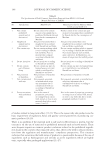
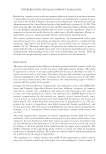
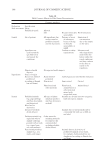
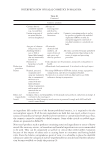
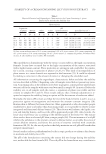
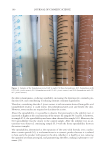
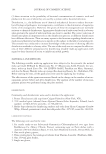
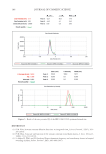
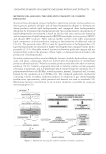
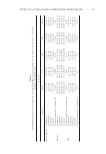
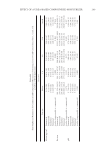
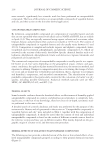
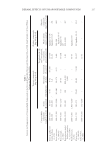
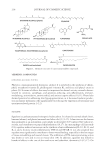
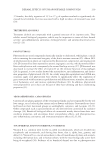
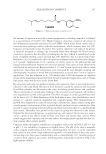
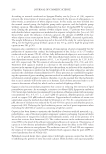
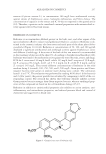
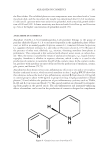
JOURNAL OF COSMETIC SCIENCE 232 thicker portions of treated thighs was 2.1 cm. When considering the lower portion (10 cm above the patella), the difference between the fi rst and last evaluation was 1.7 cm, in treated thighs. Caff eine is also an active ingredient in many anti-cellulite cosmetics. This alkaloid shows fi rming and elasticizing the skin. In vitro studies on human hepatoma HepG2 cells have shown that caffeine can slow down lipogenesis and stimulate lipolysis, which may translate into a decrease in the level of fat accumulated in the body (10). Signifi cant decreases in the accumulation of hepatic lipids, such as triglyceride (TG), and cholesterol were observed when HepG2 cells were treated with caffeine in con- centration of 6–24 mM. Caffeine decreased the mRNA level of lipogenesis-associated genes (SREBP1c, SREBP2, FAS, SCD1, HMGR, and LDLR). By contrast, the mRNA level of CD36, which is responsible for lipid uptake and catabolism, was increased. Phosphorylation of MP-activated protein kinase (AMPK) and acetyl-CoA carboxyl- ase were evidently increased when the cells were treated with caffeine as indicated for 24 h. Caffeine effectively depleted TG and cholesterol levels by inhibition of lipo- genesis and stimulation of lipolysis through modulating AMPK-SREBP signaling pathways (11). This was also confi rmed in studies in rats (eight rats per group) that were fed a high-fat diet supplemented with 0, 0.025%, 0.05%, or 0.1% caffeine for 21 d. Authors noted reducing the body fat mass and body fat percentage in a dose-dependent manner in rats fed with a high-fat diet, presumably because of increased lipolysis via catecholamines. Rats receiving 0.025%, 0.05%, and 0.1% caffeine had about 7, 10, and 11 g less body fat mass and 2.8, 3.1, and 4.5% less body fat percentage, respectively, than rats from the control group (12). Caff eine has penetrating properties, unchanged by the thickness of the skin or the occlu- sive layer. The maximal absorption rates of caffeine through the human skin were found to be 2.24 ± 1.43 μg/cm2/h (13). For determination of the maximal absorption rate of Figure 1. Chemical structure of caffeine (6).

ALKALOIDS IN COSMETICS 233 caffeine, this alkaloid was applied at a concentration of 4.0 mg/mL ethanol/water (1:1, v/v) on the human skin membrane. The application volume was 25 μL/cm2, which was considered the minimum volume necessary to produce a homogeneous distribution on the skin surface. This represented a fi nite dose (100 μg/cm2), to mimic occupationally relevant situations. The exposure time was 24 h. Aliquots of the receptor fl uid were col- lected at various time points (minimally at 1, 2, 4, 8, and 24 h post-dosing). A cumula- tive amount absorbed per unit skin area versus time course was constructed from the amount of test substance in the receptor fl uid, and the maximum absorption rate was determined from the steepest, linear portion of the curve. The pene tration of caffeine through the skin depends on the ethnicity. Because of the greater number of sebaceous glands per square cm, caffeine is better absorbed by the skin of Asians in relation to the Caucasian. Mustafa et al. (14) studied the effect of different concentrations of caffeine (1, 3, and 5%) on in vitro release through synthetic membrane and on ex vivo permeation of this alkaloid through human skin. The lowest lag time (Tlag) and higher absorption rates were obtained with gel at 1% of caffeine applied at 1 mg/cm2. The diffusion fl ux of caffeine permeation does not depend on the concentration but rather on the quantity of formulation applied (15). In addit ion, there is a linear relationship between percutaneous caffeine penetration and transepidermal water loss (TEWL) (16). This was confi rmed in the studies by Lotte et al. (17). The authors of the presented studies applied to volunteers 20 μL radiolabelled 10-3 gCi/nmol caffeine to an area of 1 cm2. This alkaloid was applied on the forehead, postau- ricular area, arm (upper and outer), and abdomen. The highest TEWL values were ob- tained when caffeine was applied on the forehead (1.8), next when caffeine was applied on the postauricular area (1.2), on arm (1.0), and the lowest when caffeine was applied on the abdomen (0.9). The maximal absorption of caffeine is reached at 100 min after local ap- plication in vivo (18). Amnuaikit e t al. (19) performed experiment on the 34 volunteers divided into four groups, and the studies were taken for four successive days (about 8–9 volunteers/ group/d). They were assigned to lie on the bed but did not sleep for one night. No face washing in the next morning was allowed. The length of each puffy eye was immedi- ately measured using a thread starting from the corner of the eye near the nose to the end of the other side of the eye curving via the puffi ness and then the thread length was determined using a ruler. The swollen area under each eye was marked, and then the samples, i.e., a selected caffeine gel and its gel base, were randomly applied on different eyelids. The observations were taken at 10, 15, 30, 90, 150, and 180 min after apply- ing the gel formulations. Ahmadraji a nd Shatalebi ( 20) evaluated in vivo effi cacy of an anti-wrinkle and dark circle eye pad consisting of 3% caffeine and 1% vitamin K. Then, research was carried out on 11 healthy women. In a single blind trial, the sample pad was applied under the right eye, and the placebo pad, consisting of water, was placed under the left eye simultaneously. The content of water in the surface layer of the skin, the content of pigmentation, and the percent of elasticity of the skin were measured using apparatus multi-skin center MC 900. After 4 weeks, the skin around the right eye of all the subjects experienced a reduction in the depth of wrinkles and dark circles, and from a subjective point of view, the appearance and elasticity of the skin were improved. Topical caffeine use reduces blood fl ow by narrowing the blood vessels wherefore, this alkaloid reduces eye shadows and swelling, as well as signs of skin fatigue (21).
Purchased for the exclusive use of nofirst nolast (unknown)
From: SCC Media Library & Resource Center (library.scconline.org)