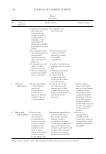
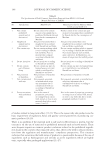
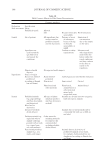
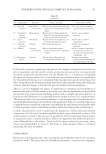
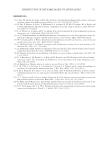
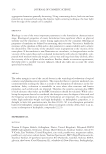
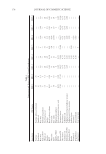
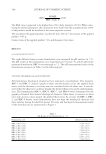
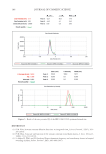
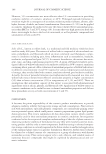
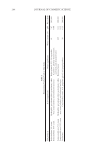
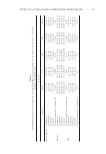
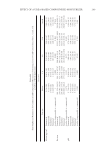
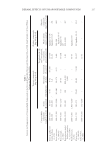
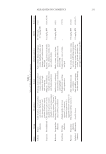
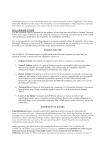
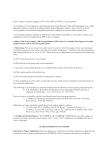
JOURNAL OF COSMETIC SCIENCE 146 Table II The Specifi cation of Halal Cosmetic Ingredients Extracted from MS2634:2019 and Manual Procedure of JAKIM No Specifi cation MS2634 (16) Manual procedure for Malaysia Halal Certifi cation-JAKIM (10) 1 Not contain prohibited animal (and its derivatives) Do not consist of or contain any part of an animal that is prohibited by Shariah law and fatwa for the consumption of Muslims. Neither consist of nor contain any part or matter of an animal that is prohibited by Shariah law for the consumption of Muslims. 2 Slaughtered animal (and its derivatives) Any part of an animal that is slaughtered in accordance with Shariah law and fatwa. Any part of an animal that is not slaughtered in accordance with Shariah law and fatwa is prohibited. 3 Not contain najs Do not contain anything which is najs according to Shariah law and fatwa. Najs is a material that is impure according to Shariah law and fatwa. Do not contain anything which is impure/ najs according to Shariah law and fatwa. Najs means impurity such as blood, urine, and faeces. In Shariah law, najs means all impurities that nullify prayers. 4 Do not intoxicate Do not intoxicate according to Shariah law and fatwa. Do not intoxicate according to Shariah law and fatwa. 5 Do not contain part of human being Do not contain any part of a human being or its yield which is not allowed by Shariah law and fatwa. Do not contain any part of a human being or its yield which is not allowed by Shariah law and fatwa. 6 Not poisonous or hazardous Not poisonous or hazardous to health. Not poisonous or hazardous to health. 7 Not contaminated with najs Not prepared, processed, or manufactured using any instrument that is contaminated with najs according to Shariah law and fatwa. Not prepared, processed, or manufactured using any instrument that is contaminated with najs according to Shariah law and fatwa. 8 Process not mixes with prohibited items Not in the course of preparation, processing, or storing been in contact with, mixed, or close to any materials that fail to satisfy items (1) and (2). Not in the course of preparing, processing, or storage been in contact with, mixed, or close to any foods that fail to satisfy paragraph numbers (1) and (2). of studies related to long-term effect (15,21). This is the reason why safe products are the basic requirement of regulatory, halal, and quality control parameters in producing cos- metic products (16,19). There is no problem if the material used is safe and its effectiveness is proven, but the concern is on the use of restricted or prohibited materials such as heavy metals. There were frequent reports on cosmetic product violations related to the prohibited ingredi- ents found in the cosmetic that impacted safety thus, there is the need to obtain informa- tion from the regulation and manufacturers’ compliance perspectives. This situation indicates that sometimes the halal status of products is questionable because of the use of ingredients such as hydroquinone and steroids as active ingredients which are highly toxic, especially after prolonged applications (21–27).

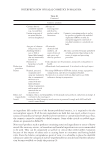
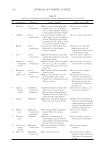
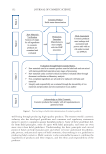
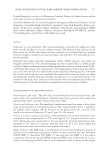
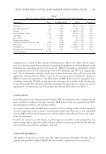
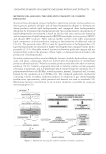
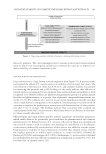
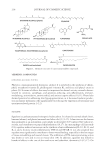
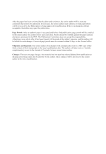
INTERPRETATION OF HALAL COSMETICS IN MALAYSIA 147 Besides that, cosmetic products that use synthetic additive or chemicals in excessive amounts or beyond the limitation that are sometimes hazardous are prohibited by a number of coun- tries such as the NPRA of Malaysia, European Union Regulation, and the Food and Drug Administration of the United States because of the health risk it possess (14,19,28). This aspect may also affect the halal status because another important element of halal cosmetic is to use harmless ingredients whether they are active or inactive ingredients. Thus, it is important to discuss and instill ethics in the whole aspect of halal compliance. Remote re- sponsibility can act as a safeguard against misuse, mistreatment, and destruction. All cosmetic products must contain safe ingredients, be manufactured under good manufacturing practice, and undergo an adequate safety assessment to comply with the regulatory requirement and halal and quality control before they are released to the market (16,19). Therefore, the aspect of ingredient for either the source or process, along with the ethics of manufacturer, need to be integrated and elaborated to have a comprehensive understanding of the halal–tayyib relationship and concept. Table III describes the integrated halal cosmetic matrix for halal status determination. DISCUSSION The main critical point for the differences between general and halal cosmetic is the ori- gin of raw materials because it is the key aspect of the fi nal cosmetic product. The origin of ingredients is always a vital aspect among Muslims because of the impact on daily re- ligious activities such as solat (pray). The aspect of purity and cleanliness are important elements highlighted in the Islamic teachings. The other important points for the differ- ences are toyyib characteristics that functioned as the complementing aspect of halal in ensuring the best quality of the product. In regard to the classifi cation of ingredients, the authorities such as the NPRA Ma- laysia and Cosmetic Ingredient Review that have different categories of cosmetic ingredients, namely, safe, prohibited, and allowed with limitations (19), and safe as used, safe with qualifi cation, unsafe, and unknown (18). JAKIM Malaysia has an internal categorization for the internal use, namely, critical (animal-based), semi- critical (plant- or animal-based mixture with unspecifi ed excipients), and noncritical (plant-based) (29). Other than that, researchers such as Sugibayashi et al. (30) cate- gorized the sources of ingredients into halal (permitted), haram (prohibited), and critical (gray area). He used critical to highlight the uncertain sources of ingredients. Pandagel et al. (17)categorized halal cosmetics into three, namely, halal, haram, and mushbooh. This study suggests three categories of cosmetic ingredients, namely, halal-safe, haram- prohibited, and critical-need for further evaluation. Critical is under syubhah items or any substances that are doubted in either their sources of origin or process of synthesis that are nonconforming to the halal system. Critical is divided into semi-critical and critical by looking at the level of halal status verifi cation for the origin of raw materials. The further evaluation of the ingredients under syubhah or critical can either be document verifi cation or laboratory analysis. The result can either be halal or haram depending on the verifi cation for the origin of ingredients. The ingredients of a cosmetic product that fulfi ll all the requirements in halal cosmetic matrix are classifi ed as halal-safe and eligible to be acknowledged as a halal cosmetic. If
Purchased for the exclusive use of nofirst nolast (unknown)
From: SCC Media Library & Resource Center (library.scconline.org)