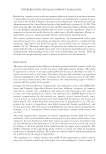
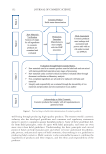
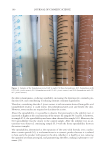
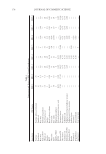
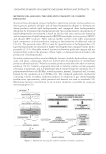
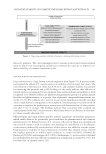
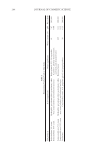
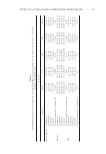
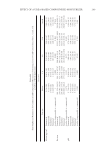
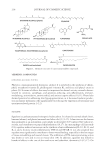
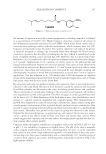
JOURNAL OF COSMETIC SCIENCE 152 well-being through producing high-quality products. The western world’s cosmetic industry also has developed guidelines and consensus and regulatory statements meant to protect consumers against harmful products. Some of these guidelines dif- fer from halal principles, some do agree with halal principles, and some are even more strict than halal guidelines. Understanding the basic principles and critical points of halal can help manufacturers and others to better understand the philoso- phy, process, and practical aspect of halal cosmetics, thus making it as a guideline in producing halal cosmetics. Halal cosmetic is also sustainable because it combines the ingredients of products and their impacts, and the ethics and responsibility of the producer. Figu r e 1. Practical steps in halal status determination of cosmetic products.

INTERPRETATION OF HALAL COSMETICS IN MALAYSIA 153 ACKNOWLEDGMENTS The authors would like to thank their colleagues from the Department of Science and Technology Studies, UM, and University Malaya Halal Research Centre (UMHRC) for their assistance with the references and comments that are greatly helpful in producing this manuscript. Author contributions: F.N.M.N. helped in conceptualization, methodology, analysis, and writing and C.W.J.W.M.R. performed supervision. Funding: This work was fi nancially supported by the University of Malaya Research grant under Grand Challenge for Humanities Research Cluster (GC002C-17HNE). REFERENCES (1) Environmental Working Group, Exposures Add up – Survey Results (2016), accessed July 15, 2019, https://www.ewg.org/testimony-offi cial-correspondence/ewg-testimony-exploring-current-practices- cosmetics-development#_ftnref. (2) Mercola, Women Put an Average of 168 Chemicals on Their Bodies Daily (2015), accessed July 15, 2019, http://articles.mercola.com/sites/articles/archive/2015/05/13/toxic-chemicals. (3) P. Hashim and D. Mat Hashim, A review of cosmetic and personal care products: halal perspective and detection of ingredient, Pertanika J. Sci. Technol., 21(2), 281–292 (2013). (4) Grand View Research, Skin Care Products Market Size, Share & Trends Analysis Report, By Product (Face Cream, Body Lotion), by Region (North America, Central & South America, Europe, APAC, MEA), and Segment Forecasts, 2019–2025 (2019), Market Research Report. Report ID: 978-1-68038-902-9. accessed May 31, 2019, https://www.grandviewresearch.com/industry-analysis/skin-care-products-market. (5) M. A. Hassali and S. AL-Tamimi, Malaysian cosmetic market: current and future prospects, Pharmaceut. Reg. Affairs., 4(4), 4–6 (2015). (6) S. Ali, F. Halim, and N. B. Ahmad, Beauty premium and halal cosmetics industry, J. Market. Manag. Consumer Behav., 1(4), 52–63 (2016). (7) M. R. Haliza, Beauty or health? A personal view. Malay. Fam. Phys., 1(1), 42–44 (2006). (8) Mordor Intelligence, Halal Cosmetic Products Market - Trends, Growth, Share, Industry Analysis (2017–2022) 2017, accessed September 6, 2020, https://www.mordorintelligence.com/industry- reports/halal-cosmetic-products-market. (9) M. H. Kamali, The Parameter of Halal and Haram in Shariah and the Halal Industry, (The International Institute of Islamic Thought, London, United KIngdom, 2013) . (10) JAKIM, Manual Procedure for Malaysia Halal Certifi cation (Third Revision), Jabatan Kemajuan Islam Malaysia, Putrajaya, Malaysia (2014). (11) J. Alzeer, U. Rieder, and K. A. Hadeed, Rational and practical aspects of Halal and Tayyib in the context of food safety. Trends Food Sci. Tech., 71, 264–267 (2018). ( 12) A. Kowcz, G. Schneider, W. Pape, and T. M. Weber, “Bench to beauty counter: development of cosme- ceuticals,” in Cosmeceuticals and Cosmetic Practice, P. K. Farris. Ed. (John Wiley & Sons, West Sussex, United Kingdom, 2014). (13 ) Z. Zakaria, Regulation of cosmetics: what has Malaysia learnt from the European system? J. Consumer Policy, 38(1), 39–59 (2015). (1 4 ) C. Juliano and G. Magrini, Cosmetic ingredients as emerging pollutants of environmental and health concern, A mini-review. Cosmetics., 4(4), 11 (2017). (15 ) S. R. Zulaikha, S. N. Syed Ismail, and S. M. Praveena, Hazardous ingredients in cosmetics and personal care products and health concern: a review. Public Health Res., 5(1), 7–15 (2015). (1 6 ) Malaysian Standard MS2634, Islamic Consumer Goods Part 1: Cosmetic and Personal Care–General Guidelines (Department of Standards Malaysia, Selangor, Malaysia, 2019). (1 7 ) F. Pandagel, N. Waranuch, and P. Plianbangchang, Categorization of Cosmetic Products According to Halal Principle, Naresuan University, Thailand, 21-22 July, (2013). (18 ) Cosmetic Ingredient Review (CIR), accessed July 15, 2019, https://cosmeticsinfo.org/cir. (19 ) NPRA, Guidelines for Control of Cosmetic Products in Malaysia (NPRA, Petaling Jaya, Selangor, 2017).
Purchased for the exclusive use of nofirst nolast (unknown)
From: SCC Media Library & Resource Center (library.scconline.org)