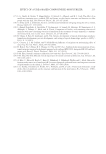
JOURNAL OF COSMETIC SCIENCE 154 (2 0 ) M. Tieman, The application of halal in supply chain management: in-depth interviews. J. Islamic Mar- ket., 2(2), 186–195 (2011). (2 1 ) American Cancer Society, Cosmetics, accessed October 8, 2020, https://www.cancer.org/cancer/cancer- causes/cosmetics.html. (2014). (22 ) National Pharmaceutical Regulatory Agency (NPRA) (2019), Pembatalan Notifi kasi Produk Kosmetik, accessed July 15, 2020, https://www.npra.gov.my/index.php/en/consumers/safety-information/cancella- tion-of-notifi ed-cosmetic-products.html. (23 ) P. Hashim, N. Shahab, T. Masilamani, R. Baharom, and R. Ibrahim, A cosmetic analysis in compliance with the legislative requirements, halal and quality control. Malay. J. Chem. 11(1), 81–87 (2009). (2 4 ) C. R. Hamann, W. Boonchai, L. Wen, E. N. Sakanashi, C. Y. Chu, K. Hamann, P. Hamann, K. Sinniah, and D. Hamann, Spectrometric analysis of mercury content in 549 skin-lightening products: is mercury toxicity a hidden global health hazard? J. Am. Acad. Dermatol., 70(2), 281–287.e3 (2014). (25 ) Y. B. Ho, N. H. Abdullah, H. Hamsan, and E. S. S. Tan, Mercury contamination in facial skin lighten- ing creams and its health risks to user. Regul. Toxicol. Pharmacol., 88, 72–76 (2017). (2 6 ) I. Al-Saleh, Potential health consequences of applying mercury-containing skin-lightening creams dur- ing pregnancy and lactation periods. Int. J. Hyg Environ. Health, 219(4–5), 468–474 (2016). (2 7 ) World Health Organization, Mercury in Skin Lightening Products (Geneva, Switzerland: WHO 2019), accessed July 15, 2020, https://www.who.int/publications/i/item/WHO-CED-PHE-EPE-19.13. 2011. (28 ) R. Siti Zulaikha, S. I. Sharifah Norkhadijah, and S. M. Praveena, Hazardous ingredients in cosmetics and personal care products and health concern: a review, Public Health Research, 5(1), 7–15 (2015). (2 9 ) Adzlina, Halal certifi cation for cosmetic products, Seminar Kosmetik Halal, presented on November, 15, (Universiti Malaya Halal Research Centre & JAKIM, 2019). (3 0 ) K. Sugibayashi, E. Yusuf, H. Todo, S. Dahlizar, P. Sakdiset, F. J. Arce, and G. L. See, Halal cosmetics: a review on ingredients, production and testing methods. Cosmetics, 6(37), 1–17 (2019).

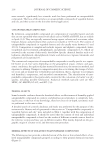
J. Cosmet. Sci., 72, 155–162 (March/April 2021) 155 Stability of a Natural-Based Cream Containing Lecythis pisonis Extract ANA C. HERTEL PEREIRA, LORRAINE O. RIBEIRO, ELISANGELA F. PIMENTEL, FABIANA G. RUAS, JOSÉ A. VENTURA, and DENISE C. ENDRINGER, Pharmaceutical Science Graduate Program, Universidade Vila Velha, Vila Velha 29102-920, Brazil (A.C.H.P., L.O.R., E.F.P., D.C.E.), C apixaba Institute of Research, Technical Assistance and Rural Extension, Vitória, Brazil (F.G.R., J.A.V.) Accepted for publication November 24, 2020. S ynopsis T he outer pericarps of Lecythis pisonis Camb. are by-products with a high content of antioxidant substances. The goal of the present study was to analyze the incorporation of L. pisonis pericarp extract in an all-natural formulation. Physical–chemical and organoleptic characteristics and Challenge tests were evaluated before and after the stability test of the cosmetic formulation. The instability of the formulation increased with the increase of the concentration of the extract. The physical–chemical and organoleptic parameters did not present alterations after the stability test. The extract of the outer pericarp of L. pisonis seems to be compatible with the cream formulation. However, the concentration should be analyzed to not interfere with the stability of the product. The natural formulation developed is under the legal requirements of the National Agency of Sanitary Monitoring of Brazil (Agência Nacional de Vigilância Sanitária), presenting an effi cient conservation system. INTR O DUCTION Cosm etics are products constituted by natural or synthetic substances used in personal hygiene, protection, odorization, or embellishment (1). There is a worldwide growing demand for cosmetics with ingredients of the vegetable source. For example, in Europe, it represented 3% of the sales, with annual growth for 2016 of 20% (2). Regulatory au- thorities guide that cosmetics should not harm human health. Therefore, the safety of fi nal products must be evaluated, considering the toxicological profi le of the ingredients, the chemical structure, and human exposure (3). Aburjai and Natsheh (4) assessed more than 50 natural compounds for cosmetical purposes. When creating a cosmetic product with natural ingredients, phytochemical studies are required and the stability of the substance in the formulation. So, when commercialized, A ddress all correspondence to Denise C. Endringer, denise.endringer@uvv.br
Purchased for the exclusive use of nofirst nolast (unknown)
From: SCC Media Library & Resource Center (library.scconline.org)