JOURNAL OF COSMETIC SCIENCE 156 it will not harm the consumer’s health. In Brazil, the tests related to this matter are guided by the Cosmetic Guide elaborated by the Agência Nacional de Vigilância Sanitária (ANVISA) (5). The Lec ythis pisonis Camb., popularly known as Sapucaia, belongs to the Lecythidaceae family and grows in Africa, Asia, and Latin America (6). Fruits from this botanical contain nuts with high nutritional value and biological activities previously evaluated (7–10). Key bio logical activities studied for the nuts include anti-infl ammatory (10), antioxidant (11), and the use of the oil for pain relief (7). The outer pericarp of the L. pisonis nuts, however, was not biologically evaluated, and considering the color, tannins may be pres- ent. Compounds like tannins have been associated with promoting wound healing (12) and antioxidant activity (13). They possess cosmetic action to improve skin tone and fi rmness due to the astringent effect (4). Besides astringent action, they may also induce complexing enzymes that promote an antimicrobial effect (14). Conside ring the chemical composition and the studies already published for L. pisonis and, knowing that the outer pericarp is a by-product of the nuts commercialization, this study aims to propose a cosmetic use of it in a natural formulation evaluating its stability. This study will contribute to the promotion of sustainable development of Sapucaia’s commercialization by transforming a residue into a by-product, allowing the income in- crease of the family producer. MATERIA LS AND METHODS PLANT M ATERIAL The L. pisonis fruits were collected in Laranja da Terra, Espírito Santo, Brazil, in 2015 by the Capixaba Institute of Research and Rural Extension. A voucher was deposited in the Herbarium of the Botanical Garden of Rio de Janeiro (Jardim Botânico do Rio de Janeiro- Holotype) and the Royal Botanic Gardens (K000600113). Fruits w ere open, and their nuts were separated from the arils. After selection, the nuts were peeled, separating the nuts from the outer pericarp. The outer pericarps were then dried in a ventilated oven at 40°C for 24 h, pulverized in a ball mill, and then stored at -18°C until analysis. The extract was obtained using a Soxhlet apparatus for 6 h, using ethanol as solvent. After that, the solvent was removed using a rotatory evaporator. PHYTOCHEMIC AL SCREENING The determi nation of total phenolic and tannin content was performed according to Krepsky et al. (15), with adaptations. In brief, 25 μL of the sample solution was added to a 96-well plate with 10 μL of the Folin–Ciocalteu reagent (10% volume/volume) and 215 μL sodium carbonate (10.6% m/v). After 3 min of reaction, the absorption was determined at 715 nm. To determine the tannin content, 20 mL of the sample solution was shaken with 200 mg of polyvinylpyrrolidone for 60 min, and after fi ltration, 25 μL was used in the same reaction previously described. Gallic acid and tannic acid were used at a concentration ranging 150 from 6.5 μg/mL (r2 = 0.991 and r2 = 0.981, respectively). The experiments

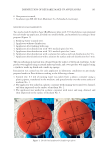
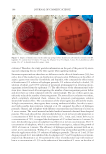
STABILITY OF A CREAM CONTAINING LECYTHIS PISONIS EXTRACT 157 were conducted in triplicate, and the results are expressed as gallic acid or tannic acid equivalent/100 g. FORMULATION OF A MOISTURE CREAM CONTAINING L. PISONIS The cream was for mulated using 100% natural-based product: Karité butter, stearic acid, cetyl alcohol, vegetable glycerin, vitamin E, citric acid, free conservant® (Engeltec, São Paulo, Brazil), rice wax, Emulgin B6® (Cromoline, São Paulo, Brazil), and ultrapured water Mili Q. The extract of L. pisonis was incorporated, previously diluted in water, in concentrations of 0.5, 1, and 5% to the base formula. All formulations were prepared in triplicate. EVALUATION OF FORMUL A CHARACTERISTICS The centrifugation t est was performed for each formulation tested before and after the stability test, according to the ANVISA (5). The amount of 5 g sample was transferred to a tube, centrifugated at ×3000 g, for 30 min, and observed if any separation of phases oc- curs. According to the ANVISA (3), pH was evaluated and measured using a digital Gehaka® pH meter (São Paulo, Brazil). Spreadability was perf ormed in all samples before and after the stability test, according to Knorst (16), with modifi cations. One gram of each sample was placed in the central dot of an acrylic plate, and then the other plate was aligned above the sample. Over the plates, a cali- brated weight of 200 g was placed for 2 min. The spreadability diameter was recorded in opposite directions, and the average diameter was calculated. A commercial moisture cream (Monange® - Savoy Industria de Cosméticos, Goiânia, Brazil) was used as a reference. All formulations were v isually analyzed for changes in color, odor, and homogeneity dur- ing the study and before and after the stability test (17). The stability test was performed for all samples in triplicate, according to the ANVISA (5). The samples were stored in sterilized fl asks and submitted to different temperatures for 24 h each and in three cycles: freezing (-5°C ± 2°C), room temperature (15°C to 30°C), and elevated temperature (40°C). The stability of formulations samples was evalu- ated based on organoleptic and physical–chemical characteristics (17). CHALLENGE TEST The microbiologi cal security te st was performed based on Resolução da Diretoria Colegiada 481/99 for cosmetics products (18). The samples were randomly selected before and after the stability test and artifi cially contaminated with different microorganisms. This test aims to determine the product resistance against microbial contamination, refl ecting the conservation system’s effi ciency present in the formulation. The formulations were artifi - cially contaminated by inoculation with selected microorganisms in a solution at 0.5 in McFarland scale, followed by the plate counting method’s survival determination at 0, 24, and 48 h, and 7, 14, 21, and 28 d. Escherichia coli ATCC 8739, Staphylococcus aureus ATCC 25923, Pseudomonas aeruginosa CCCD P003, Candida albicans ATCC 10231, and Aspergillus niger ATCC 40067 were cultivated in Müeller–Hinton media (Kasvi®, São José dos Pinhais, Brazil) and then inoculated at 10% in the different samples of cream.
Purchased for the exclusive use of nofirst nolast (unknown)
From: SCC Media Library & Resource Center (library.scconline.org)