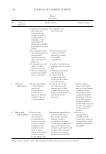
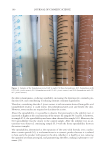
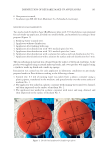
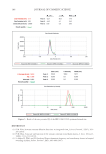
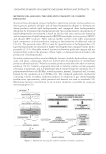
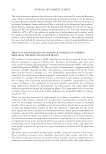
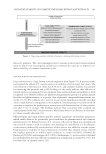
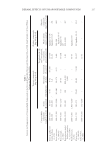
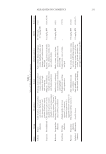
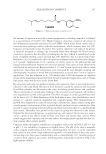
JOURNAL OF COSMETIC SCIENCE 158 STATISTICAL ANALYSIS The quantita tive variables were e xpressed as media ± standard deviation, and the data were submitted to Student’s t test with a signifi cance of p 0.05. The qualitative data were expressed in a descriptive way. RESULTS AND DISCUSSION The ethanol ic extract of the outer pericarp of L. pisonis demonstrated a potential effect in the wound healing process. The ethanolic extract’s phytoconstituents could be quanti- fi ed, presenting 8.299 ± 0.079 mg of gallic acid equivalent/g of polyphenols and 3.410 ± 0.130 mg of gallic acid equivalent/g of tannins. In terms of tannic acid, total polyphenols performed 305.542 ± 34.812 mg of tannic acid equivalent/g and 145.202 ± 41.214 mg of tannic acid equivalent/g attributed to tannins, as calculated using the tannic acid curve. The main compounds identifi ed in the extract were tannins and other phenolic compounds. The incorporation of the extract in all-natural moisture formulation was analyzed for stability and shelf life. There is an increasing interest by the Society to diminish waste generation in industrial or commercial processes and to give a new purpose for these materials. The valorization of these materials is related to biotechnological innovation and sustainability (19–21). There are several agro-industrial residues already evaluated as potential use as elements for cosmetical production (19). Furthermore, even residues originating from organic or family-owned rural properties, generating more value to the producer, safety origin of the plant material, and more valuation in the fi nal product ally to the reduction of chemical substances use (19). Plant extracts’ applicability in cosme tics is broad because they possess a rich chemical composition with diverse biological actions as antioxidants, anti-infl ammatory, antimi- crobial, and other properties (21). Tannins, for example, have an astringent, antioxidant, antibacterial activity that helps to maintain the integrity of superfi cial skin, reduce in- fl ammation and wrinkles, and have constrictor properties in the skin (22,23). The cream with L. pisonis outer perica rp extract evaluated in this study was stable before and after the stability test related to odor and color, as presented in Table I and Figure 1. However, in the criteria of sepa ration of phases and texture, it is possible to notice that as the increase in the concentration of the extract is higher, the infl uence over the formula’s stability is higher (Table I). For the commercialization of a cosmetic, it is mandatory be- yond the selection of raw materials to fulfi ll specifi c quality requirements, including toxicity, stability to environmental variations (shelf life), and contamination of microor- ganisms (3,5). Before the stability analysis, in the centrifugation test, only sample S0 remains stable. Samples S0.5 and S1.0 that contain the extract presented white dots on the surface. This may be an incompatibility due to wax remnants as a result of incorporating the extract into the cream. This test is essential for simulating the behavior of the product during storage (24). The S5.0 sample presented separation of phases, with an accumulation of water on the surface. After the stability test, sample S0 remains stable. Although plant extracts are natural, it is necessary to evaluate its concentration in topical formulations as it may affect the stability of the product and may cause a rash in the skin (25).

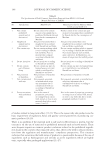
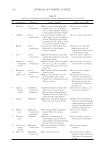
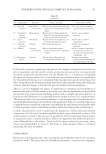
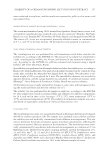
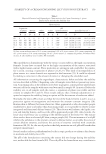
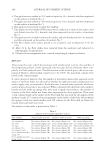
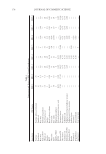
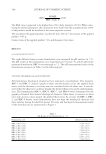
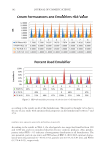
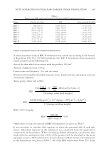
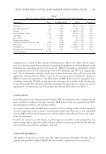
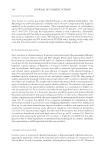
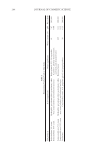
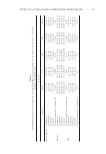
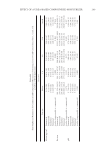
STABILITY OF A CREAM CONTAINING LECYTHIS PISONIS EXTRACT 159 This instability in formulations with the extract is noticeable in the high concentration formula. It may have occurred due to the high concentration of the extract, associated with a higher tannin content. These molecules are astringent and could affect the emulsi- fi er’s action, creating a separation of phases (22,26,27). This kind of incompatibility of plant extract in a cream formula was reported in the literature (25). It could be adjusted by making a correction in the amount of extract or changing the emulsifi er used. All information concerning the organol eptic characteristics before and after the stability test are described in Table I. Regarding color, all samples tested did not present any varia- tion. Concerning odor, as the stability cycles were in progress, a more present smell of nuts was noticed for the samples with extract and wax smell in sample S0. As noticed before the stability test, in all samples with the extract, a separation of phases was visible and less evident in samples S0.5 and S1. These results indicate that a formula adjustment is re- quired to improve the stability, being an option will be the amount of surfactant added. Normally, the skin’s pH is more acid t han the rest of the body, between 4 and 6, to act as protection against microorganisms and maintain the stratum corneum integrity (28). Human skin is different between ethnicities. More pigmented or afro-descendant people usually have a more acid surface than Caucasian people, so it is possible to observe a more integrated and functional defense barrier (29). These factors will enhance the lipidic con- tent and lamellar density, and lower the pH in pigmented people (28). Also, besides, the basal value of pH may vary according to the different parts of the body (30). The mature skins tend to have an elevated pH than younger people (28). The maintenance of acid pH inhibits the unbalance in the stratum corneum’s defense barrier, as unviable the action of certain alkaline enzymes, and favors the activity of enzymes involved with ceramides formation (28,30). So, the use of products that help maintain an acid pH will benefi t skin integrity maintenance. Several studies indicate polyhydroxyla ted acids in topic products to enhance skin barrier in newborn and elderly mice (29). The pH of the formulations containing the extract did not change during the stability test, neither did the base formula (S0). The acid pH in the formulation may contribute to Table I Physical–Chemical and Organoleptic Characteristics o f a Cream Containing L. pisonis Extract before and after the Stability Test Characteristics Separation of phases Texture Odor Color pH (potentiometric) Spreadability (cm2) B A B A B A B A B A B A S0 S S S S S S S S 2.96a 2.84a 18.338 ± 0.080 10.65 ± 0.058 S0.5 NS NS NS NS S S S S 3.00a 2.83a 20.686 ± 0.101 11.94 ± 0.075 S1.0 NS NS NS NS S S S S 2.98a 2.85a 32.996 ± 0.101 14.068 ± 0.063 S5.0 NS NS NS NS S S S S 3.08a 2.90a 30.992 ± 0.138 10.844 ± 0.227 C — — — — — — — — — — 32.321 ± 0.101 — S0: base cream without extract S0.5: cream containing 0.5% of L. pisonis extract S1.0: cream containing 1% of L. pisonis extract S5.0: cream containing 5% of L. pisonis extract C: commercial product B: before stabil- ity test A: after stability test S: stable NS: nonstable.
Purchased for the exclusive use of nofirst nolast (unknown)
From: SCC Media Library & Resource Center (library.scconline.org)