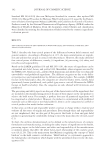
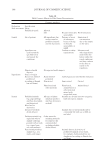
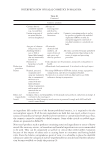
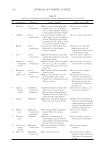
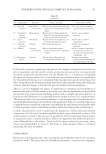
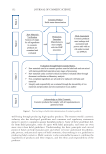
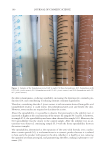
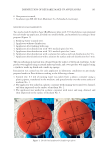
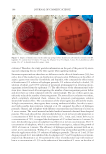
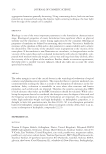
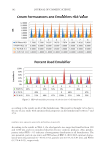
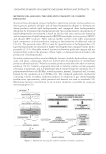
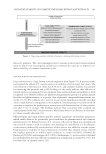
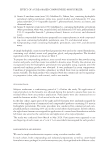
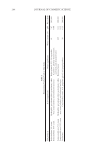
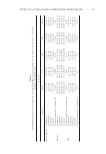
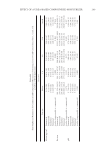
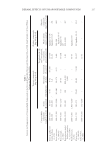
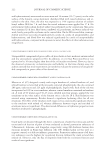
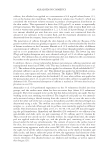
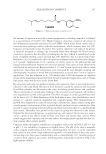
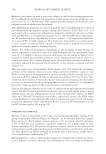
JOURNAL OF COSMETIC SCIENCE 160 the skin’s maintenance, reducing sensibility, increasing the keratinocyte ceramide pro- duction (29), and contributing to reducing stratum corneum degradation. Therefore, considering that the L. pis onis extract is rich in tannins derived from gallic acid (unpublished results), it could mimic the polyhydroxylated acids and benefi t the skin. However, more studies are required to elucidate the action. About the spreadability, it is p ossible to observe that previously to the stability test, it increased as higher as the concentration of the extract for samples S0.5 and S1.0 however, in sample S5.0, the spreadability was lower than observed for sample S1.0. Moreover, the S1.0 spreadability was the closest to the control sample. After the stability test, no al- terations were observed, continuing sample S1.0 with the better spreadability between the extract samples. The spreadability, determined as the e xpansion of the semi-solid formula over a surface after a certain period (16), is a relevant factor in a cosmetic product because it is related to how easily the product will spread in the skin, whether it is healthy or not, reducing the quantity necessary per region, and guaranteeing the effect, making it pleasant to cos- tumer (31). Figure 1. Samples of the formulations tested (left to right ) : S0 (base formulation), S0.5 (formulation with 0.5% of L. pisonis extract), S1.0 (formulation with 1% of L. pisonis extract), and S5.0 (formulation with 5% of L. pisonis extract).

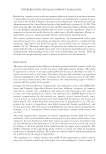
STABILITY OF A CREAM CONTAINING LECYTHIS PISONIS EXTRACT 161 As expected, the challenge test presen ted a positive result for contamination in time 0, confi rming samples’ contamination. At 7 d, all samples contaminated showed negative results, indicating that the preservative system effectively inhibited the microorganism growth. After the stability test, the results were the same as before, meaning that tem- perature variations did not affect the preservative system or the stability of formulations regarding microbiological contamination. It is relevant because some of the formulations presented separation of phases with a high percentage of free water, which could facilitate microorganism’s proliferation, that did not occur. According to Brazilian regulation, RDC 481\99 is possible to infer that the preservative system is effi cient (18). CONCLUSION The incorporation of extrac ts in topic ally applied creams may affect the stability of the product. All the formulations analyzed are according to the legislation, including the conservative system that was effective against microbiological contamination. An im- provement in pH will diminish possible irritation to the skin as the pH will be close to the skin’s pH. Because of the organoleptic characteristics, color and odor are pleas- ant. Furthermore, we found the formulation with 1% of extract to be the most stable. However, further studies should be performed to evaluate the extract’s chemical com- position and its biological effi cacy. The authors alone ar e responsible for the content and writing of this article. ACKNOWLEDGMENTS This work was supporte d by the Foundat ion for Support to Research and Innovation of Espírito Santo-FAPES [TO #241/2016] the Secretaria de Estado da Agricultura, Abas- tecimento, Aquicultura e Pesca-SEAG [grant number TO #432665/2016] and the Na- tional Council for Scientifi c Technological Research (PQ-process #310680/2016-6) for their fi nancial support. This study was fi nanced in part by the Coordenação de Aper- feiçoamento de Pessoal de Nível Superior -Brasil (CAPES)-Finance Code 001. The au- thors also acknowledge FGR in the fruits collection process. REFERENCES (1) Brasil, Resolução da Diretori a Colegiada - RDC no 7, de 10 de fevereiro de 2015. ANVISA, Brasília, Brazil (2015). (2) ABIHPEC, Panorama do setor de higiene pesso al, perfumaria e cosméticos (Associação Brasileira da Indústria de Higiene Pessoal, Perfumaria e Cosméticos, São Paulo, 2016). (3) ANVISA, Guia de Controle de qualidade de produtos cosméticos (2008), p. 121. ANVISA, Brasília, Brazil. (4) T.Aburjai and F. M. Natsheh, Plants used in cosmetics, Phyther Res., 17(9), 987–1000. (5) ANVISA, Guia de estabilidade de Produtos Cosméticos (2004), p. 52. ANVISA, Brasília, Brazil. (6) S. A. Mori, E. A. Kiern a n, N. P. Smith, L. M. Kelly, Y. Y. Huang, G. T. Prance, and B. Theirs, Observa- tions on t h e phytogeography of the Lecythidaceae clade (Brazil nut family). Phytoneuron, 30, 1–85 (2017). (7) M. S. Brandão, S. S. Pereira, D. F. Lima, J. P. C. Oliveira, E. L. F. Ferreira, M. H. Chaves, and F. R. C. Almeida, Antinociceptive effect of Lecythis pisonis Camb. (Lecythidaceae) in models of acute pain in mice, J. Ethnophar macol., 146(1), 180–186 (2013). (8) E. A. P. Franco and R. F. M. Barros, Uso e diversidade de plantas medicinais no Quilombo Olho D’agua dos Pires, Esperantina, Piauí. Rev. Bras. Plantas Med., 8(3), 78–88 (2006).
Purchased for the exclusive use of nofirst nolast (unknown)
From: SCC Media Library & Resource Center (library.scconline.org)