JOURNAL OF COSMETIC SCIENCE 162 (9) M. I. Vallilo, M. Tavares, S. Aued-Pim entel, N. C. Campos, and J. M. Moita Neto, Lecythis pisonis Camb. nuts: oil characterization, fatty acids and minerals, Food Chem., 66, 197–200 (1999). (10) M. V. Martins, I. M. M. de Carval h o, M. M. M. Caetano, R. C. L. Toledo, A. A. Xavier, and J. H. de Queiroz, Sapucaia nuts (Lecythis pisonis) modulate the hepatic infl ammatory and antioxidant metabolism activity in rats fed hig h -fat diets, Afr. J Biotechnol., 15(25), 1375–1382 (2016). (11) E. L. Ferreira, T. S. Mascarenhas, J. P. de Oliveira, M. H. Chaves, B. Q. Araújo, and A. J. Cavalheiro, Phytochemical investigation and antioxidant activity of extracts of Lecythis pisonis Camb, J. Med. Plants Res., 8(8), 353– 3 60 (2014). (12) L. Chokotho and E. Van Hasselt, The use of tannins in the local treatment of burn wounds - a pilot study, Malawi Med. J., 17(1), 19–20 (2005). (13) M. C. Figueroa-Espinoza, A. Zafi mahova, P. G. M. Alvarado, E. Dubreucq, and C. P o ncet-Legrand, Grape seed and apple tannins: emulsifying and antioxidant properties dedicated to the memory of Gé- rard Mazerolles, Food Chem., 178, 3 8–44 (2015). (14) C. dos Santos, Á. Vargas, N. Fronza, and J. H. Z. dos Santos, Structural, textural and morphological characteristics of tannins from Acacia mearnsii encapsulated using sol-gel methods: applications as an- timicrobial agents, Colloids Surf. B Biointerf., 151, 26–33 (2017). (1 5) P. B. Krepsky, R. G. Isidório, J. D. De Souza Filho, S. F. Côrtes, and F. C. Braga, Chemical composition and vasodilatation induced by Cuphea carthagenensis preparations, Phytomedicine, 19(11), 953–957 (2012). (16) M. T. Knorst, Desenvolvimento tecnológico de forma farmacêutica plástica contendo extrato concen- trado de Achyrocline satureioides (LAM.) DC. Compositae (Marcela) (Universidade Federal do Rio Grande do Sul, Brazil, 1991). (17) P. Chuarienthong, N. Lourith, and P. Leelapornpisid, Clinical effi cacy comparison of anti-wrinkle cos- metics containing herbal fl avonoids, Int. J. Cosmet. Sci., 32(2), 99–106 (2010). (18) B R ASIL, RES N ° 481, DE 23 DE SETEMBRO DE 1999 (*). ANVISA, Brasília, Brazil. (1999). (19) A. Barbulova, G. Colucci, and F. Apone, New trends in cosmetics: by-products of plant origin and their potential use as cosmetic active ingredients, Cosmetics, 2, 82–92 (2015). (20) S. Bom, J. Jorge, H. M. Ribeiro, and J. Mar t o, A step forward on sustainability in the cosmetics indus- try: a review, J. Clean Prod., 270–290 (2019). (21) A. Fatima, S. Alok, P. Agarwal, P. P. Singh, and A. Verma, Benefi ts of herbal extracts in cosmetics: a review, Int. J. Pharma Sci. Res., 4(10), 3746–3760 (2013). (22) M. Kashif, N. Akhtar, and R. Mustafa, An ov e rview of dermatological and cosmeceutical benefi ts of diospyros kaki and its phytoconstituents, Braz. J. Pharmacogn., 27(5), 650–662 (2017). (23) P. Kole, H. Jadhav, P. Thakurdesai, and A. N agappa, Cosmetic potential of herbal extracts, Indian J Nat Prod Resour., 4(4), 315–321 (2005). (24) M. Friedrich, F. T. Primo, J. A. B. Funck, L . V. Laporta, M. P. Alves, C. F. Bittencourt, and A. L. V. Escarrone, Avaliação da estabilidade físico-química de creme não iônico inscrito no Formulário Nacio- nal, Lat. Am. J. Pharm., 26(4), 558–562 (2007). (25) M. S. Ahshawat, S. Saraf, and S. Saraf, Preparatio n and characterization of herbal creams for improve- ment of skin viscoelastic properties, Int. J. Cosmet. Sci., 30(3), 183–193 (2008). (26) A. Adamska-szewczyk and G. Zgórka, Plant polypheno l s in cosmetics – a review, Eur. J. Med. Technol., 3(24), 1–10 (2019). (27) P. K. Ashok and K. Upadhyaya, Tannins are astringen t , J. Pharmacogn. Phytochem., 1(3), 45–50 (2012). (28) S. M. Ali and G. Yosipovitch, Skin pH: from basic s c ience to basic skin care, Acta Derm. Venereol., 93(3), 261–267 (2013). (29) R. Gunathilake, N. Y. Schurer, B. A. Shoo, A. Celli , J. P. Hachem, D. Crumrine, G. Sirimanna, K. R. Feingold, T. M. Mauro, P. M. Elias, PH-regulated mechanisms account for pigment-type differences in epidermal barrier function, J. Invest. Dermatol., 129(7), 1719–1729 (2009). (30) F. Rippke, V. Schreiner, and H. J. Schwanitz, The ac idic milieu of the horny layer: new fi ndings on the physiology and pathophysiology of skin pH, Am. J. Clin. Dermatol., 3(4), 261–272 (2002). (31) J. C. Borella, N. S. Ribeiro, J. C. L. Teixeira, an d D. M. A. Carvalho, Avaliação da espalhabilidade e do teor de fl avonoides em forma farmacêutica semissólida contendo extratos de Calendula offi cinalis L. (As- teraceae), Rev. Ciencias Farm. Basica e Apl., 31(2), 193–197 (2010).

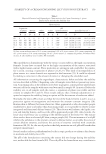
J. Cosmet. Sci., 72, 163–171 (March/April 2021) 163 Effectiveness of the Disinfection of Reusable Make-Up Applicators—Initial Experiences P IOTR ZALĘCKI, JOANNA TWARDOWSKA, DANUTA NOWICKA, and WALDEMAR ANDRZEJEWSKI, Fa culty of Physiotherapy, University School of Physical Education, Wroclaw 51-612, Poland (P. Z., J.T., W.A., D.N.), Department of Dermatology, Venereology and Allergology, Wroclaw Medical University, Wroclaw 50-368, Poland (D.N.) Accep ted for publication December 15, 2020. Synop s is Make- up accessories may be subjected to bacterial contamination due to their contact with many surfaces, including the client’s skin. Disinfection prevents the spread of infection, but the capacity to eliminate microorganisms varies among disinfection methods. Little is known about disinfection in beauty salons therefore, we aimed to compare the effectiveness of disinfectants for reusable make-up applicators. We tested reusable make-up applicators (natural brush, synthetic brush, and sponge) with disinfectants (bactericidal soap, 70% ethanol, and Hydro Sept solution). The number of microorganisms present before and after disinfection using the plate method was assessed. In comparison to water, bactericidal soap reduced the number of bacterial colonies. There were 418 versus 83 colonies in natural brush samples, 1,162 versus nine colonies in synthetic brush samples, and 617 versus three colonies in sponge samples. Ethanol eliminated 100% of bacterial growth. Disinfection was more effective on applicators used for dry products (natural brush) than for wet products (sponge, synthetic brush). We conclude that disinfection is a complex process and depends on the type of make-up applicator being disinfected and the type of cosmetics being used. Further research on the selection of appropriate disinfection procedures for individual applicants and for those who prepare makeup is needed. INTRO D UCTION Reusa ble make-up applicators come into contact with many surfaces, including in par- ticular the client’s skin, which contributes to their contamination with various microbes (1). In the case of cosmetics, microorganisms such as Candida albicans, Pseudomonas aeru- ginosa, Serratia marcescens, Escherichia coli, Burkholderia cepacia, Klebsiella oxytoca, Staphylococ- cus aureus, and Enterobacter gergoviae pose the greatest risk and negatively affect the health of consumers (2). Data from the literature indicate that products and make-up accessories may be subjected to bacterial contamination, depending on the number of people using the cosmetic, the composition of the cosmetic, and the users’ hygiene habits. Wilson et al. Address all correspondence to Danuta Nowicka at danuta.nowicka@umed.wroc.pl
Purchased for the exclusive use of nofirst nolast (unknown)
From: SCC Media Library & Resource Center (library.scconline.org)