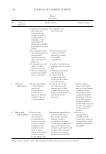
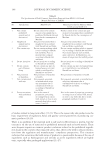
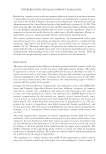
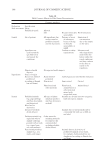
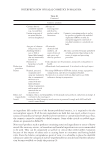
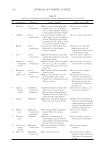
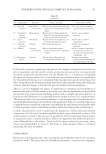
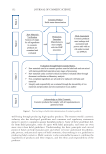
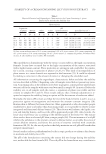
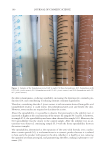
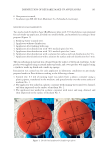
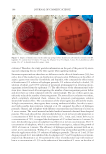
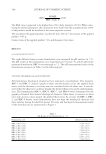
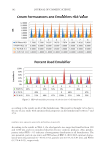
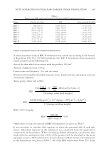
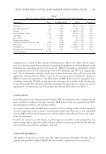
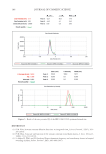
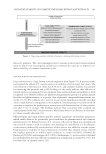
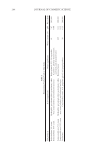
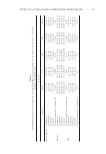
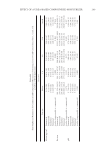
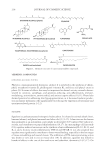
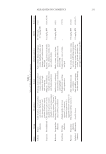
JOURNAL OF COSMETIC SCIENCE 166 4. Th e applicator was soaked in 70% medical spirit for 30 s, drained, and then impressed on the surface of medium No. 4. 5. Th e applicator was soaked in 70% medical spirit for 3 min, drained, and then impressed on the surface of medium No. 5. 6. Th e applicator was reused to apply face makeup. 7. Th e applicator was washed with soapy water, soaked in a solution for surface and tool disinfection for 30 s, drained, and then impressed on the surface of medium No. 6. 8. Th e applicator was soaked in solution for surface and tool disinfection for 3 m, drained, and then impressed on the surface of medium No. 7. 9. Th e Petri dishes were sealed, placed in an incubator, and incubated at 37°C for 24 h. 10. Af ter 24 h, the Petri dishes were removed from the incubator and subjected to photographic documentation. 11. Co lonies of microorganisms were counted using ImageJ computer software. RESULT S After using the soap, which has triclosan with antibacterial activity, the number of microorganisms present clearly decreased, but the soap did not eliminate them com- pletely in all the analyzed cases. The effectiveness of the medical spirit, the active com- pound of which is ethyl alcohol, turned out to be 100%. No microbial colonies were noted in the control sample. It can be observed, however, that the number of microbial colonies that appeared on the surface of the Petri dishes was affected by whether the applicator under examination was used to apply a dry or wet product. In the fi rst case, a natural make-up brush, which was used to apply a dry product, was analyzed. When compared with the brush with synthetic bristles and the make-up sponge that were used to apply wet products, the number of colonies in the Petri dishes was lower after impressing the dirty applicator. There were 1,162 colonies found on the surface of the Petri dish that was used for the analysis of the synthetic brush, 617 colonies of microorganisms on the surface of the Petri dish on which the sponge tested was much smaller, and 418 colonies on the Petri dish on which the natural make-up brush was tested. The an alysis of the media is presented in Table 1. Table I Analysis of the Columbia Agar Plate Culture Plate number Natural make-up brush Synthetic make-up brush Make-up sponge #1: control test No colonies (Figure 2A) No colonies (Figure 3A) No colonies (Figure 4A) #2: water 418 colonies (Figure 2A) 1,162 colonies (Figure 3A) 617 colonies (Figure 4A) #3: soap 83 colonies (Figure 2A) Nine colonies (Figure 3A) Three colonies (Figure 4A) #4: ethanol, 30 s No colonies (Figure 2B) No colonies (Figure 3B) No colonies (Figure 4B) #5: ethanol, 3 min No colonies (Figure 3B) No colonies (Figure 3B) No colonies (Figure 4B) #6: re-disinfection after using, 30 s No colonies (Figure 2B) No colonies (Figure 3B) No colonies (Figure 4B) #7: re-disinfection after using, 3 min No colonies (Figure 2B) No colonies (Figure 3B) No colonies (Figure 4B)

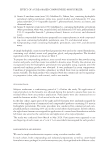
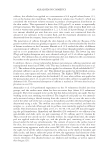
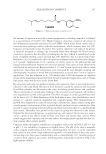
DISINFECTION OF REUSABLE MAKE-UP APPLICATORS 167 DISCUS SION The co nducted analyses show that all the agents used in the study—antibacterial soap, medical spirit, and the solution for disinfecting tools and surfaces—show different effec- tiveness in disinfecting reusable make-up applicators. The effectiveness of disinfection not only depends on the type of applicator but also on the type of product being applied. The re search is not without restrictions. It was only bacterial contamination that was considered in the study, with viral contamination not being assessed. The hygiene proce- dures in a beauty salon and the level of knowledge of the medical staff were also not Figure 2. Impact of disinfectants on the natural make-up brush before disinfection (A) and after disinfection (B). Legende: #1: control test #2: water #3: soap #4: ethanol, 30 s #5: ethanol, 3 min #6: re-disinfection after using, 30 s #7: re-disinfection after using, 3 min. Figure 3. Impact of disinfectants on the synthetic make-up brush before disinfection (A) and after disinfection (B). Legende: #1: control test #2: water #3: soap #4: ethanol, 30 s #5: ethanol, 3 min #6: re-disinfection after using, 30 s #7: re-disinfection after using, 3 min.
Purchased for the exclusive use of nofirst nolast (unknown)
From: SCC Media Library & Resource Center (library.scconline.org)