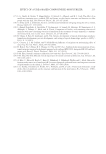
JOURNAL OF COSMETIC SCIENCE 188 (30) T. P. and M. D. A . Ministry of Health, Guideline on Safety Assessment of Cosmetics, Version 2.0. Of- fi cial Newspaper No. 29417 (2015) (the 2.Repeated). (31) F. Aguilar, H. Autrup, S. Barlow, L. Castle, R. Crebelli, W. Dekant, K.-H. Engel, N. Gontard, D. Gott, S. Grilli, R. Gürtler, J. C. Larsen, J.-C. Leblanc, C. Leclercq, F. X. Malcata, W. Mennes, M. R. Milana, I. Pratt, I. Rietjens, P. Tobback, F. Toldrá, Scientifi c Opinion of the Panel on Food Additives, Flavour- ings, Processing Aids and Materials in Contact with Food (AFC) Adopted on 27 November 2007, pp. 1–28 (2007), EFSA Journal, 5(12), 615. doi:10.2903/j.efsa.2007.615. (32) A. E. Clewell, J. R. Endres, and T. S. Murbach, A comprehensive toxicological safety assessment of an extract of Olea Europaea L. Leaves (Bonolive™), Int. J. Toxicol., 35(2), 208–221 (2016). (33) S. Description, Fa tty Acids, Lanolin, Iso-Pr Esters (2020), https://echa.europa.eu/registration-dossier/-/ registered-dossier/10504/7/6/2. (34) S. Health, R. Tech nical, and U. S. E. P. Agency, Provisional Peer-Reviewed Toxicity Values for Butyl- ated Hydroxytoluene (BHT), https://cfpub.epa.gov/ncea/pprtv/documents/Butylatedhydroxytoluene. pdf (2013). (35) T. Summary, Glycer ol Toxicological Summary Workers - Hazard via Inhalation Route. https://echa.eu- ropa.eu/registration-dossier/-/registered-dossier/14481/7/1. (36) E. L. Notice, Zin c Oxide Endpoint Summary Administrative Data Description of Key Information, no. 401, European Commission, Brussels, Belgium (2015), pp. 215–222. https://echa.europa.eu/registra- tion-dossier/-/registered-dossier/16139/7/3/1. (37) E. L. Notice, Magn esium sulphate Endpoint summary Description of key information, pp. 3–4, Mack Publishing Co., Easton, PA (1975). https://www.echa.europa.eu/web/guest/registration-dossier/-/regis- tered dossier/15865/7/6/1. (38) Sigma-Aldrich, Eth ylenediaminetetraacetic Acid Dipotassium Salt Dihydrate ( MERCK), Darmstadt, Germany (2020), https://www.merckmillipore.com/TR/tr/product/Ethylenediaminetetraacetic-acid- dipotassium-salt-dihydrate,MDA_CHEM-819040. (39) D. V. Belsito, R. A. Hill, C. D. Klaassen, D. C. Liebler, J. G. Marks Jr, R. C. Shank, P. W. Snyder, Safety Assessment of Butyrospermum Parkii ( Shea ) - Derived Ingredients as Used in Cosmetics Status: Release Date: Panel Meeting Date: Draft Report for Panel Review Cosmetic Ingredient Review, Washington, DC, (2016), https://www.nordictattoosupplies.com/WebRoot/NTS/Shops/24052010172317. (40) A. L. Parra, V. Bu eno, and U. De Girona, Acute and subchronic oral toxicities of Calendula offi cinalis extract in Wistar rats, J. Gesellschaft Toxikologische Pathologie, 63(4), 387–391 (2010). (41) R. Date, P. M. Da t e, S. L. Review, and P. C. January, Safety Assessment of Polyglyceryl Fatty Acid Esters as Used in Cosmetics Status: Release Date: Panel Meeting Date: Scientifi c Literature Review for Public Comment (2016), http://www.cir-safety.org/sites/default/fi les/PGlyFE122015SLR.pdf.

J. Cosmet. Sci., 72, 189–199 (March/April 2021) 189 Improving Oxidative Stability of Cosmetic Emulsions with Plant Extracts: Current Status and Potential ANICA PETKOVIC, VLADIMIR JAKOVLJEVIC, MARINA TOMOVIC, JOVANA JEREMIC, GORDANA RISTIC, and JOVANA BRADIC , Department of Pharmacy, Faculty of Medical Sciences, University of Kragujevac, Kragujevac 34000, Serbia (A.P., M.T., J.J., J.B.), Department of Physiology, Faculty of Medical Sciences, University of Kragujevac, Kragujevac 34000, Serbia (V.J.), Department of Human Pathology, 1st Moscow State Medical University IM Sechenov, Moscow 119991, Russian Federation (V.J.), Department of Dermatovenerology, Faculty of Medical Sciences, University of Kragujevac, Kragujevac 34000, Serbia (G.R), Clinical Centre Kragujevac, Center for Dermatovenerology, Kragujevac 34000, Serbia (G.R) Accepted for publication December 15, 2020. Synopsis There are increasing demands for cosmetic emulsions with natural active components such as plant extracts because of their myriad benefi ts. Quality of cosmetic emulsions may be affected by distribution and storage processes, which can lead to peroxidation of lipid components. Lipid peroxidation results in undesirable alterations in effi cacy, texture, and appearance of the cosmetic product, thus indicating a need to fi nd a safe and potent compound to be added in products to postpone oxidation processes. In that sense, the current article gives an overview of parameters infl uencing oxidative stability of emulsions, as well as methods for assessing the oxidative stability. Emphasis is given to the usage of plant extracts rich in phenolics for improving oxidative stability of cosmetic emulsions. Application of plant extracts in cosmetic emulsion is promising because of their signifi cant antioxidant properties which may delay lipid peroxidation during storage. Plant species are a valuable source of biologically active compounds that might be exploited in the cosmetic and pharmaceutical industry. SKIN-CARE EMULSIONS Since the discovery in 1925, emulsions have been widely used in food, pharmaceutical, cos- metic industries, etc. (1). They represent the most common type of the delivery system in cosmetics, especially those formulated as creams and lotions (2). An emulsion is a complex mixture of two immiscible phases, with one phase dispersed in another (3). Their application as cosmetic products is frequently referring to as the O/W type, which contains typically 12–22% (w/w) oil (4). On the other hand, W/O emulsions are recommended for soothing and Address all correspondence to Jovana Bradic at jovanabradickg@gmail.com.
Purchased for the exclusive use of nofirst nolast (unknown)
From: SCC Media Library & Resource Center (library.scconline.org)