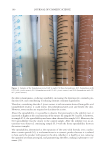
JOURNAL OF COSMETIC SCIENCE 190 softening the skin as well as in the treatment of dry skin (3,5). To stabilize emulsions, as ther- modynamically instable systems, different emulsifying agents are required in formulations (6). There are increasing demands for cosmetic products, thus requiring manufacturers to design novel high-quality formulation in a short period. Stability represents one of the essential fac- tors to be accomplished while developing a cosmetic emulsion. In that sense, identifi cation of the most suitable, adequate, and rapid methods for determining the product stability is of a great signifi cance (7). Much scientifi c attention has been dedicated to plant extracts as active components of cosmetic emulsions because of their myriad benefi ts (3). OXIDATIVE STABILITY OF COSMETIC EMULSIONS During distribution and storage processes, different alterations may occur in cosmetic emul- sions, thus altering the quality of the product. In fact, creaming, aggregation or fl occulation, coalescence, and oil–water separation have been considered as processes resulting in the lower- ing or loss of product effi ciency (8,9). Although the aforementioned processes lead to physical instability, there is also a great concern regarding oxidative instability of products as a result of oxidation of lipid components. Unsaturated fatty acids present in cosmetic oils are effi cient in skin hydration and strengthening however, their oxidation disturbs the properties of emul- sion (4). Numerous data support the fact that the O/W emulsion type is more susceptible to lipid oxidation because of the large interfacial area between the oil and water phases (10). It has been proposed that major reactions of lipid oxidation involve interaction between hydro- peroxides from the surface of the oil phase and transition metals from the aqueous phase (11). Certain factors such as light and/or high temperature might provoke lipid oxidation (2,12). Lipid oxidation is followed by the formation of harmful compounds which com- promise the safety and effi cacy of emulsion. The process of lipid oxidation in cosmetic emulsions is initiated through withdrawing hydrogen atoms from unsaturated fatty ac- ids, which leads to the generation of alkyl free radicals. Once a radical is formed, it reacts with other molecules, resulting in the formation of other radicals. This reaction occurs rapidly and continues until the radical is neutralized via reaction with other radicals (9). Therefore, certain compounds that are able to delay these processes are necessary in design and formulation of emulsions. Otherwise, lipid oxidation will result in undesirable al- terations in texture and appearance of cosmetic emulsions (11). FACTORS AFFECTING OXIDATIVE STABILITY OF EMULSIONS Scientifi c efforts have been invested in elucidation of factors that infl uence lipid oxidation in emulsions and the underlying mechanisms. It has been proposed that emulsifi cation methods and composition of the O/W emulsion strongly affect the oxidation processes in cosmetic products (13,14). Numerous factors have been listed as potential contributors to lipid oxidation such as fatty acid composition, pH value, type and concentration of anti- oxidants and pro-oxidants, emulsion droplet and interfacial properties, and lipid droplet characteristics (15). Available evidence suggests that a decrease in oil droplet size in- creases the possibility of oxidation. Possible explanations might lie in the increase in the specifi c surface area and higher oxygen consumption of small droplets (9). The presence of oxidative initiators such as iron, ribofl avin, or chlorophyll might accelerate the process of oxidation in the product (16,17).

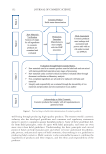
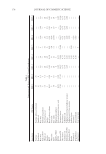
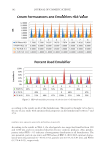
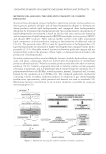
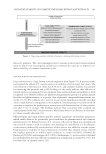
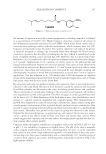
OXIDATIVE STABILITY OF COSMETIC EMULSIONS WITH PLANT EXTRACTS 191 METHODS FOR ASSESSING THE OXIDATIVE STABILITY OF COSMETIC EMULSIONS Scientists have developed various methods to determine primary and secondary oxi- dation process products of lipid- and oil-based formulations (Figure 1). Primary oxi- dation products include lipid hydroperoxides and conjugated diene hydroperoxides, which may be determined spectrophotometrically. Spectropohotometric measurement of lipid hydroperoxide concentration is based on the fact that iron catalyzes the formation and decomposition of lipid hydroperoxides (ROOH) into highly reactive peroxyl (ROO•) and alkoxyl (RO•) radicals. These radicals further interact with other unsaturated lipid components in the formulation, leading to the formation of additional radicals (16–23). The peroxide value (PV) is used for quantifi cation of hydroperoxides (21). Lipid hydroperoxides are measured at higher wavelengths than conjugated diene hydro- peroxides (17,19). Generally viewed, interaction between molecular oxygen and un- saturated fatty acids in the presence of heat, light, or chemical initiators leads to the production of hydroperoxides. Secondary oxidation products involve aldehydes, ketones, alcohols, hydrocarbons, organic acids, and epoxy compounds, which are formed after decomposition of intermediate products (alkoxyl radicals). Volatile secondary products may affect the odor of cosmetic emulsion (19,21). Volatile compounds detected in stability studies include propanal, 2-butenal, 2-pentenaol, and 2,4-hexadienal which resulted from the oxidation of n–3 polyunsaturated fatty acids (PUFAs), as well as pentane, hexanal, 2-heptenal, and 2-octenal, formed by the oxidation of n–6 PUFAs (16). The validated qualitative method for evaluating volatile secondary oxidation products in emulsions is gas chromatography tandem mass spectrometry, while pentanal and hexanal are used as standards (24). Monitoring hexanal concentration in oil-in-water emulsions is possible by using gas chromatography (25). Figure 1. Methods for assessing the oxidative stability of cosmetic emulsions.
Purchased for the exclusive use of nofirst nolast (unknown)
From: SCC Media Library & Resource Center (library.scconline.org)