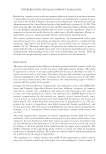
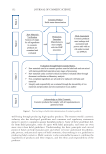
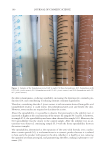
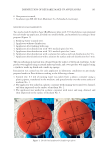
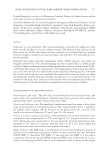
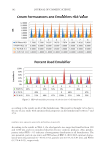
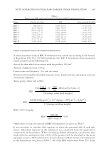
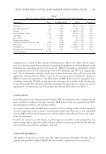
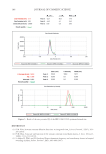
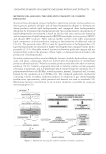
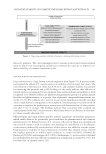
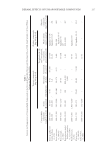
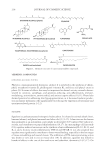
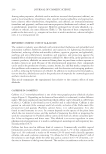
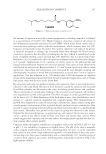
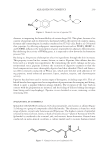
JOURNAL OF COSMETIC SCIENCE 192 The volatile oxidation products (dicarboxylic acids) can be evaluated by using the Rancimat assay, whereas monitoring of lipid hydroperoxide intermediate formation can be followed by using the ferric–xylenol orange technique (24). Anisidine values (AVs) are indicators of the formed aldehydes during oxidation of fats or oils and can be determined spectrophoto- metrically by a technique approved by the American Oil Chemists’ Society (24,26). In ad- dition, the PV is an indicator of primary oxidation products (21). The total oxidation value (defi ned as 2PV + AV) is an indicator of production of both primary and secondary oxida- tion products and represents the overall stability of formulation (21). Secondary oxidation products can be determined by thiobarbituric acid measurements. This method is probably the most used method for measuring lipid peroxidation, in which malondialdehyde reacts with thiobarbituric acid to give a pink-colored species that absorbs at 532 nm (21,27). IMPACT OF ANTIOXIDANTS ON OXIDATIVE STABILITY OF COSMETIC EMULSIONS: THE ROLE OF PLANT EXTRACTS The addition of antioxidants in O/W formulations has been proposed as one of the effi cient methods to improve stability (28). Synthetic antioxidants that have been used include butylated hydroxyanisole, butylated hydroxytoluene (BHT), and tertiary butyl hydroquinone (TBHQ) (29). The potential of antioxidants to suppress oxidation processes strongly depends on their concentration, partitioning between the water phase and the interface, polarity, etc. (10). Hydrophilic antioxidants may be incorpo- rated into the water phase, whereas lipophilic antioxidants in the oil phase (30). The possibility to scavenge the radicals directly is increased if antioxidants are present in the oil phase, thus indicating greater effectiveness of nonpolar compounds (10). The current challenge is the assessment of the most suitable antioxidant for combating lipid oxidation in emulsions. Antioxidants can either protect the target lipids from oxidation initiators or disturb the propagation phase (29). Components able to inactivate or chelate metal ions as initiators of lipid oxidations are frequently added to cosmetic emulsions (10). There are growing demands for replacement of synthetic ingredients with natural products in the cosmetic industry (31). In that sense, manufacturers of cosmetic emul- sions are increasingly interested in using plant-derived products because of multiple benefi ts. Plant species are a valuable source of antioxidants which may act protectively on skin and aging-related changes on skin (21). Phenolic compounds are one of the most signifi cant classes of plants’ secondary metabolites, which possess remarkable an- tioxidant capacity (29). Apart from attenuation of skin’s oxidative damage, plant-based products are able to enhance the stability of cosmetic emulsions (21). It has been known that extraction solvent strongly affects the extract composition (32). A safety profi le is an important factor to be considered while choosing the solvent for plant extraction in cosmetology. So far, natural products extracted from nuts, fruits, herbs, and algae have been found to possess the potential to improve oxidative stability of O/W emulsions (Figure 2). The plant species described in this article include Sargassum muticum, Ulva lactuca, Fucus vesiculosus, Castanea sativa, Malpighia punicifolia, Rosa canina, and Salix alba. The choice of the plant species was based on their valuable chemical composition and prominent antioxidant and antimicrobial activities, which enables their applicability in

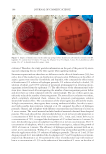
OXIDATIVE STABILITY OF COSMETIC EMULSIONS WITH PLANT EXTRACTS 193 skin-care products. The citied examples refer to various seaweed and terrestrial plant extracts which were investigated and proven to possess the capacity to improve oxi- dative stability of cosmetic emulsions so far. SARGASSUM MUTICUM (SARGASSACEAE) Sargassum muticum is a large brown seaweed originated from Japan (33). A previous study investigated the effects of S. muticum extract on stability of oil-in-water sun cream. The concentration of the extract in cream was 0.15 wt %, and oxidative stability was assessed by measuring the peroxide and p-AV. Findings of the study indicate that addition of natural extracts corresponded to less oxidation than creams without antioxidants or with tocopherol (31). Observed effects are likely resulting from the presence of polysaccharide fucoidan and phlorotannins, as a specifi c class of phenolic compounds from marine sea- weeds (21,33). The addition of S. muticum in sun cream formulation initially switched color to dark brown in comparison to α-tocopherol, and this product was also tested for consumer acceptance by performing a sensory test and determination of color parame- ters after 9 mo of storage. The fi ndings indicate that consumers well accepted sun cream prepared with the S. muticum extract, while there were no oscillations in colorimet- ric values visually observed (31). Phlorotannins and algal polysaccharides possess signifi cant antioxidant properties, which enable them to be potentially good candidates for pharmaceutical and cosmetic formulations (21). Ethanol extract of S. muticum collected in Spain was incorporated into avocado cream as well as cosmetic oils, massage oil, and shower oil. In addition, crude extract produced by autohydrolysis of this species was added to avocado cream. Examination of stability of those preparations revealed that ethanol extract exerted the highest potential to inhibit lipid oxidation in cream (93.96%), followed by shower oil (58.58%) and massage oil (13.90%). Furthermore, S. muticum extract obtained by autohydrolysis was also effi cient in inhibition of oxidation in cream (84.37%), but less than that in ethanol extract (21). Figure 2. Improving oxidative stability of cosmetic emulsions with plant extracts.
Purchased for the exclusive use of nofirst nolast (unknown)
From: SCC Media Library & Resource Center (library.scconline.org)