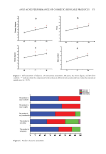
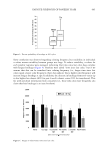
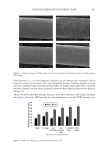
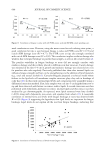
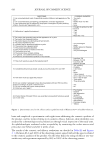
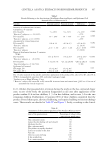
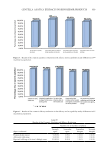
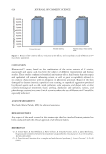
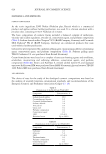
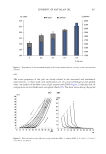
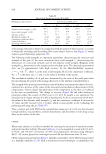
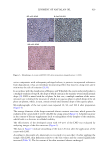
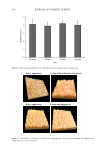
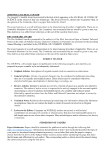
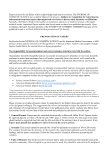
577 ANTI-ACNE PERFORMANCE OF COSMETIC SKINCARE PRODUCTS felt comfortable. All subjects stated that the product does not cause pimples, swelling, or tension. Detailed parameters for comfort and tolerance evaluation can be seen in Table IV. CONCLUSIONS A 4 week clinical trial indicated that the product has promising anti-acne properties. The results of this trial show that the products can effectively improve the moisture content of the cuticle and the moisture supplement of the skin, relieve dryness of the skin, and thereafter enhance the ability of the skin to resist external stimulation. At the same time, it can also regulate the skin oil secretion, reduce the proportion of pore and porphyrin area, and reduce the a value. The clinical evaluation shows that the number of acne, including Table III Parameters for Treatment Effect Parameters 1 2 3 4 Thanks to this product, my skin has fewer inflammatory lesions Totally agree Agree a little Sort of disagree Totally disagree Thanks to this product, my skin has fewer noninflammatory lesions Totally agree Agree a little Sort of disagree Totally disagree The product has proven its ability to resist oily skin Totally agree Agree a little Sort of disagree Totally disagree The product is a pleasure to use Totally agree Agree a little Sort of disagree Totally disagree I will continue to use this product Totally agree Agree a little Sort of disagree Totally disagree The product is generally satisfactory Totally agree Agree a little Sort of disagree Totally disagree The product is generally effective Totally agree Agree a little Sort of disagree Totally disagree Figure 8. Comfort and tolerance evaluation.

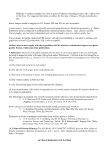
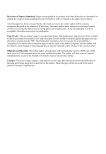
578 JOURNAL OF COSMETIC SCIENCE open acne, closed acne, papules, and pustules, decreased, and the pores, greasiness, and moisture levels also improved. The self-evaluation of the skin pores, greasiness, moisture, and comfort level also show a satisfying score after 4 weeks of usage. REFERENCES (1) S. F. Friedlander, H. E. Baldwin, A. J. Mancini, A. C. Yan, and L. F. Eichenfield, The acne continuum: an age-based approach to therapy, Semin. Cutan. Med. Surg., 30(3), Suppl, S6–S11 (2011). (2) H. C. Williams, R. P. Dellavalle, and S. Garner, Acne vulgaris, Lancet, 379(9813), 361–372 (2012). (3) D. E. Castillo, S. Nanda, and J. E. Keri. Propionibacterium (Cutibacterium) acnes bacteriophage therapy in acne: current evidence and future perspectives, Dermatol. Ther., 9(1), 19–31 (2019). (4) J. Fernández, C. Webb, K. Rouzard, J. Healy, M. Tamura, M. Voronkov, K. L. Huber, J. B. Stock, M. Stock, J. S. Gordon, and E. Pérez., SIG1459: A novel phytyl-cysteine derived TLR2 modulator with in vitro and clinical anti-acne activity, Exp. Dermatol., 27 (9), 993–999 (2018). (5) B. Dreno, R. Martin, A. Khammari, D. Moyal, J.B. Seite, and S. Seite, Skin microbiome and acne vulgaris: Staphylococcus, a new actor in acne. SKIN The Journal of Cutaneous Medicine, 1(3.1), 54 (2017). (6) A. Koreck, A. Pivarcsi, A. Dobozy, and L. Kemény, The role of innate immunity in the pathogenesis of acne, Dermatology, 206(2), 96–105 (2003). (7) R. G. Fried and A. Wechsler, Psychological problems in the acne patient, Dermatol. Ther., 19(4), 237– 240 (2010). (8) R. Balkrishnan, A. J. McMichael, J. Y. Hu, F. T. Camacho, K. R. Shew, A. Bouloc, S. R. Rapp, and S. R. Feldman, Correlates of health-related quality of life in women with severe facial blemishes, Int. J. Dermatol., 45(2), 111–115 (2010). (9) A. F. Klassen, J. N. Newton, and E. Mallon, Measuring quality of life in people referred for specialist care of acne: comparing generic and disease-specific measures, J. Am. Acad. Dermatol., 43(2 Pt 1)(2-part-P1), 229–233 (2000). (10) J. Koo, The psychosocial impact of acne: patients’ perceptions, J. Am. Acad. Dermatol,. 32(5 Pt 3), S26– S30 (1995). (11) R. J. Lasek and M. M. Chren, Acne vulgaris and the quality of life of adult dermatology patients, Arch. Dermatol., 134(4), 454–458 (1998). (12) L. Abu-Qatouseh, E. Mallah, and K. Mansour, Evaluation of anti-propionibacterium acnes and anti- inflammatory effects of polyphenolic extracts of medicinal herbs in Jordan, Biomedical and Pharmacol. J., 12(1), 211–217 (2019). (13) A. N. Lin and T. Nakatsui, Salicylic acid revisited, Int. J. Dermatol., 37(5), 335–342 (1998). (14) A. Tasleem, Salicylic acid as a peeling agent: a comprehensive review, Clin. Cosmet. Investig. Dermatol., 8, 455–461 (2015). (15) J. Lu, T. Cong, X. Wen, X. Li, D. Du, G. He, and X. Jiang., Salicylic acid treats acne vulgaris by suppressing AMPK/SREBP1 pathway in sebocytes, Exp. Dermatol., 28(7), 786–794 (2019). (16) M. A. Davies, Salicylic acid deposition from wash-off products: comparison of in vivo and porcine deposition models, Int. J. Cosmet., 37(5), 526–531 (2015). Table IV Parameters for Comfort and Tolerance Evaluation Parameters 1 2 3 4 The product is comfortable Totally agree Agree a little Sort of disagree Totally disagree The product does not cause tingling Totally agree Agree a little Sort of disagree Totally disagree The product does not cause tension Totally agree Agree a little Sort of disagree Totally disagree The product does not cause pimples Totally agree Agree a little Sort of disagree Totally disagree The product does not cause swelling Totally agree Agree a little Sort of disagree Totally disagree The product does not cause skin greasiness Totally agree Agree a little Sort of disagree Totally disagree The product does not cause skin stickiness Totally agree Agree a little Sort of disagree Totally disagree The product is easy to use Totally agree Agree a little Sort of disagree Totally disagree
Purchased for the exclusive use of nofirst nolast (unknown)
From: SCC Media Library & Resource Center (library.scconline.org)