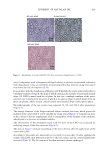
614 JOURNAL OF COSMETIC SCIENCE During the first 3 weeks (induction or sensitization phase), the patches were applied intermittently on days D1, D3, D5, D8, D10, D12, D15, D17, and D19, with removal after 48 h of contact of those patches that had been placed on days D3, D5, D10, D12, D17, and D19, and after 72 h of those placed on days D8, D15, and D22. This period was followed by a 15-day resting phase. Finally, the patch with Blastoactiva™ was again placed on day D37 (challenge phase), and was removed 48, 72, and 96 h after application (days D39, D40, and D41). The product was applied onto the skin of the dorsal region. Test reading was performed by the dermatologist based on inspection of the study zone for 15 min (or longer if alterations were observed). The appearance of a positive test includes erythema, edema, vesicles, blisters, papules, dryness, skin coloring, and a soapy effect (reddened, glass-like appearance). The scale of the International Contact Dermatitis Research Group was used to evaluate the capacity of the product to cause allergic contact dermatitis, based on the following grades: ?+ (doubtful reaction), + (erythema, infiltration, minimum papule), ++ (erythema, papules, vesicles), and +++ (blisters). Likewise, the participants were questioned about possible reactions. No skin reaction of any kind was observed in either the induction phase or in the challenge phase. Blastoactiva™, therefore, can be regarded as a product for topical use with low clinical potential to cause allergic contact dermatitis. Phototoxic potential. The phototoxic potential of Blastoactiva™ was studied in 12 healthy volunteers (nine women and three men) between 18 and 65 yr of age (with a mean age of 48.3) with a Fitzpatrick I–III skin phototype and no skin alterations capable of influencing the test results. The participants gave written informed consent to participation, and the study protocol was approved by the evaluation committee of EVIC Hispania, Centro Experimental de Evaluación Cutánea (Barcelona, Spain) (registry CEN-41-09). The test involved the application with occlusive patches of 0.2 mL of the product onto two 4 cm2 zones on the dorsal region between the waist and scapula, while a third zone without product was used as control. The patches were removed after 24 h. Following visual inspection of the three zones and having discarded the presence of allergic contact dermatitis according to the International Contact Dermatitis Research Group scale, one of the treated areas and the control zone were irradiated with filtered light (with a wavelength of 320–400 nm) equivalent to 10.0 J/cm2 of ultraviolet irradiation. Skin reaction in the irradiated zones was assessed after 24, 48, and 72 h. No phototoxic reactions were observed in the area treated with Blastoactiva™ and irradiated, in the treated and nonirradiated zone, or in the irradiated control zone. The tested product therefore can be considered to lack phototoxic capacity. Blastoactiva™ is therefore a cosmetic product that has shown negligible risk of eye irritation in vitro, no allergic contact dermatitis, and no phototoxic effects, and can be regarded as safe. CLINICAL EFFICACY AND ACCEPTABILITY Study in healthy adult volunteers. Three clinical efficacy variables were evaluated in 36 healthy volunteers exposed to Blastoactiva™: anti-irritant action, skin barrier function repair, and epidermal cell renewal capacity. The volunteers served as their own control. The participants gave written informed consent to participation, and the study protocol (N°: 08-0319/1) was approved by the evaluation committee of EVIC Hispania, Centro

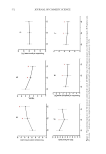
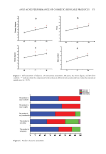
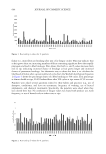
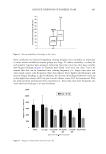
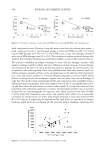
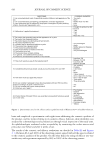
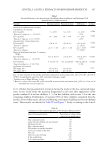
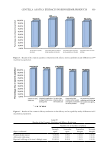
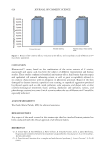
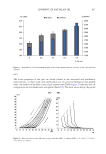
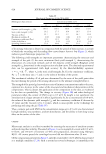
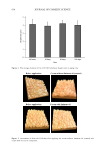
615 CENTELLA ASIATICA EXTRACTS IN SKIN REPAIR PRODUCTS Experimental de Evaluación Cutánea (Barcelona, Spain) (registry CI-S22/08). The study involved subjects of either gender and between 18 and 70 yr of age with a Fitzpatrick I–V skin phototype and reactive skin. The study excluded individuals with skin alterations on the forearm or skin characteristics capable of interfering with evaluation of the product, such as scars, pigmentation disorders, abundant body hair, and allergy or intolerance of topically administered products of the same class as the tested product. The three study variables were evaluated on both forearms (one treated arm and one control arm). An occlusive patch was applied with 45 µL of a 2% solution of sodium lauryl sulfate during 24 h (day 1, D1), followed by the application of Blastoactiva™ twice a day in the same zone. Evaluation of the three parameters (anti-irritant effect, skin barrier repair, and epidermal cell renewal) was made after 24 h, 48 h (D2 and D3, respectively) and over 14 d, as follows: • Anti-irritant action was assessed by colorimetry (Mexameter® MX 18, Courage & Khazaka Electronic, Köln, Germany) based on the amount of light absorbed by the skin and the clinical inspection of erythema intensity (from 0 = absent to 4 = severe). • Skin barrier function repair activity was quantified based on transepidermal water loss (Tewameter TM 300®, Courage & Khazaka Electronic) during 4 min, expressed as evaporated water in g/m2/h. • The effect upon epidermal cell renewal was assessed from the changes in skin color based on the individual typological angle (Cromameter CR, Minolta), where the faster the increase, the faster the cell renewal rate. In this test, 160 µL of the product was applied on a semiocclusive patch with 6% dihydroxyacetone, with analysis of the variations from D3 to D14. • In addition, the cosmetic qualities of the product were evaluated using a 23-item questionnaire in which most of the questions were scored based on a 5-point Likert scale (Figure 1). Testing showed Blastoactiva™ to exert a statistically significant anti-irritant effect (p 0.031), reducing erythema intensity after four applications, as well as a statistically significant barrier function repair effect (p 0.001), reducing transepidermal water loss by 24 and 29% after two and four applications, respectively. Likewise, a statistically significant effect (p 0.014) was observed in terms of epidermal cell renewal with acceleration of this process in 61% of the participants. The cosmetic properties of the product were favorably rated by 83 to 100% of the participants (Tables I and II). The dermatologist interpreted product acceptability as being very satisfactory (30–32), since none of the subjects presented clinical signs or discomfort attributable to the tested product. Study in a pediatric population. A group of 22 children (eight boys and fourteen girls) between 3 and 47 mo of age (with a mean age of 30 mo and range of 5–45) with Fitzpatrick I–V skin phototype and reactive skin were selected for the evaluation of skin and eye tolerability and of the cosmetic qualities and efficacy of Blastoactiva™. The children served as their own control. The parents signed the informed consent document, and the study was approved by the evaluation committee of Eurofins Product Testing, Cosmetics & Personal Care Spain, S.L.U. (Barcelona, Spain) (registry CI-S2/19). 1.5 g of the product was applied on a single side of the groin (zone of the fold) and on the entire waist (at diaper level) twice a day (morning and night) for 28 ± 2 consecutive d (4 weeks). The product could also be applied on any other localized zone presenting irritation during the study. One parent per child (the observing parent) assessed acceptability on a daily
Purchased for the exclusive use of nofirst nolast (unknown)
From: SCC Media Library & Resource Center (library.scconline.org)