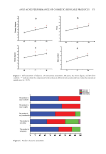
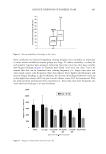
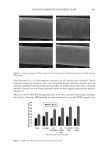
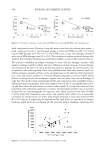
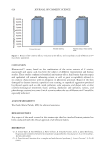
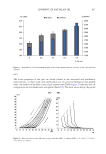
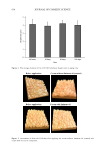
620 JOURNAL OF COSMETIC SCIENCE CONCLUSION Blastoactiva™ cream, based on the combination of the active extracts of C asiatica, asiaticoside and asiatic acid, has been the subject of different experimental and human studies. These studies confirm its beneficial anti-irritant effect, skin barrier function repair and epidermal cell renewal enhancing action, as well as great acceptability referred to its cosmetic characteristics with no allergenic or phototoxic potential. Repair of the skin damaged by dryness (xerosis), superficial acne scarring, or superficial aggression produced by physical agents such as cold, wind, pollution, solar exposure, and diaper rash, or after cosmetic/nonsurgical treatments (laser, peeling, depilation and epilation, tattoos, and phototherapy sessions) are some clinical scenarios where the use of Blastoactiva™ would be especially indicated. ACKNOWLEDGMENTS We thank Marta Pulido, MD, for editorial assistance. RESEARCH ETHICS Any aspect of the work covered in this manuscript that has involved human patients has been conducted with the ethical approval of all relevant bodies. REFERENCES (1) A. Guerra-Tapia, E. Serra-Baldrich, L. Prieto Cabezas, E. González-Guerra, and J. L. López-Estebaranz, Diagnosis and treatment of sensitive skin syndrome: an algorithm for clinical practice, Actas Dermosifiliogr., 10, 800–808 (2019). (2) A. Pons-Guiraud, Sensitive skin: a complex and multifactorial syndrome, J. Cosmet. Dermatol., 3, 45–48 (2004). Promoted skin repair Alleviated reddening Repaired rubbing or friction (chafing) zones Figure 5. Results of the cosmetic efficacy evaluation in the efficacy and acceptability study of Blastoactiva™ in pediatric population. Percentage ( of parent s s

621 CENTELLA ASIATICA EXTRACTS IN SKIN REPAIR PRODUCTS (3) A. Niazi, V. B. Rahimi, Soheili-Far S, N. Askari, P. Rahmanian-Devin, Z. Sanei-Far, A. Sahebkar, H. Rakhshandeh, and V. R. Askari, A systematic review on prevention and treatment of nipple pain and fissure: are they curable? J. Pharmacopuncture, 21,139–150 (2018). (4) C. Gorzelanny, C. Mess, S. W. Schneider, V. Huck, and J. M. Brandner, Skin barriers in dermal drug delivery: which barriers have to be overcome and how can we measure them? Pharmaceutics, 12, 684 (2020). (5) A. Chamli and A. Souissi, “Lichen Sclerosus,” StatPearls, (StatPearls Publishing, Treasure Island, FL, January 2021), https://www.ncbi.nlm.nih.gov/books/NBK538246. (6) L. A. Sadownik, E. Koert, C. Maher, and K. B. Smith, A qualitative exploration of women’s experiences of living with chronic vulvar dermatoses, J. Sex Med. 9, 1740–1750 (2020). (7) J. M. Krapf, L. Mitchell, M. A. Holton, and A. T. Goldstein, Vulvar lichen sclerosus: current perspectives, Int. J. Women’s Health, 12, 11–20 (2020). (8) Y. Marfatia, A. Surani, and R. Baxi, Genital lichen sclerosus et atrophicus in females: an update, Indian J. Sex Transm. Dis. AIDS, 1, 6–12 (2019). (9) J. C. Kent, E. Ashton, C. M. Hardwick, M. K. Rowan, E. S. Chia, K. A. Fairclough, L. L. Menon, C. Scott, G. Mather-McCaw, K. Navarro, and D. T. Geddes, Nipple pain in breastfeeding mothers: incidence, causes and treatments, Int. J. Environ. Res. Public Health, 10, 12247–12263 (2015). (10) E. Berardesca, M. Farage, and H. Maibach. Sensitive skin: an overview, Int. J. Cosmet. Sci., 35, 2–8 (2013). (11) S. Seite and L. Misery, Skin sensitivity and skin microbiota: is there a link? Exp. Dermatol., 27, 1061– 1064 (2018). (12) J. James and I. Dubery, Identification and quantification of tripenoid centelloids in Centella asiatica (L.) urban by densitometric TLC, J. Planar Chromat., 24, 82–87 (2011). (13) World Health Organization, WHO Monographs on Selected Medicinal Plants, 2nd Ed. (WHO, Ravello- Salerno, Italy, 1999), pp. 77–85. (14) W. Bylka, P. Znajdek-Awiżeń, E. Studzińska-Sroka, A. Dańczak-Pazdrowska, and M. Brzezińska. Centella asiatica in dermatology: an overview, Phytother. Res., 28, 1117–1124 (2014). (15) A. Ratz-Łyko, J. Arct, and K. Pytkowska, Moisturizing and antiinflammatory properties of cosmetic formulations containing Centella asiatica extract, Indian J. Pharm. Sci., 78, 27–33 (2016). (16) L. Suguna, P. Sivakumar, and G. Chandrakasan, Effects of Centella asiatica extract on dermal wound healing in rats, Indian J. Exp. Biol., 34, 1208–1211 (1996). (17) Sunilkumar, S. Parameshwaraiah, and H. G. Shivakumar. Evaluation of topical formulations of aqueous extract of Centella asiatica on open wounds in rats, Indian J. Exp. Biol., 36, 569–572 (1998). (18) A. Shukla, A. M. Rasik, G. K. Jain, R. Shankar, D. K. Kulshrestha, and B. N. Dhawan, In vitro and in vivo wound healing activity of asiaticoside isolated from Centella asiatica, J. Ethnopharmacol., 65, 1–11 (1999). (19) L. C. Agra, J. N. Ferro, F. T. Barbosa, and E. Barreto, Triterpenes with healing activity: a systematic review, J. Dermatolog. Treat., 26, 465–470 (2015). (20) O. Ozdemir, K. Ozkan, F. Hatipoglu, A. Uyaroglu, and M. Arican, Effect of asiaticoside, collagenase, and alpha-chymotrypsin on wound healing in rabbits, Wounds, 28, 279–286 (2016). (21) M. F. Nagoor Meeran, S. N. Goyal, K. Suchal, C. Sharma, C. R. Patil, and S. K. Ojha, Pharmacological properties, molecular mechanisms, and pharmaceutical development of asiatic acid: a pentacyclic triterpenoid of therapeutic promise, Front Pharmacol., 9, 982 (2018). (22) R. Cotellese, S. Hu, G. Belcaro, A. Ledda, B. Feragalli, M. Dugall, M. Hosoi, and E. Ippolito, Centella asiatica (Centellicum®) facilitates the regular healing of surgical scars in subjects at high risk of keloids, Minerva Chir., 73, 151–156 (2018). (23) J. Somboonwong, M. Kankaisre, B. Tantisira, and M. H. Tantisira, Wound healing activities of different extracts of Centella asiatica in incision and burn wound models: an experimental animal study, BMC Complement Altern. Med., 12, 103 (2012). (24) J. H. Sampson, A. Raman, G. Karlsen, H. Navsaria, and I. M. Leigh. In vitro keratinocyte antiproliferant effect of Centella asiatica extract and triterpenoid saponins, Phytomedicine, 8, 230–235 (2001). (25) H. S. Datta and R. Paramesh, Trends in aging and skin care: ayurvedic concepts, J. Ayurveda Integr. Med., 1, 110–113 (2010). (26) I. S. An, S. An, S. M. Kang, T. B. Choe, S. N. Lee, H. H. Jang, and S. Bae, Titrated extract of Centella asiatica provides a UVB protective effect by altering microRNA expression profiles in human dermal fibroblasts, Int. J. Mol. Med., 30, 1194–1202 (2012). (27) F. X. Maquart, F. Chastang, A. Simeon, P. Birembaut, P. Gillery, and Y. Wegrowski. Triterpenes from Centella asiatica stimulate extracellular matrix accumulation in rat experimental wounds, Eur. J. Dermatol., 9, 289–296 (1999).
Purchased for the exclusive use of nofirst nolast (unknown)
From: SCC Media Library & Resource Center (library.scconline.org)