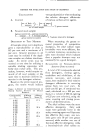
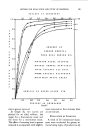
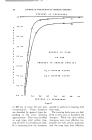
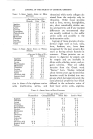
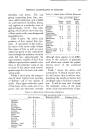
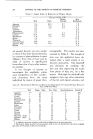
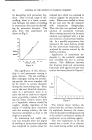
248 JOURNAL OF THE SOCIETY OF COSMETIC CHEMISTS by deswelling with potassium bro- mate. Over a broad range of thio swelling, there is a linear correla- tion between the extent of swelling in ammonium thio and the deswell- ing by potassium bromate. The data oerom this experiment are shown on Fig. 4. 6O •o •o AMM.THIO. IO O 0 5 I0 15 20 25 30 % Swelhn• in KBrO• Figure 4. The significance of this relation- ship in cold permanent waving is quite obvious. The less swelling a fiber undergoes during the process- ing period, the more complete will be its return to normal diameter during the neutralizing step. Since one of the most desirable character- istics of a permanent wave is to leave the hair as close to its original state as possible, a means of chang- ing the linear relation shown here to a hyperbolic relation should be sought ideally, regardless of the extent of swelling upon treatment with the waving solution, the hair should be deswelled as close to the original as possible. An interesting and useful rela- tion was revealed when the degree of swelling in ammonium hydroxide was compared to cystine values for reduced hair wh.ich was oxidized to various degrees by potassium bro- mate. Fibers were swelled to about 50 per cent over the dry diameter with ammonium thioglycolate. Then the thio was replaced with a solution of potassium bromate. After varying intervals the bromate solution was replaced with a 6 per cent solution of ammonium hydrox- ide. In a parallel experiment, hair treated in the same fashion, except for the ammonium hydroxide, was analyzed for cystine content by the Sulhvan method. Application of ammonium hy- droxide to the partially oxidized hair reswelled the hair to various extents. This difference between the bromate level and ammonium hydroxide level against the per cent cystine has been plotted in Figure 5 % Cystine 0 •0 20 30 40 50 60 70 60 90 DiFference between NH•OH and K3rO, levels Figure 5. The inverse linear relation ob- tained here has not been satisfactor- ily explained however, the ammo- n ium hydroxide reswelling has proved to be useful in evaluation studies of permanent wave oxidizing agents. The next experiment to be dis- cussed was a result of an observa- tion made during earlier work when

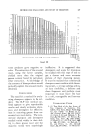
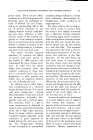
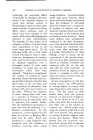
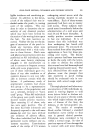
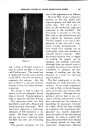
SWELLING STUDIES OF SINGLE HUMAN HAIR FIBERS 249 it was noted that as ammonium thioglycolate swelled a previously untreated fiber, a change took place in the refractive index of the fiber where the solution had pene- trated. This makes possible the measurement of the rate of pene- tration of the reducing solution into the fiber. In this type of ex- periment both the diameter of the whole fiber and the boundaries of the penetrating solution had to be observed and recorded for each time interval. From this data the per- centage of penetration can be calcu- lated. From a parallel rate of reaction experiment, the millimoles of sulf- hydryl groups per gram of hair formed during corresponding reac- tion periods were obtained. The percentage of penetration and the millimoles of sulfhydryl groups formed for corresponding reaction periods are shown graphically (Fig. 6). These data show that the pene- tration of the waving lotion into the hair fiber is followed very rap- •oo 8o 7o % •o P•mlm•m4o •o Io o o QI 02 Q:5 0• O• 07 Q• 0.9 ID mM SH i•er •mm of hair idly by the reaction of the reducing agent with the disulfide bonds of the hair to form sulfhydryl groups. The main conclusion to be drawn from inspection of this data is that the concentration of cystine is very close to constant throughout the cross section of the fiber. If all of the cystine in the hair (assuming that there is a 16 per cent cvstine content) were immediately and completely reducible to sulf- hydryl or SH, the curve would be a straight line to the co-ordinate 1.33, 100. However, we have found that 1.1 millimoles of SH per gram of hair is about the limit of reactivity. According to these data, we reach 100 per cent penetration after about 90 per cent of the available cystine is reacted. After a short time the last 10 per cent of reduc- ible cystine reacts. The bow in the curve and the fact that the reaction is completed after the solution has penetrated completely to the center of the fiber shows that there is a slight, but real, hindrance--steric or otherwise--to the reaction. These three comparatively simple experiments have been described to illustrate the types of problems that can be studied and to show that the apparatus performs in the wav that we desired. Those of you who are interested in keratinous fiber studies can no doubt see many more problems and experiments of interest. I hope that this presenta- tion will help to stimulate the ex- ploration of this field.
Purchased for the exclusive use of nofirst nolast (unknown)
From: SCC Media Library & Resource Center (library.scconline.org)