COLLOIDAL MAGNESIUM ALUMINUM SILICA'IE' AND ITS USE IN COSMETICS* By B. R. T. Fanderbilt C•., Inc., New York, N.Y. Tins PAPER will present some background material on the physical and chemical structure of a unique inorganic colloid which has particu- lar application in the cosmetic and pharmaceutical industries. Then data will be presented to define th4 properties which are associated with its c611oidal nature, and which there- fore are of special interest to cos- metic chemistry. This field is, in effect, a division of colloidal chemis- try, since most cosmetics are emul- sions or suspensions, both of which involve colloidal systems. The material we are discussing is Magnesium Aluminum Silicate, a processed, highly refined product.t This inorganic colloid has definite advantages over organic colloids. It is uniform. It is stable on pro- longed storage and it does not have to be preserved. It is readily dispersed in water without soak- ing. A colloid is commonly defined as a particle whose size ranges from 1 to 500 millimicrons. But if only one * Presented at the December 5, 1950 Meeting. New York City. t VEEGUM, reg. trade mark, R. T. Vanderbilt Co., Inc. dimension of a particle, or any ir- regularity in the surface of a particle is in the colloidal range, the particle will exhibit the properties of a col- loid. Even a hole or a space within the structure of a particle will impart to it colloidal properties (1). Vari- ous materials are included in this classification, for example: viruses, genes, vitamins, egg albumin, starch, carbon black, and even smoke and fog occur in the colloidal state. It is obvious then that col- loids are not any one chemical group, but are strictly defined by their spa- tial measurements. Colloids behave in a different manner from what their chemical nature alone would indicate because the particle size is so small that tre- mendous surface area is available. Electron microscope examination of carbon black shows that a single pound would blanket an area of not less than 12 acres if the surfaces of all its particles were spread out flat. The physical structure of the prod- uct Magnesium Aluminum Silicat% determined by x-ray diffraction and electron microscope, is believed to be in the shape of a long thin rod (2). In the optical range it can be likened 250

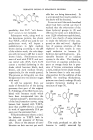
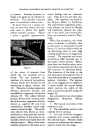
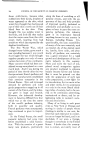
COLLOIDAL MAGNESIUM ALUMINUM SILICATE IN COSMETICS 251 to a pencil. Actually, however, its length and depth are of colloidal di- mensions. This peculiar structure gives it tremendous surface area. To prove that it is a unique col- loid, we must first discuss the min- erals used to obtain this highly refined finished product. Figure 1 gives a graphic representation ':....!Silicate j {• ':'Aluminum Silica• •n•ori!loni•) .- Figure 1 of the series of minerals from which the raw materials are se- lected. The raw materials are members of a .series of isomorphous silicates which were formed by the weathering of glassy volcanic ash (5). The-series includes magnesium silicates, aluminum silicates, and intern•'ediate magnesium aluminum sili6ates (7). The refined finished product derives from one end mem- ber of the series, magnesium silicate, known as saponite (8) and from intermediate members whose mag- nesium content is high. The alumi- num silicate end, known as mont- morillonite or bentonite (6), and ad- jacent members of the series are un- suitable, therefore excluded from the refined product. Many of the inter- mediate minerals in this series are of recent finding and' are relatively rare. They have not yet been clas- sified. The saponites are found in the Mojave Desert in California. The intermediate magnesium alumi- num silicates are found in Nevada and California, whereas the other end of the series, the montmorillo- nites, are commonly found in Wyo- ming. With a few exceptions, this whole series of silicates is swellable that is, they have an expandable crystal lattice (7), but the colloid which we are discussing owes its very high swelling properties to its magnesium content. The saponites•and mont- morillonites differ basically also in the shape of their crystals. '. Bento- nites have the familiar platy struc- ture whereas saponites have the rod- like structure we described before. This distortion of the plate to the rod takes place all along the line of intermediate products as magnesium replaces aiumindm. The .xgteater size of the magnesium ion ri•sults in a strain within the crystal lattice which restricts the width .of the plate but permits growth along the length (3.). Let us enumerate now what makes Magnesium Aluminum Silicate unique. 1. The natural occurrence of the minerals is rare. 2. The expandable lattice in the rod-like form is unusual. 3. It is one of the few inorganic materials that occurs naturally in the colloidal state. Metallic oxides can exist as colloids but must be proc- essed to reach this size range.
Purchased for the exclusive use of nofirst nolast (unknown)
From: SCC Media Library & Resource Center (library.scconline.org)