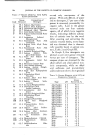
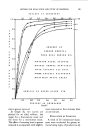
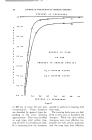
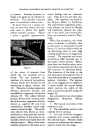
252 JOURNAL OF THE SOCIETY OF COSMETIC CHEMISTS 4. --and most important, the re- fined product, Magnesium Alumi- num Silicate, is a more than additive blend of minerals. An example of this is found in the control of starch-sugar conversion by the adsorption of the enzyme. Magnesium Aluminum Silicate is four times as effective as would be predicted from the activity of each component. Magnesium Aluminum Silicate is processed to a drum dried flake of i/2 millimeter average particle size. Considerable research was involved before the flake form was selected. The flake form contributes ease of handling and speed of rehydration. Magnesium Aluminum Silicate pow- ders formed by spray drying or ex- trusion, pack in the dry form and ball up when wet. The flake form seems to give the expandable crystal lattice its optimum chance for hy- dration. It is interesting to note that mixtures of Magnesium Alumi- num Silicate dispersions and other materials, such as solid polyethylene glycols, precipitated calcium sili- cate, methyl cellulose, and alumi- num chlorohydroxide can be proc- essed to the flake form and will give materials with unusual properties. Magnesium Aluminum Silicate flakes will occupy 36 times their vol- ume after saturation with water. In other words, 2 gm. of Magnesium Aluminum Silicate will occupy 72 cc. after swelling in 100 cc. water. The swelling property is reversible therefore, it can be dried and re- hydrated any number of times. The crystal lattice actually expands by the penetration of water and re- tracts when dried. Theoretically, if the lattice were expanded com- pletely this silicate would disperse into units of molecular thickness and all the surfaces could be regarded as external (4). The thickening properties can be visualized if one considers that the particles become bulky as their crys- tal lattice expands and the en- veloped water moves with the par- ticle. Then the volume of free water is reduced and the mass as- sumes a viscous consistency. At 4 per cent solids the immediate viscosity of a Magnesium Aluminum Silicate dispersion prepared at room temperature is about 300 cp. At 5 per cent it is about 1000 cp.* In any one solids range, maximum vis- cosity can be obtained by heating and aging. Dispersions prepared hot (70øC.) will increase their vis- cosity on aging at a faster rate than if prepared cold. An initial increase in viscosity with heat is particularly significant when Magnesium Alu- minum Silicate is mixed with other materials. For example, when polyethylene glycol, molecular weight 6000, and Magnesium Alu- minum Silicate are blended dry and then dispersed in hot water, the vis- * Procedure for preparing these disper- siolls: 1. Weigh out the proper amount of Mag- nesium Aluminum Silicate after compensat- ing for moisture content (6 to 10 per cent). 2. Add the Magnesium Aluminum Sili- cate slowly to the water (at room tempera- ture) and mix on the Waring Blendor for 3 minutes. 3. Take the 6-minute reading on the Bra- bender Recording Viscosimeter, operating at 105 r.p.m., using the double ttag paddle. Convert Brabender units to centipoises.

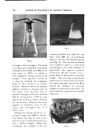
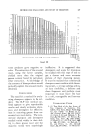
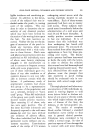
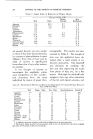
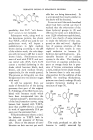
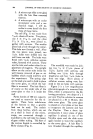
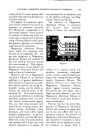
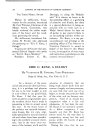
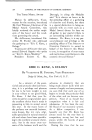
COLLOIDAL MAGNESIUM ALUMINUM SILICATE IN COSMETICS 253 coslty will be 41/,. times greater than would be expected from the behavior of either material. The degree of mechanical agita- tion will also influence the rate of at- tainment of maximum viscosity. The Mixmaster, comparable to a slow-speed Lightnin' mixer, requires 15 minutes to obtain the same vis- cosity that is obtained in 3 minutes using a Waring Blendor which gives the greatest agitation of commonly used laboratory equipment. Magnesium Aluminum Silicate forms stable o/w emulsions with mineral oil and vegetable oils. A 3 per cent dispersion of Magnesium Aluminum Silicate will emulsify 35 per cent medium viscosity mineral oil or raw linseed oil. With slightly greater amounts of raw linseed oil, Magnesium Aluminum Silicate will tend to form w/o emulsions. However, the use of Magnesium Aluminum Silicate as an emulsion stabilizer is of greater significance. This function is based on its protec- tive colloid activity, its strong hy- drophilic nature, and its ability to thicken the external phase of the emulsion (9). Very small amounts are extremely effective in stabilizing emulsions prepared with non-ionic and anionic surface-active agents. This has been demonstrated with hand lotions, shaving creams, deo- dorant lotions, dentifrices, cream shampoos, and many other typical cosmetic preparations. A particu- lar o/w emulsion, at a low pH, emul- sified with 3 per cent polyoxyethyt- ene stearate and 1.2 per cent cetyl alcohol, separated in 6 weeks. It was stabilized for an indefinite time by the addition of 0.4 per cent Mag- nesium Aluminum Silicate. The addition of Magnesium Aluminum Silicate to emulsions will increase their viscosity. Figure 2 shows the relative vis- EMULSION 3% M.A.S. Figure cosities of a typical liquid o/w emulsion containing triethanol- amine stearate, isopropylpalmitate, water, and varying amounts of'Mag- nesium Aluminum Silicate. The addition of 0.5, 1, 2, or 3 per cent Magnesium Aluminum Silicate shows regular viscosity increases. Five-tenths per cent gives only a slight increase, whereas 5 per cent Magnesium Aluminum Silicate in this emulsion would give almost a cream consistency. The fact that the viscosity of dis- persions of Magnesium Aluminum Silicate will increase on aging does not in any way affect their use in emulsions because the amount of Magnesium Aluminum Silicate usu- ally required in emulsions is below that which shows significant viscos- ity increases on aging. This is
Purchased for the exclusive use of nofirst nolast (unknown)
From: SCC Media Library & Resource Center (library.scconline.org)