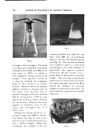
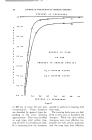
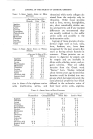
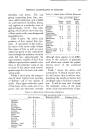
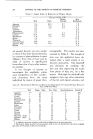
254 JOURNAL OF THE SOCIETY OF COSMETIC CHEMISTS clearly seen in Figure 2 in which viscosity is plotted against time in days. The viscosity aging curves are nearly parallel for both the con- trol and the emulsions containing Magnesium Aluminum Silicate. The emulsion containing 5 per cent Magnesium Aluminum Silicate is omitted from this graph for practical reasons. However, it too has a vis- cosity aging curve nearly parallel to the control emulsion containing no Magnesium Aluminum Silicate. The phenomenon of flocculation is another interesting property. As is true of all colloids--the particles of Magnesium Aluminum Silicate re- main in suspension by virtue of the negative polarity by which they mu- tually repel each other. If the par- ticles are to be allowed to coalesce into aggregates and therefore floccu- late, the negative charge on each particle must be neutralized. How- ever, this is not the complete story. The stability of a hydrophilic col- loid is not only a function of its elec- tric charge but it is also held in sus- pension by hydration. Therefore, the flocculating electrolytes must de- hydrate the expanded particles and also adjust the charge to permit co- alescence upon contact (10). This explains why Magnesium Aluminum Silicate is stable over a wide range of pH and why relatively large amounts of electrolytes are required to cause flocculation. Organic solvents flocculate Mag- nesium Aluminum Silicate primarily by dehydration. The amount of solvent that can be tolerated de- pends on its polarity, its selective- ness for water, and its molecular size. Some work with solvents was done in connection with the formulation of a creamy nail polish remover. A 3 per cent Magnesium Aluminum Silicate dispersion was compatible with a 40 per cent total mixture of diethylene glycol monoethyl ether, ethylene glycol monoethyl ether, and butyl acetate. It might be pos- sible to have a much higher solvent content with a thickener that would actually swell in the solvent mixture. Base exchange compounds made with Magnesium Aluminum Silicate are now being studied for this prop- erty. The formation of Magne- sium Aluminum Silicate gels in mix- tures of water and glycols is possible, but there are definite limitations to the amount of glycol. A 4 per cent Magnesium Aluminum Silicate dis- persion can be prepared in water containing 40 per cent glycerin or 30 per cent polyethylene glycols. In several cases Magnesium Alu- minum Silicate has been used in par- tially flocculated form to give opac- ity and thickening. As we have discussed, the flocculation can be controlled by pH and factors contrib- uting to dehydration. To understand the function of Magnesium Aluminum Silicate as a suspending agent, we must visualize the particles of the material to be suspended as being distributed in the water between the Magnesium Alu- minum Silicate particles. There- .fore, they would be surrounded by negative charges and so prevented from coalescing and settling. With

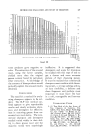
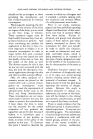
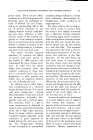
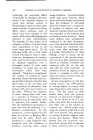
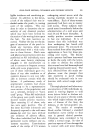
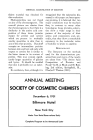
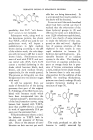
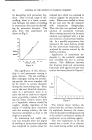
COLLOIDAL MAGNESIUM ALUMINUM SILICATE IN COSMETICS 255 an increase in solids and therefore a greater concentration of charges and a firmer gel structure, suspension is improved. Moreover, Magnesium Aluminum Silicate has a higher ap- parent viscosity than would be ex- pected from the solids content. This property of increased apparent viscosity which can be reversed by simple agitation is called thixo- tropy (11). Thixotropyis a definite advantage in suspensions and is greatly responsible for the superior- ity of Magnesium Aluminum Sili- cate over organic gums which form irreversible gels. Magnesium Alu- minum Silicate can suspend at lower viscosity than organic gums and can suspend more efficiently at equal viscosity. Suspensions of talc in Magnesium Aluminum Silicate, algin, high vis- cosity carboxymethyl cellulose, and tragacanth each at 65 cp. were ob- served. Magnesium Aluminum Sili- cate suspended 100 per cent of the talc, algin 75 per cent, and carboxy- methyl cellulose and tragacanth 30 per cent. Similar results were ob- tained with suspensions of colloidal sulfur. • C.M.C. tSET TO .o. Sodium Alginate JELLY • METHYL CELLULOSE et ACACIA - • TRAGACANTH .•o ,- M.A.S. 18 4•0 60 100 % SALTS SUSPENDED Figure 3 In another study (see Fig. 3), a 3 per cent total of bismuth salts was suspended in Magnesium Aluminum Silicate and in several organic gums. A 1 per cent dispersion was used in all but one case. Carboxymethyl cel- lulose •and sodium alglnate formed solid ii•reversible gels with the salts entrapped, and free water released. Methyl cellulose, acacia, and traga- canth showed hard packing that could not be redispersed by shaking, whereas, Magnesium Aluminum Sili- cate remained flowable and gave 60 per cent suspension. With a 21/2 per cent Magnesium Aluminum Silicate dispersion, 100 per cent sus- pension was obtained in a free flow- ing system. Before concluding, we must men- tion that the limitation of time has not allowed discussion of many other interesting and useful properties of Magnesium Aluminum Silicate. Some of these are: (1) capacity for base exchange, (2) acid neutraliza- tion, (3) formation of films, (4) lu- bricating, disintegrating, and bind- ing of tablets. Magnesium Aluminum Silicate is non-toxic. Detailed studies on mice and rabbits have been made and these data are available. This paper has attempted to ex- plain the behavior of Magnesium Aluminum Silicate with the hope that an understanding of how it ß functions will promote the most ad- vantageous use of the product. BIBLIOGRAPHY (1) Hawley, Gessner G., "The Story of Col- loids" New York, Alfred A. Knopf, 1947 p. 30.
Purchased for the exclusive use of nofirst nolast (unknown)
From: SCC Media Library & Resource Center (library.scconline.org)