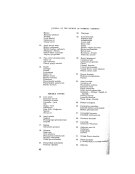
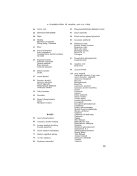
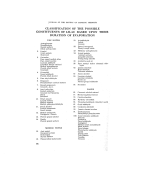
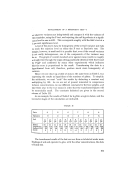
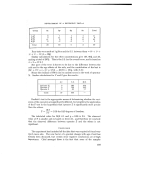
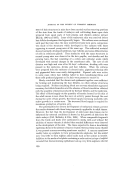
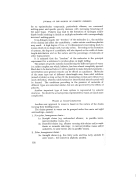
A CLASSIFICATION OF ODOURS AND ITS USES blend. I have abstracted the possible constituents for the creation of a lilac complex, from its simplest form in a compound to its more intricate pattern in a sophisticated fragrance, and have chosen this type because it is one of the commonest flowering agents in use. This particular classification will be available for publication with this paper, but in the meantime I shall quote from it in the two examples I will discuss in detail. In the creation of all flower compounds I give the same advice to my pupils, and will repeat it here and now namely, that the key to success is Simplicity, Simplicity and again Simplicity or, in other words, the use of the absolute minimum of aromatics in the production of the finished blend. Bearing this in mind, an examination of the classification will reveal the vital constituents of a lilac as reducible to nine, as follows: Top Note: Benzyl acetate 1, terpineol 3, and phenyl ethyl alcohol 4. .Middle Note: Heliotropin 15, and anisic aldehyde 21. Basic Note: Cinnamic alcohol 65, hydroxy citronellal 80, isoeugenol and phenyl acetic aldehyde 100. The relative proportions of each are a matter of taste and I must leave each worker to compose his fragrance as he thinks fit, but if the perfume of pink lilac is to be duplicated with any accuracy, then attention should be paid to the predominating nuances of phenyl ethyl alcohol and hydroxy citronellal, their shading with heliotropin and cinnamic alcohol and crown- ing with terpineol, all of which are rounded off with relatively small per- centages of the other essential ingredients including benzyl acetate, which would be replaced by jasmin absolute in a compound of first quality. This classification is perhaps even more useful in the creation of a flowery perfume, and in taking lilac again as the example, it will, of course, be based largely upon the compound already discussed. But here simplicity gives place to complexity, as there are about eighty possible aromatics that may be used in building up a sophisticated fragrance of this type. Their selection offers endless permutations and combinations, and if ten perfumers worked on this theme every one of their creations would be different. Indeed, some might so modify the flower note that it would be unrecognisable as a lilac complex to all save the expert. I shall here discuss only a simple flowery version, which may be elaborated at will in accordance with the above ideas, as follows' Top Notes: Bergamot 6 and nerol 8. Middle Notes: Ionone 21, ylang 24, jasmin and rose absolutes 43, and neroli 50. Basic Notes: Cyclamen aldehyde 89, santal, musk ketone, vanillin and methyl nonyl acetic aidehyde 100 plus lilac and muguet compounds. 89

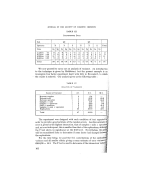
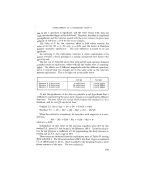
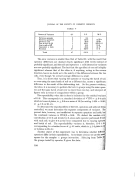
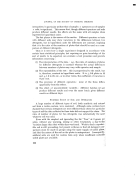
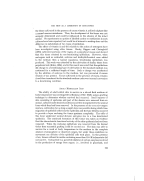
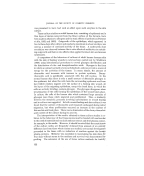
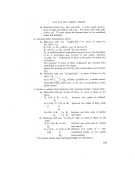
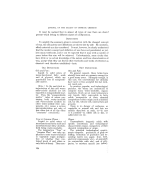
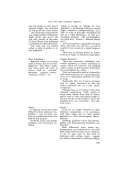
JOURNAL OF THE SOCIETY OF COSMETIC CHEMISTS Finally, how can the Mothe• Chart be used in the creation of a new note ? The most interesting, and even amusing procedure is to select any two substances of long evaporation, and to mix them in nine progressive proportions, asl.9 2-8 3.7 4.6 5-5 6-4 7.3 8.2 and 9.1. If the two chosen aromatics will blend then one of these mixtures will be a perfect balance, when neither can be detected by the nose as a separate entity, but when each contributes its odour quota to the new note. This simple pro- cedure can be applied just as successfully to the flower compounds that are to be used to enhance the basic fragrance, and the note will be further rein- forced and modified by suitable substances selected from the chart in accord- ance with their volatility, and in as cunning a manner as possible, which will, of course, depend upon the imagination of the perfumer. Another procedure, in which the chart is only useful after the base has been created, is to employ the above arithmetical system to any two already compounded flower oils, such as violet and carnation. When their true blend has been found, the same arithmetical system is again used with this blend as one of the units, while the other should be a long-lasting compound, such as an amber. This will yield a final basic blend of great and uncopyable complexity owing to the number of different constituents in the three com- pounds, and it can be further reinforced if desired in its middle and top notes by reference to the chart, and perhaps ultimately flowered wi•h orange, rose and jasmin absolutes to yield a symphonic fragrance. In conclusion, the depth of such a creation-merits the liberal use of the animal infusions of musk, ambergris and civet, which will impart life and diffusion to the whole. Here, then, is an odour classification of practical value, which, in the hands of an experienced artist, will not only reduce his time and labour by avoiding unnecessary experiments of a futile nature, but will also enable him to select with certainty the substances of proved value, knowing beforehand just what part they will play in his finished creation. DURATION OF EVAPORATION TABLE TOP NOTES 1. Acetophenone 2. Benzyl formate Almonds Bols de rose Amyl acetate Ethyl benzoate Benzaldehyde Limes distilled Benzyl acetate Linalol Ethyl acetate Mandarin Ethyl acetoacetate Methyl salicylate Isobutyl acetate Octyl acetate Methyl benzoate Phenylethyl acetate Niaouli Phenylethyl formate 90
Purchased for the exclusive use of nofirst nolast (unknown)
From: SCC Media Library & Resource Center (library.scconline.org)