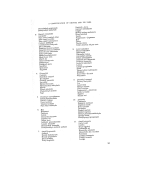
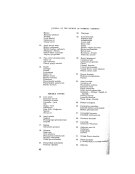
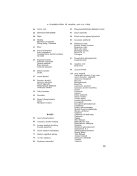
A CLASSIFICATION OF ODOURS AND ITS USES composition together with a first-grade lilac compound containing the ingredients I shall shortly mention. To each I added 10 per cent of the "fixatives," and then placed approximately 100 milligrams on smelling strips, making four in all of each aromatic. The first smell clearly revealed the superiority of the pure substance, and by comparison the flattening effect of the additions it was particularly noticeable in that containing the benzyl benzoate, which also imparted a rather metallic nuance. The strips were examined at regular intervals until the parent substance had evaporated, when it was clear that the odour strength of the other three were in direct ratio to the vapour pressures of the additions: thus, that containing benzyl benzoate was the strongest diethyl phthalate less so and benzyl alcohol the weakest. But the remark- able thing about these tests was that this rearrangement of strengths took place in one hour with the acetophenone in six hours with the bergamot and in fifty hours with the lilac. Having, therefore, proved the superiority of the benzyl benzoate, I went a step further by adding it in the percentages of one, five and ten to anisic aidehyde and ylang ylang oil aromatics of the middle note according to the classification, the one of straight and the other of complex composition. In each example the pure substance was preferred on first smelling, followed by those of 1, 5 and 10 per cent additions. But since these two substances are inherently more lasting than acetophenone and bergamot, the weakening of their odours was less rapid in fact, at the end of ten hours there was no change in the order of preference. It was only after fifty hours that a differ- ence in the odour strength of the synthetic was noticeable, and then in the following order: (1) the 10 per cent addition, (2) the 5 per cent, (3) the pure substance, and (4) the 1 per cent addition whereas in the meantime the fragrance of the essentiM oil maintained its original order of preference. Furthermore, I made parallel experiments with a Yardley perfumed cologne, which has a wide sale on this continent and contains many long- lasting ingredients. In order to decide whether the diluent of ethyl alcohol played a part, if any, in the duration of evaporation of the whole I made the same tests with the compound. The first smell confirmed the superiority of the "unfixed" perfume and compound, and no change could be observed up to fifty hours when the perfume containing 1 per cent of benzyl benzoate assumed first place, while those with 5 and 10 per cent additions still occupied third and fourth places respectively, but owing to the greater concentration of the compound the pure product retained first place after this time. Finally, I smelt the range of perfumes on the skin, when that containing no added fixative was predominantly fragrant. It would appear, therefore, that these high-boiling odourless "fixatives" exert a definite delaying action on the evaporation of the top-and middle- note synthetics, but they do so at the expense of the freshness and lift of the 87

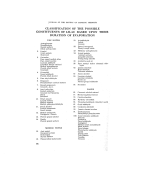
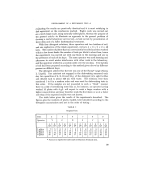
JOURNAL OF THE SOCIETY OF COSMETIC CHEMISTS pure substance. Moreover, they are not so active when added to essential oils by reason of their complex composition, since the low vapour pressure fractions probably act as natural fixatives to the more volatile constituents. In the same way the fragrance. of a properly blended compound or perfume may be marred rather than enhanced by their use, and their employment should only be condoned as fixatives in basic compounds of a light, flowery or evanescent nature. Hence, I think it is time we had a more precise conception of fixation as a whole. First, we should admit that it depends upon the choice and blending of the basic notes in any mixture of aromatics, and we might then with truth call this group of the classification" fixatives" if desired. Second, we should realise that no magical lasting qualities can be imparted by mere additions of odourless synthetics of high boiling point to already blended mixtures,. and in consequence the perfumer will be bound carefully to consider their dual effect before adding them to his finished creation. For if he is a master of his craft he will doubtless prefer to select his aromatics in accordance with their lasting properties, rather than rely upon dubious additions which might, in effect, impair his work of art. To return to the main theme, how can this classification of odours be used to facilitate the work of the perfumer, either novice or expert ? It may be true to say that the few are able to apply their genius exclusively to the creative side of the industry, but alas, the many are compelled to devote much of their time to the examination and duplication of other successful fragrances. This work can be exhausting and is often unsatisfactory, since to copy exactly a work of art is virtually impossible. Some of you will have experienced the disappointments that are inevitably associated with such problems for after months of trial and error you may have succeeded in producing a colourable imitation of the model, only to find on offering it to your client that he expects to pay a quarter the price you ask for your laboriously produced compound. This classification of odours can be of great assistance in this type of work ß since it reveals to the eye, and suggests to the olfactory organ, all the possible constituents of the model in the order of their evaporation. This is:: rendered less difficult by placing a fresh quantity of the fragrance on paper,. at equal intervals and comparing the series of strips, when by difference the:: lost constituents will be immediately recognised by a l•een and experienced sense of smell in accordance with the coefficients. .:::. But it is in the creative side of perfumery that this classification can beli so useful. The first step is to analyse the coefficients under the headings ofl • the various flower types, and colognes, and to then tabulate them according!.:: to their respective groupings of top, middle and basic notes. Each picture.' will then suggest the possible variations in shading as the new flowery creationi'i: develops, and trial and error by quantity will ultimately yield the require.• 8 : f: "•'
Purchased for the exclusive use of nofirst nolast (unknown)
From: SCC Media Library & Resource Center (library.scconline.org)