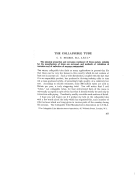
DEVELOPMENT OF A DETERGENT TEST--PART I W. B. SMITH, B.Sc., and A. TAYLOR, M.P.S.* The approach to the general problem o[ devising usehal laboratory service tests is described using as an example the development ot a test •or the deter- gency o[ dishwashing products. The economy o[ e[[ort and additional value o[ the results obtained by the use o[ a Factorial Design [or the tests over those obtained [rom the Classical Method o[ examining the e[[ect o[ changing each variable singly is emphasised. The results o• the artificial soil test developed agree with those •ound with a natural soil test. !n•ormation is obtained regarding the best method o• interpretation o[ the data, the repeat- abili• o• the test, the precision o[ different operators and the effect o• uncon- Bollable variables. INTRODUCTION TI4• ULTm^T• test of a detergent--as of many things--is its performance under actual use conditions. Though laboratory determinations of what are considered the prime requisites can be utilised as valuable screening tests, the final evaluations (or at least the later stages of evaluation) are normally made by performing actual detergency operations ' the detergent under test and a standard product are successively or simultaneously used for washing soiled articles under closely controlled conditions. In specifying a useful test procedure of this type it is necessary to deter- mine what variables require control, to what extent they need to be con- trolled, and what are the optimum values for the variables. In this connec- tion it is necessary to ensure that the conditions selected really provide the required objective test of the detergent, which implies that slightly different levels of control (for example, using natural instead of artlficial soils)' will give essentially the same comparison of the sample with the standard. Finally, it is desirable to determine the precision of the test procedure:--its repeatability and reproducibility--in'order that useful and valid inferences may be drawn from the results. This article describes the experiments carried out on these lines on a method'•'C•f evaluating detergents for dish washing, and is offered in the hope that the examples will prove instructive and useful for persons engaged on analago. us problems. THE TEST PROCEDURE The quantity to be determined is the number of plates that can be washed under typical domestic conditions with given concentrations of the detergents under test and the procedure consists of washing soiled dinner plates one at a time until the detergent solution is "finished." * IV[archon Products, Ltd., Whitehaven, C[•mberland. 96
Purchased for the exclusive use of nofirst nolast (unknown)
From: SCC Media Library & Resource Center (library.scconline.org)