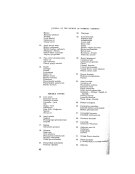
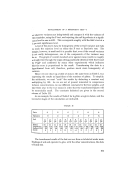
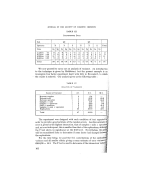
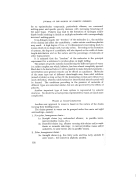
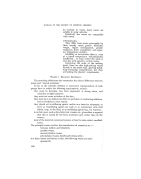
JOURNAL OF THE SOCIETY OF COSMETIC CHEMISTS far as equimolecular compounds• particularly alkanes, are concerned, melting-point and specific gravity decrease with increasing branching (of the same type). Polarity may lead to the formation of hydrogen and/or dipole bonds resulting in double or multiple molecules with correspondingly increased melting-points. Cross-linkages impede the "freedom" of the molecules (i.e., the mobility of the chains) and affect the crystallinity under certain conditions plastics may result. A high degree of two- or tri-dimensional cross-linking leads to masses which do no longer melt, but only soften. Reverting to the formation of systems, the degree of crystallinity will also depend on the width of chain- length-distribution and on the nature and the percentage of molecules of other types present. It is assumed that the "freedom" of the molecules is the principal requirement for a substance to produce gloss on slight buffing. The subject of specific systems characterisi. ng the different types of waxes is a rather complex one which, hitherto, has been almost completely ignored. Much has to be learned before it will be possible to make detailed statements nevertheless some general remarks can be offered as a guidance. Molecules of the same type but of different chain-length may form solid solutions (mixed crystals) as long as they fit the dominating crystal-unit without too much distortion, whereby substitutional or interstitional mixed-crystals will be formed. The conditions prevailing in the presence of molecules of different types are somewhat similar, but are also governed by the effects of polarity. Another important type of basic system is represented by eutectic mixtures. No doubt the actual systems represented by waxes are much more complicated. WAXES AS CHAIN-COMPOUNDS Another ne•v approach to waxes is based on the nature of the chains forming their building stones. The chains present in waxes can be grouped under four main and eight sub-headings--namely: 1. Non-polar, homogeneous chains: la. Straight chains (e.g. unbranched alkanes in paraffin waxes, microcrystalline waxes, etc.). 2a. Branched chains (e.g. alkanes carrying side-chains and/or naph- thenic or aromatic side-rings in microcrystalline waxes and/or ozokerites, to some extent also in paraffin waxes). 2. Polar, homogeneous chains: 2a. Straight chains (e.g., free fatty acids and free fatty alcohols in ester waxes free amines in aliphatic amides). 132

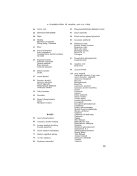
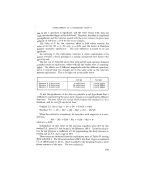
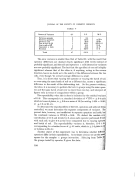
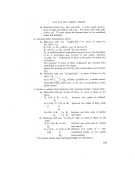
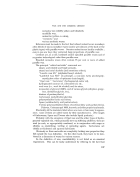
WAX AND THE COSMETIC CHEMIST 2b. Branched chains (e.g., free oxy-acids in ester waxes, particu- larly in Opal wax and in cork wax free fatty acids with side- chains, etc. To some extent also ketones have to be considered under this heading). Somewhat polar, heterogeneous chains: 3a. Molecules with one "oxygen-link"--or more of them--in the chain, e.g. R•.O.R• or .R, (ethers) (e.g., in IG-wax V). R•.CO.O.R• or .Rs (esters) (in ester waxes). Di- or multifunctional components can give rise to the formation of di- or poly-ethers (e.g. IG-wax V) and -esters, -lactones, -lactides, etc. furthermore to those of the polar oxy-esters and. acidsesters. The presence of many of these compounds has recently been established in natural ester waxes. Under this heading also fall the poly-oxyethylenes (carbowaxes, etc.). 3b. Molecules with one "nitrogen-link"--or more of them--in the chain, e.g. R.CO.NH'•---• (e.g., anilides, xylidides, etc., in amide waxes). R•CO.NH.(CH,) n.NH.CO.R• or .R• (Di- or polyamides, in other amide waxes). or multiple chain-molecules with "hydrogen-bridges" between them: Molecules with one "O•H•O"-link---or more of them--in the chain. R• .O.H--.O .R• or .R• (between two moles of alcohol/, R•.C.O.H..-O: C.R• or .R, (between two moles of fatty acid), 8 6 R•.O.H .... O.R,. •or .R, (between one mole each of alcohol i• •or .R: and ether). 4b. Molecules with one "N,--,H,--,O" link---or more of them--in the chain. R•N .... H.O.R, or .R• (between one mole each of alcohol i/I• and amine), R•.C.N.H .... O:C.R, or.R• (between two moles of a non- •jI/I /(1 substituted amide, or two substi- ii, tuted amides). For further details about hydrogen-bridges see Reference 2. 4. Double 4a. 133
Purchased for the exclusive use of nofirst nolast (unknown)
From: SCC Media Library & Resource Center (library.scconline.org)