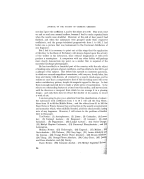
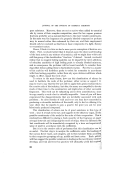
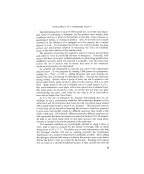
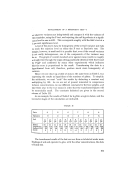
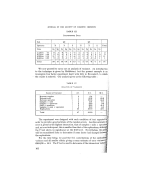
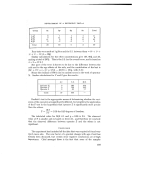
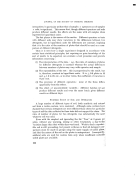
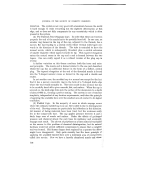
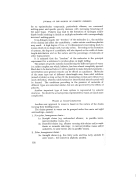
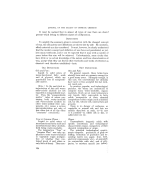
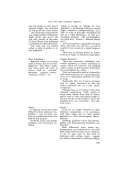
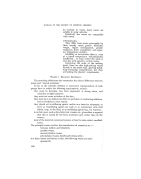
JOURNAL OF THE SOCIETY OY COSMETIC CHEMISTS It must be realised that in almost all types of wax there are chain s present which belong to different classes of configuration. DEFINITIONS To amplify the summary given in connection with the changed concept of wax, the old and the new definitions are shown side by side. By necessity, allied materials are also considered. It must, however, be clearly understood that the modern concept and definition of wax have not penetrated, as yet, into many textbooks, and it can be expected that it may need a number of years before this aim will be achieved. Unfortunately, some circles that have little or no actual knowledge of the nature and true characteristics of wax, accept what they can find in other textbooks and works of reference as classical--and therefore established--facts. OLD I)EFINITIONS Oils and Fats: Liquid to solid esters of mono-functional fatty acids and of glycerol, which are practically free of unsaponifi- able matter. [Note ! In the analytical in- terpretation o[ fats and waxes water-soluble alcohols are not regarded as unsaponifiable mat- ter. Thus, the "unsaponifiable matter" value of waxes con- taining both water-insoluble and water-soluble alcohols (or other water-soluble ester com- ponents, etc.) causes a serious misrepresentation not only of this value but of all the other "constants" concerned.] NEW I)EFINITIONS Oils and Fats: By general consent, these terms have already been used as a generic concept for a good many years. Strangely enough, in this case, the conventional fat chemists have more or less accepted the fact with- out much ado. In practice, popular, and technological parlance, the terms are understood to comprise many water-insoluble, organic materials, which are at room temperature oily liquids, fatty semi-solids or fatty solids, irrespective of their chemical composition or their origin (such as mineral oils, tar oils, silicone oils, mineral fats and greases). There is no danger of confusion, as vegetable or animal oils and fats are usually described as such, or--in case it is i ustified--as edible oils or fats, or called olive oil, etc. True or Genuine Waxes: Liquid to solid esters of monofunctional fatty acids and monofunctionM fatty alcohols, both being water-insoluble. The designation "True" or "Genuine Wax" was only ap- plicable to ester waxes of animal or vegetable origin (irrespec- tive of whether they con- tained much of said esters or only little of them). Thus mon- 134 W1196•S : Thermoplastic (organic) solids with specific consistency and technological characteristics (uses), irrespective of their chemical composition or origin. The principal technological require- ments comprise: production of gloss on buffing, formation of protective and in-:. sulating layers (on paper, fruit, food,' electrical components, etc.), of ointments (in conjunction with oils), and of gels, pastes, or mixture. masses (see below), :

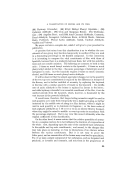
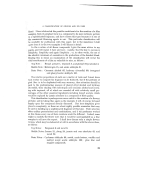
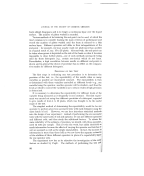
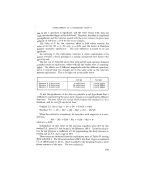
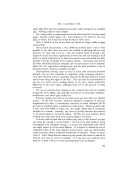
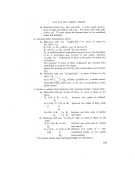
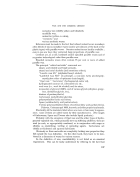
WAX AND THE COSMETIC CHEMIST tan wax (being an ester wax of mineral origin) was excluded, as well as all the other waxes. One of the main requirements was a high content of unsaponi- fiable matter (see above, oils and fats), usually of the order of about 50 per cent (although not limited in either direction). The term was not related either to state of matter or to any properties. acting as carriers or vehicles for dyes, pigments or medicating additives (carbon paper, cosmetics, pharmaceuticals, etc.), and--at least in principle--suitability for use as a solid illuminant, as well as a mouldi.ng material. (Re emulsifiability, see ma•n text "Waxes v. Related Mater- ials"). All waxes must be compatible with each other and with oils and fats, as well as soluble in fat solvents at a raised tempera- ture. There are, as already stated, no limita- tions as to origin or chemical composition. Wax Substitutes .' Materials which are de facto used as waxes, but are not ful- filling the "True Wax" defini- tion were given' all sorts of names, such as "wax-like" materials, "physical waxes," "practical waxes," etc. Related Materials: There are numerous substances out- wardly exhibiting a certain similarity to waxes, which are, however, not fulfilling some or many of the essential, technologi- cal requirements for waxes. They are frequently used in conjunction with waxes and may, for certain purposes, serve as a replacement material for some of them. Chemically, they are in many instances akin to waxes, inasmuch as also the related materials are, as a rule, chain- compounds. Naming them in accordance with their chemical composition, which usually is much more simple than that of waxes. and/or with a trade description might in the end also be an advantage so far as the manufacturers are concerned. (See also main text.) Resi•s .' In the past, resins were solely defined by their chemical com- position very involved sys- tems of classification had to be used for this purpose. Synthetic resins and similar materials were frequently ex- cluded. Resins .' They are no longer defined by their chemical composition or in accordance with their origin, but by their specific physical (i.e., their technological) charac- teristics. Synthetic products--often also thermo- plastic and thermosetting materials--are included. Main differences from waxes are: transparency and brittleness in the solid state, high melt-viscosity, and a tendency to set as such--and in the form of solutions--with surface gloss usually not further enhanced by ordinary buffing. 135
Purchased for the exclusive use of nofirst nolast (unknown)
From: SCC Media Library & Resource Center (library.scconline.org)