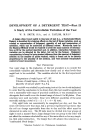
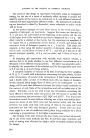
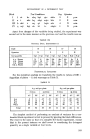
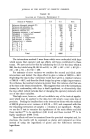
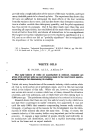
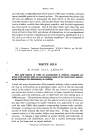
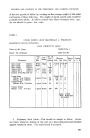
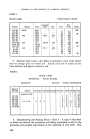
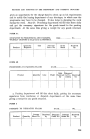
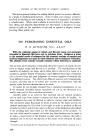
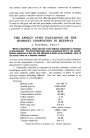
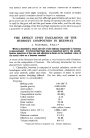
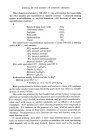
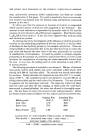
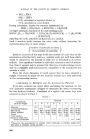
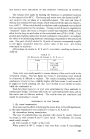
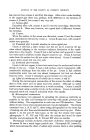
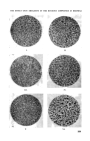
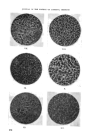
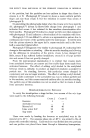
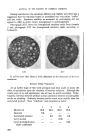
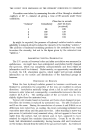
THE EFFECT UPON EMULSIONS OF THE HYDROXY COMPOUNDS IN BEESWAX tank may cause these slight variations. If possible, the number of broken seals and opened containers should be kept to a minimum. In conclusion, one may say that although general hints such as have been given above can be of service in the buying of essential oils, there is a lot to be said for the good will and the good name of the seller, and the old adage that the high standing of the firm and high reputation on the label is as good a guarantee of quality as one can obtain from chemical tests. THE EFFECT UPON EMULSIONS OF THE HYDROXY COMPOUNDS IN BEESWAX J. PICKTHALL, F.R.I.C.* Work is described in which the role of the hydroxy compounds in beeswax is demonstrated. It is found that these play an important part in the emulsi- fication behaviour of the wax and attention is drawn to the resultant value of the acetyl value as a beeswax constant. A STUDY of the literature does not p• oduce a very lucrative yield of informa- tion on the composition of beeswax. The following information has been gleaned from various sources. 1. "Chemically, beeswax is composed of myricyl palmirate, cerotic and homologous acids with small amounts of hydrocarbons, cholesterol esters and ceryl alcohols, pollen and resins. The presence of resins in undue amounts renders bleaching difficult. The free fatty acid content is an important factor in emulsifiability. Properties: Melting point 145-158 ø F. Specific gravity 0.952-0.975 Acid number 16.6-20.7 Saponification number 90-96 Unsaponifiable matter 52-56% Iodine number 4-12 Acetyl number 15.1 Ester number 72-78 Ester-acid ratio 3.6-4.2 Colour white, yellow, brown Refractive index (75 ø C.) 1.4398-1.4451 Odour honey Dielectric constant 3.1-3.3 Effective A.C. conductivity 70-86 Volume resistivity 0.9-1.5 *Polak and Schwarz (England) Ltd., Enfield, Middlesex. 263

THE EFFECT UPON EMULSIONS OF THE HYDROXY COMPOUNDS IN BEESWAX tank may cause these slight variations. If possible, the number of broken seals and opened containers should be kept to a minimum. In conclusion, one may say that although general hints such as have been given above can be of service in the buying of essential oils, there is a lot to be said for the good will and the good name of the seller, and the old adage that the high standing of the firm and high reputation on the label is as good a guarantee of quality as one can obtain from chemical tests. THE EFFECT UPON EMULSIONS OF THE HYDROXY COMPOUNDS IN BEESWAX J. PICKTHALL, F.R.I.C.* Work is described in which the role of the hydroxy compounds in beeswax is demonstrated. It is found that these play an important part in the emulsi- fication behaviour of the wax and attention is drawn to the resultant value of the acetyl value as a beeswax constant. A STUDY of the literature does not p• oduce a very lucrative yield of informa- tion on the composition of beeswax. The following information has been gleaned from various sources. 1. "Chemically, beeswax is composed of myricyl palmirate, cerotic and homologous acids with small amounts of hydrocarbons, cholesterol esters and ceryl alcohols, pollen and resins. The presence of resins in undue amounts renders bleaching difficult. The free fatty acid content is an important factor in emulsifiability. Properties: Melting point 145-158 ø F. Specific gravity 0.952-0.975 Acid number 16.6-20.7 Saponification number 90-96 Unsaponifiable matter 52-56% Iodine number 4-12 Acetyl number 15.1 Ester number 72-78 Ester-acid ratio 3.6-4.2 Colour white, yellow, brown Refractive index (75 ø C.) 1.4398-1.4451 Odour honey Dielectric constant 3.1-3.3 Effective A.C. conductivity 70-86 Volume resistivity 0.9-1.5 *Polak and Schwarz (England) Ltd., Enfield, Middlesex. 263
Purchased for the exclusive use of nofirst nolast (unknown)
From: SCC Media Library & Resource Center (library.scconline.org)