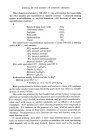
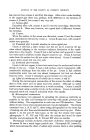
JOURNAL OF THE SOCIETY OF COSMETIC CHEMISTS When beeswax is heated to 150-250 ø C., the acid number decreases while the ester number and saponification number increase. Continued heating causes re-esterifi. cation or estolide formation with decrease of ester and saponification numbers." 2. "Esters of long chain acids 72% ½holesteryl esters 0.8% Lactones 0.6% Free acids 13% Hydrocarbons 12}/o Water 2% The esters have a saponification equivalent of about 700 with a melting point of 63 ø C. and contain: 33% myricyl palmitate 12ø/0 myricyl palmitoleate 12% myricyl cerotate 9ø/0 lacceryl palmitate 6ø//0 myricyl hydroxypalmitate (myricyl alcohol C80H0•OH) Free acids equivalent 377. Melting point 78 ø C. Neocerotic C •sH 500 • Cerotic C• 7H5•O• Montanic C•0H580, Melissic Cs,H 6sO • Hydrocarbons mainly hentriacontane C,•H •* Melting point 68.7 ø C." * Probably an error, Karrer gives CaxH½½. Most specifications for beeswax quote acid and ester values with emphasis on the ratio number (ester value divided by acid value), but there is a notable absence of acetyl values. This work was prompted by the thought that certain hydroxy compounds (alcohols and polyglycols) play an important part in emulsification technique. For example, cetyl alcohol, woolwax alcohols and glyceryl monostearate, when used with soaps or alcohol sulphates, act as efficient oil-in-water emulsifiers. Now beeswax has quite amazing properties when employed in emulsions. For instance, in the presence of a base, whether caustic alkali, trlethanolamine, borax or lime water, emulsions of unusual properties are obtained. Its properties in this direction are very well known, even if its exact function is not. It seems unlikely that when a base--say, triethanolamine or caustic soda--is reacted with beeswax to produce an emulsion the total emulsifying effect depends only on the soap formed. Borax, when used as the reacting 264

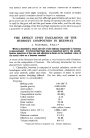
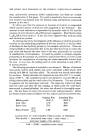
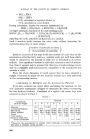
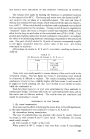
THE EFFECT UPON EMULSIONS OF THE HYDROXY COMPOUNDS IN BEESWAX base, undoubtedly introduces added complications, but these are outside the consideration of this paper. The point in question is, have we an associa- tion between soap formed from the beeswax acids and hydroxy compounds present in the wax ? It will be seen that the presence in beeswax of alcohols or compounds which contain hydroxy radicals has been suggested in the literature. The amount of such substances is represented by an acetyl value of 15.1 and the presence of ceryl alcohol C27H•,OH has been suggested. (Paul Karrer gives C26H•30H for this alcohol.) It has also been suggested that hydroxy acids and alcohols are present. An obvious step in the investigation of the influence of alcohols present in beeswax on the emulsifying properties of the wax would be to try the effect of blocking the free hydroxy groups by, for example, acetylation. There are certain pitfalls in this procedure due to the fact that heat tends to reduce the acid value and increase the ester value of the wax, presumably by a process of esterification or lactonisation. It would be possible to attempt complete acetylation in the presence of a solvent to reduce heat effects, but this would introduce the complication of removing the water-immiscible solvent from the wax. In any case, the boiling point of acetic anhydride is only 138 ø C. at normal pressure. The following procedure of acetylatim) was adopted: 300 gm. of beeswax were gently heated until molten and acetic anhydride added slowly with stirring until 200 ml. had been added The mixture was heated under reflux for one hour. During this time the temperature rose from 119 ø C. to a maxi- mum of 139 ø C. The acetylated product was allowed to cool and 300 mi. of boiling water added and the whole stirred for 10 minutes This was allowed to separate and the water-layer removed. The mass was washed six times with hot water and after the last washing, at which point the wash-water was neutral to phenolphthalein, the water was allowed to thoroughly separ- ate. The last traces of water were removed under reduced pressure. Below are shown certain analytical figures for the original and the acetylated wax. Original Wax A cetylated Wax Melting point 63.4 ø C. 63.0 ø C. Acid value 17.9 16.6 Ester value 75.2 90.6 (E.V Ratio Number 4.20 5.46 A.V) CALCULATION OF ACETYLISABLE FREE-ALCOHOL IN BEESWAX Free alcohol = (acetylated ester value - ester value) x molecular weight of the alcohol. 0.42 x (1336 - acetylated ester value) 265
Purchased for the exclusive use of nofirst nolast (unknown)
From: SCC Media Library & Resource Center (library.scconline.org)