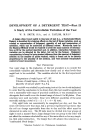
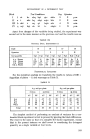
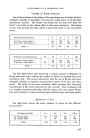
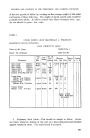
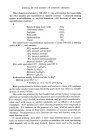
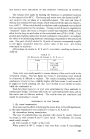
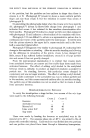
JOURNAL OF THE SOCIETY OF COSMETIC CHEMISTS 15.4 x 214.4 0.42 x 1245.4 = 6.3% calculated as myristyl alcohol or 7.1% calculated as cetyl alcohol. During acetylation, besides the reaction represented by' ROH + (CH,CO)•O --+ ROOCCH• + CH,COOH we might anticipate reactions of the acid-exchange type. R00CC•,H,• q-CH•C00H q- [(CH•C0)•0]-+R00CCH• q- C•H•COOH + [(cmco)2o] regarding the acetic anhydride [(CH3CO)20] as a catalyst. Such a reaction would increase the ester value without increasing the molecular proportion of esters present Numbe_____r of mol___ecu_les of este_•_rs Total number of molecules However, reactions of this type would also increase the acid value by the introduction of further fatty acid (e.g., palmitic acid), but both these effects would be reduced by the increase in bulk due to introduction of acetate radicals. If no significant increase in acid value occurs as a result of acetyla- tion, then it appears safe to assume that this type of acid-exchange occurs only on a negligible scale and hence the calculation of the acetylisable free alcohols is valid. From the above discussion it would appear that we have prepared a sample of beeswax in which the free hydroxy radicals have been converted to the corresponding acetate. COMPARISON OF BEESWAX AND ITS ACETYLATION PRODUCT If we have achieved our object when acetylating the beeswax, we can now undertake experiments designed to determine the effect of removing the free hydroxyl radicals. Emulsions of a typical cold cream type were prepared as shown in Table I. TABLE I Constituents parts by weight Beeswax Acetylareal Beeswax Mineral Oil Water, distilled Borax Cetyl alcohol *Ethylene oxide-cetyl alcohol condensate A 35-0 1.0 -- CREAM 35.0 1.0 C s•0 35'00 0'93 -- D l•o 50.00 35-00 0.93 E 49.0 35.0 1'0 1-0 F 147oo 49.00 35.00 0.93 1'00 G 49.0 35.0 1.0 H 14•oo 49.00 35.00 0.93 1'0 1'00 * Stated by the manufacturer to contain twelve molecules of ethylene oxide, but this figure is probably on the low side. 266

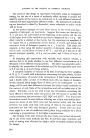
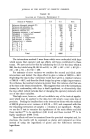
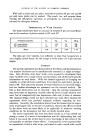
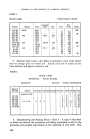
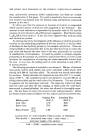
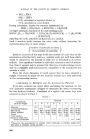
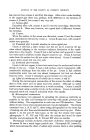
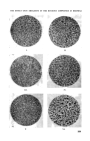
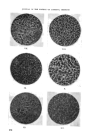
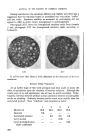
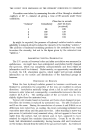
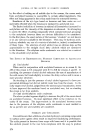
THE EFFECT UPON EMULSIONS OF THE HYDROXY COMPOUNDS IN BEESWAX The creams were made by heating the beeswax or acetylated beeswax in the mineral oil to 65 ø C. The borax and water were also heated to 65 ø C. and added to the oil phase at a controlled speed. The rate and time of stirring was constant for each cream, which was poured into jars at a tempera- ture of 45 ø C. When cetyl alcohol or ethylene oxide condensate was included this was incorporated in the oil phase. Creams A and B may be regarded as "standard" types, the borax in creams C and D was reduced to 0.93 parts to allow for the drop in acid value in the acetylated wax (17.9 to 16.6). Cetyl alcohol and ethylene oxide/cetyl alcohol condensate were added to investigate the effect of re-introducing hydroxyl-containing compounds to the acetylated wax. One part of cetyl alcohol to 14 parts of beeswax corresponds roughly to the figure calculated fr6m the acetyl value of the wax. All creams were made in triplicate. pH readings on creams A, B, E and G •'ere taken, resulting as shown in Table II. TABLE II PH READINGS Of CREAMS A, B, E AND G Cream pH 8.7 to 8.8 8-7 to 8.8 8.5 8-8 to 8.9 These tests were made mainly to ensure absence of free acetic acid in the acetylated creams. The low figure for cream E (containing cetyl alcohol) is of interest, if difficult to explain. The cream containing ethylene oxide condensate (cream G) has a slightly higher pH than cream A and cream B. It might be worth pointing out that cetyl alcohol is not soluble in water, while the condensate is. Tests for phase type (w/o or o/w) were undertaken by three methods, i.e conductance-bridge, colouring with both oil- and water-soluble dyes, and by the water and oil dilution method. The results were not conclusive and would be misleading to record. ASSESSMENT OF THE CREAMS 1. By visual examination. In no case was the effect of reducing the borax from 1.0 to 0.93 significant, so the main examination was confined to creams A, B, E and G. (a) observations during manufacture. The ease of emulsification was greatest with cream E, closely followed by cream A, with creams B and G about equal. Nevertheless, all creams made easily enough. , (b) The viscosity or "body" of the cream. When poured at 45 ø C. cream G was very thin, cream E was perhaps 267
Purchased for the exclusive use of nofirst nolast (unknown)
From: SCC Media Library & Resource Center (library.scconline.org)