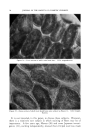
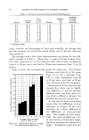
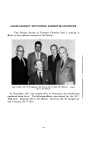
80 JOURNAL OF THE SOCIETY OF COSMETIC CHEMISTS enable one to contact members should--and when--the occasion arises. It is thus my intention to further the interests of this SOCIETY in all directions, employing the procedures which have proved to be so effective in the past. In a lighter vein, I do not intend to make afaux-pas as did the president of a large ketchup manufacturing house in Canada. His ketchup had been used only at restaurants and counters in the downtown areas of the large cities. He wanted to expand his sales so he appointed an advertising agency to help bring his product into the home. The agency prepared some large billboard displays showing a happy man eating a sizzling, juicy steak in a downtown restaurant with a beautiful waitress handing him a bottle of the ketchup. The caption read: "What Does 5'he Know About Your Husband That You Don't Know?" Upon reading the ad, the president was aghast at the suggestiveness of the caption. After much careful and thorough consideration, he proudly rewrote the caption and forwarded it to the agency. It read as follows: "He Gets It Downtown--Why Don't You Give It To Him At Home ?" You can rest assured the SoeiET•C problems will be solved more discretely than the ketchup advertisement. Thank you. METHODS OF INCREASING SKIN PIGMENTATION* By S. WILLIAM BECKEP,, JP.. Dept. of Dermatology (Marcus R. Caro, Head), College of Medicine, Universily of Illinois, Chicago, Ill. A brief review of the pigment forming cycle will help to clarify the problems of increasing skin pigmentation. Melanin (brown pigment) is formed by the enzyme tyrosinase in the melanocyte (dendritic cell) which lies in the basal portion of the epidermis. Following stimulation with the thorium X, (1) pigment formation begins on the third day and continues for about three weeks. The pigment passes through the den- drites of the melanocyte to the stratum corneum (horny layer) where it is cast off. The melanin content of the skin reaches a maximum two weeks after stimulation. At this time the melanocytes and their den- drites are filled with melanin and a large amount of melanin has been dis- charged into the horny layer. Pigment formation then slows and the melanocytes lose their pigment. Maximum pigment formation is not seen after prolonged stimulation * Presented at the September 19, 1957, Seminar, Chicago. Ill.

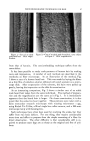
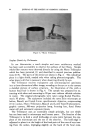
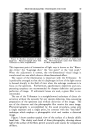
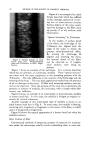
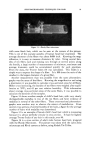
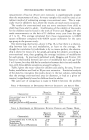
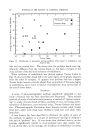
METHODS OF INCREASING SKIN PIGMENTATION 81 (daily sunlight, Addison's disease). In these conditions the melanocytes are only partially filled and the horny layer contains less than the maximum amount of melanin. It is possible that the, e is not enough substrate (tyrosine) available to maintain maximum pigment forming activity. This brief summary demonstrates that pigment formation must proceed for some time before a large amount of melanin is contained in the skin and that regardless of stimulation there is a limit to the amount of melanin that can be produced. Sunlight is the most frequently utilized pigmenting agent. The exact mechanism of action is unknown. Ultraviolet irradiation produces darkening of preformed melanin, migration of melanin to the surface of the skin and finally production of new melanin. Erythema producing ultraviolet light (2800-3100 Angstrom units) produces damage in the superficial layers of the skin. By-products of this reaction produce the erythema. There are many ways the ultraviolet radiation might effect pigment production. Lorincz (2) lists the •bllowing possible effects: 1. A drop in tyrosinase--inhibiting epidermal sulfhydril groups occurs from ultraviolet radiation. 2. Ultraviolet radiation catalyzes the oxidation of tyrosine to dopa and the dopa thus formed then catalyzes the tyrosine--tyrosinase reaction. 3. The redox potential of the skin changes with irradiation. This may favor the production of melanin. 4. Increased skin temperature accompanying the ultraviolet erythema accelerates the tyrosine--tyrosinase reaction. There has been an attempt for many years to increase the effect of ultraviolet light upon the pigment forming system. The most recently used photosensitizer is 8-methoxypsoralen (8-MOP) (3). An investiga- tion was undertaken to determine the mechanism by which this chemical acts (8). TECHNIQUE A l0 X 2 inch test area was selected on the medial aspect of the left and right thighs. An ultraviolet light 30 inches from the body was used as the source of energy. The area on the left leg was exposed to 1, 3, 5, 5, 5, 5, 10, 10, 15, 15, 15, 15, 15, and 15 minutes of ultraviolet radiation on successive days. The amount of ultraviolet irradiation was such that there was no clinical erythema or scaling during this experiment. Biopsy specimens were removed from the treated area on the seventh and four- teenth days of treatment. The same procedure was repeated on the right thigh except that 20 milligrams of 8-methoxypsoralen was taken by mouth two hours before each exposure to the ultraviolet light. After the test areas had received fourteen days of ultraviolet irradiation they were divided into six segments and these received respectively 15,
Purchased for the exclusive use of nofirst nolast (unknown)
From: SCC Media Library & Resource Center (library.scconline.org)