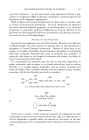
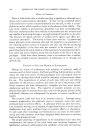
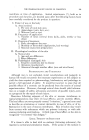
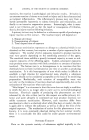
Report on EVALUATING ANTIPERSPIRANT AND DEODORANT PRODUCTS THE FOLLOWINg3 methods are based on methods and techniques tried in several laboratories to determine antiperspirant effect and deo- dorant effect of preparations used in the axilla. For this work, the studies are conducted directly in the axillary areas. (Later if studies in other than axillary areas .or in vitro can be correlated with data obtained directly in axillary areas, consideration will be given to such test methods.) PROCEDURE FOR ANTIPERSPIRANT TEST 1. Subject having used no deodorant or antiperspirant for a week, hav- ing used no deodorant soap for this week (olive oil, castile or Ivory soap permissible in axillary areas) and having shaved the axillary areas is set up for a test beginning on Monday. 2. Monday, 9 a.m. Collect 3 to 6 pieces of control data of weights of perspiration obtained simultaneously in left and right axilla of the subject. This is done by placing rated absorbent pads in the previously dried axillae and having the subject keep the upper arms close to the body to hold the pad in place. Each set of pads is retained in the axillae for from 15 to 30 minutes or until a minimum of 100 mg. of perspiration is collected from the least perspiring axilla. The number of determinations made is governed by the closeness of the check ratios obtained by the following calculation Wt. perspiration from R axilla = ratio (pR) Wt. perspiration from L axilla pR = perspiration ratio. 3. Monday, 12 noon. Apply preparation under test to the axilla which perspires the most. 4. Monday, 1 p.m. Collect 3 to 6 pieces of data of weights of perspira- tion obtained simultaneously in left and right axillae as under collection of control data. CalculatepR. 5. Tuesday, 9 a.m. Apply preparation under test to same treated axilla as on Monday. 6. 10 a.m. Collect 3 to 6 pieces of data of weights of perspiration as before. Calculate pR. 108

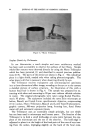
ANTIPERSPIRANT AND DEODORANT PRODUCTS 109 7. Wednesday. Repeat Tuesday's routine of applying preparation and collecting weights of perspiration. CalculatepR. 8. Thursday. Repeat Wednesday's routine. CalculatepR. 9. Tabulation of data. Average the usable data, control and after 1, 2, 3 and 4 applications of the test preparation and note the alteration in the pR as a result of the antiperspirant preparation. COMMENTS ON THE ANTIPERSPIRANT TEST Numbers refer to the corresponding numbers of the paragraphs of the test procedure. 1. The paragraph is self-explanatory. 2. Pads used must cover the perspiring area of the axilla which is delineated by the hairy area. Pads used by various workers have been made of: (a) Absorbent paper wrapped in gauze and measuring about 3 X and •/•. inch thick. This pad when folded and shaped like an in- verted U was easily retained in direct contact with the axillary sur- face when the upper arm held is close to the body. (b) Zobec pads of J & J are held in place by means of ping pong balls. (c) Webril No..#R2801 pad material from Kendall Mills serves as the absorbing material. Other means of determining amounts of perspiration in L & R axillae such as snug fitting metal cups with dry air circulating may serve as a better technique. The arbitrary figure of 100 mg. of perspiration as a minimum is based on experience in the handling of pads. Depending on the laboratory conducting tests related to the method described here, the subject has been subjected to various conditions. (d) Subject continues at regular work but in such a way that the pads are retained in close proximity to the axillary surface. (e) Subject placed in conditioned room with hands and wrists immersed in warm to hot water. (f) Subject exercising in a conditioned room on an exercycle. (g) Subject walks a treadmill in a conditioned room. In general, elevated temperature conditions can increase the output of perspiration but the pR of the subject is not altered by these conditions. To facilitate the collection of data, it may be advisable to subject the sub- ject to conditions stimulating perspiration. Because pads can slip out of place during the time of wearing and possibly affect the quantity of perspiration absorbed, the number of pieces of data will depend on the agreement of the pR's determined. 3. If Monday is devoted to obtaining control data, the first application
Purchased for the exclusive use of nofirst nolast (unknown)
From: SCC Media Library & Resource Center (library.scconline.org)