THE PHARMACOLOGIST DELVES IN COSMETICS By JoH H. DP. AIZE, Chief Skin Toxicity Branch, Food and Drug/Idministration, Dept. of HeMth, Education, and PFelfare, PFashington, D.C. The Division of Pharmacology of the Food and Drug Administration is often called upon to review derreal, mucous membrane and other toxicity data submitted for a new cosmetic formulation, or for ingredients thereof, and to express an opinion on the adequacy of such data in support of safety for use. In essence, the evaluation of such data represents an appraisal of the health hazards in the cutaneous or mucous membrane exposure to the product. Such appraisals involve fundamental problems in skin pharma- cology. More specifically, these problems are associated with studies in percutaneous or mucous membrane absorption, and concern local and sys- temic effects following exposure to the cosmetic. Time does not permit the discussion in detail of all the factors involved in percutaneous absorption. There have been a number of reviews by Rothman (1), Calvery, Draize and Laug (2), Valette (3), Rothman (4), and Gemmell and Morrison (5), which deal with this problem in great detail. Any substance which, when applied topically, is capable of eliciting a re- action, although such reaction is purely local and superficial in nature, dem- onstrates a certain degree of absorption. There are three fundamental factors concerned with percutaneous absorption: 1. Skin (gross anatomical and histological nature). 2. Innate nature of the substance to be absorbed. 3. Role of the vehicle. The skin is a large, important and, histologically, a unique organ of the body. Unlike the parenchymatous organs, it is exposed to many and var- ied influences, often of a detrimental nature, such as wide variations in temperatures and humidity, or to many offending factors, such as chemical and physical irritants in man's environment. Anatomically, the skin, also unlike the parenchymatous organs, is a typically stratified structure con- sisting of three distinct entities--the subcutis, derma and epidermis. The epidermis itself, or the peripheral stratum, is further differentiated in five cell layers. The skin has many "breaks" or imperfections in its architec- ture (as represented by the skin appendages, sebaceous and sweat glands 125

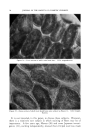
126 JOURNAL OF THE SOCIETY OF COSMETIC CHEMISTS with their ducts and the hair follicles). Since the coarser sweat glands and hair follicles may extend as far as the subcurls, the skin, in a sense, repre- sents a sieve-like structure capable of engulfing considerable material which, while no longer visible on the surface of the skin, may not be con- sidered to have penetrated the skin or to be absorbed by it. Another characteristic of the skin of man and warm-blooded animals is that the outer horny layer desquamates constantly and uninterruptedly and, in addition, the cells of the various epidermal layers, beginning at the level of the stratum granulosum and extending to the outermost portion-- the stratum corneum--exhibit a gradual loss of viability and water content. It is also in these latter layers that cornification takes place. The process of cornification, producing the keratins of the horny layer, endows this section of the skin with tough refractory chemical substances to enable the skin better to withstand trauma. All this points to evidence that a primary func- tion of the epidermis of mammalian skin is to exclude, slough off and expel materials rather than to abet the penetration of substances coming in con- tact with it. Although the skin serves as an effective barrier to the inward transfer or percutaneous penetration of many substances, a review of the literature on this subject reveals that many substances, even if only to a limited degree, may be absorbed percutaneously. In general, as better methods of chem- ical analysis have become available for the detection of substances in tis- sues and body excretions, it has been possible to demonstrate that a wide variety of substances may penetrate the skin. Newer technics employing radio isotopes, especially for substances for which sensitive methods of chemical analysis are not available, have afforded a new tool for the study of percutaneous absorption. Too often, however, radio isotopes have been employed simply to demonstrate whether or not a substance has penetrated the skin. Obviously, such procedures give little information from a phar- macological standpoint as to the biochemical fate of the substance, meta- bolic end products or the toxicity of metabolites. In our consideration of the percutaneous absorption of substances, dis- tinction should be made as to whether the skin at the time of exposure is in- tact or in varying degrees of damage. Differences in absorption (6) be- tween intact skin and a skin damaged by simple abrasions can be most striking. Some workers even consider the simple removal of sebum and cell detritus, as with detergents, as capable of producing an unphysiological state in the skin. If this is true, a condition of truly normal skin is more rare than realized. Many substances, upon repeated topical application, bring about a cer- tain degree of serious skin damage. Such damage may be simple macera- don or keratolysis, or as ,extensive as frank fissuring and ulceration of the epidermis, so that with subsequent application greater absorption of the
Purchased for the exclusive use of nofirst nolast (unknown)
From: SCC Media Library & Resource Center (library.scconline.org)