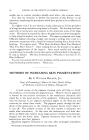
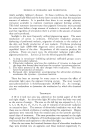
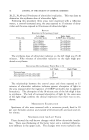
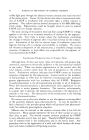
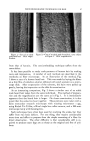
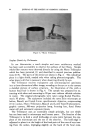
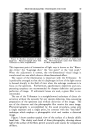
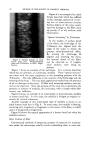
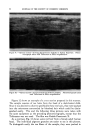
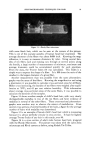
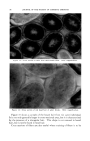
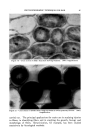
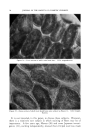
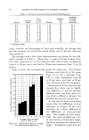
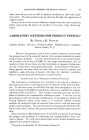
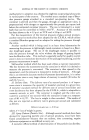
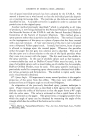
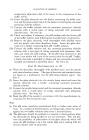
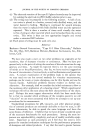
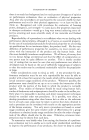
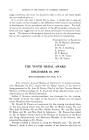
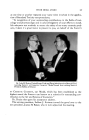
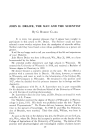
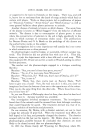
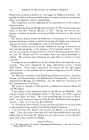
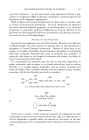
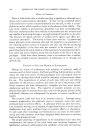
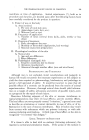
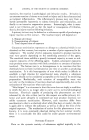
PHOTOMICROGRAPHIC TECHNIQUES FOR HAIR 93 Figure 11.--Hardy fiber microtome. with some black hair, which can be seen at the corners of the picture. This is one of the coarsest samples of human head hair examined. The average diameter of the fibers was about 0.004 inch. Knowing the mag- nification, it is easy to measure diameters by ruler. Using several bun- dles of ten fibers each and making cuts through at several points along the bundle, a large number of measurements of minimum, maximum and average diameters could be accumulated quickly for each specimen. From the data, the Trotter Index (9) was calculated. This Index is a simple way to express the shape of a fiber. It is 100 times the ratio of the smallest to the largest diameter of a given fiber. Another measurement that was possible from the same photomicro- graphs was the areas of the fibers. Knowing the magnification and using a planimeter, it was possible to calculate cross-sectional areas for all fibers. Before cross sectioning, the bundles of ten fibers were weighed after equili- bration at 70øF., and 65 per cent relative humidity. With information about average cross-sectional areas of the same fibers, it was possible to calculate the densities of the samples. Figure 14 shows another sample of child's head hair, with very clearly distinguishable medullas in two of the ten fibers and faint evidence of medullas in several of the other fibers. These cross-sectional photomicro- graphs were another way to observe the extent of medullation. From several cross sections of several bundles of ten hairs, a figure for the average number of hairs with medullas was determined. Figure 15 is an example of female child's head hair which is interesting because it is almost perfectly circular in cross section. It had the highest average Trotter Index of any hair in this study, over 90. Figure 16 is a cross section of adult male human head hair, prepared with the Hardy Microtome. The picture was taken with the same Zeiss microscope and Rival camera as before, using Kodak Tri-X film.

94 JOURNAL OF THE SOCIETY OF COSMETIC CHEMISTS , •- '"'•'•:':•?-r ............. •::•.•t,:•" •' '•'• ß .. '•-. . .:• . ...• .: •... .• .• ..:: ... • •:?• ..... .. .. . ." 7'.: "' !i ? '•i :.. ". ...... ....7-. i?'.i':i:,• ,:. ,:...' ...... '•' ...: '¾: "-?. ......... 'z .. •.• •'• Figure 12.--Cross section of hairs from dark-haired child. 500X magnification. •... ......: .7,.... • ß •.,'.: ... .. :.•,,, 37•:. ß ß Figure 13.--Cross section of red head hair of adult female. 500X magnification. Figure 17 shows a sample of the beard hair from the same individual. It is not only generally larger in cross-sectional area, but it is characterized by the presence of a triangular hair. This shape is not unusual in beard hair, but is rarely found in head hair. Cross sections of fibers are also useful where staining of fibers is to be
Purchased for the exclusive use of nofirst nolast (unknown)
From: SCC Media Library & Resource Center (library.scconline.org)