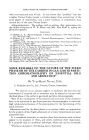
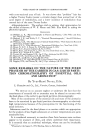
THE PHARMACOLOGIST DELVES IN COSMETICS 131 skin and mucous membranes (7) are obtained in small laboratory animals. The albino rabbit has been found well suited for the bulk of the dermal toxicity studies. Experimental procedures in animals should yield data on the extent of injury, if such result, and a margin of safety in use. Pro- cedures for the study of local and systemic toxicity are given in brief outline below. I. Determination of dermal toxicity A. Acute (single exposure of 24 hours or less) 1. Intact skin 2. Damaged skin (a) Disease (b) Abrasion (mechanical) (c) Burn B. Subacute (multiple exposures) 1. Short or 20-day (a) Skin intact and abraded (b) Cosmetics, infrequently used 2. Long or 90-day (a) Skin, intact only (b) Majority of cosmetics (c) Dose levels employed (1) Determination of base line dose, depending on label directions (2) Demonstration of margin of safety II. Biochemical studies--analytical methods A. Excretion studies B. Tissue storage C. Organ function tests III. Hematology A. Hemoglobin determination B. Differential cell counts C. Abnormalities of formed elements D. Other tests as indicated, e.g., clotting time, fiocculation time, hematocrit, etc. IV. Pathology A. Gross examination of tissues, and recording of organ weights B. Detailed microscopic examination of tissues ¾. Local toxicity A. Primary irritation B. Sensitization 1. Guinea pig intracutaneous technique (shortcomings of method) 2. Man (a) Repeated insult technic (b) Shortcomings of limited exposure such as "prophetic tests" involving few or limited exposures •,•, C. Skin fatigue

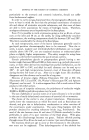
132 JOURNAL OF THE SOCIETY OF COSMETIC CHEMISTS VI. Acute oral toxicity of topical preparations A. Preferably in two species of animals (one, a nonrodent) B. Toxicity information, in case of accidental swallowing Important as it is to obtain pharmacological and toxicological data on individual components of a cosmetic formulation, such data may be in- sufficient if the resu'lting biological reactions elicited by a formulation represent more than a simple addition of effects of the component parts. In other words, data on the final formulation are necessary to demonstrate whether synergistic effects are produced by compounding. Tests khould be conducted on the same type of tissue as will apply in normal use. Results obtained in tests on one type of mucous membrane may not necessarily be valid to demonstrate safety for use on another type of mucosa where secretions, pH conditions and absorbing capabilities may differ significantly. To a limited extent this is also true of various skin areas of the body where pH, thickness and physiological condition of the epidermis may vary. SUMMARY Thorough animal experimentation as outlined above for cosmetics should yield data on the pharmacology, biochemistry and pathology to enable a calculation of safety in use. Animal data are obtained on a relatively uniform and standardized experimental subject that is, selected on the basis of maximum homogeneity as to age, health, diet and environment. Results obtained on highly uniform subjects do reflect more accurately the effects of treatment. Such uniformity of results would be difficult to obtain for man, who, as stated above, is probably the most heterogeneous species of the animal kingdom. It would be difficult to define so-called normal man since diet, age, state of stress (health) and environment are some of the variables which may affect his response, but it is this heterogeneity of man which makes certain clinical investigations desirable and essential. How- ever, clinical investigations should not be attempted before the phar- macologist, the biochemist and the pathologist have, through their animal studies, arrived at a probable level of tolerance for man. The question of ultimate safety for use in cosmetics is of vital importance and concern to the user who must be protected from harm it also concerns the govern- mental regulatory agency which has been delegated the responsibility in these matters by Congress and finally, it concerns equally and vitally the cosmetic manufacturer if he wishes to continue and prosper in his business. REFERENCES (1) Rothrnan, S., y. Lab. C/in. Med., 28, 1305 (1943). (2) Calvery, H. O., Draize, J. H., and Laug, E. P., Physiol. Rev., 26, 495 (1946).
Purchased for the exclusive use of nofirst nolast (unknown)
From: SCC Media Library & Resource Center (library.scconline.org)