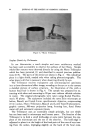
106 JOURNAL OF THE SOCIETY OF COSMETIC CHEMISTS method prior to adoption was checked by eighteen cooperating laboratories in various parts of the country. The method uses a standard type of Bour- don pressure gauge attached to a standard can-piercing device. The container is pierced and then the gauge, through an appropriate valve, is prepressurized with nitrogen to approximately five pounds per square inch below the estimated container pressure. The can is immersed in a water bath that can be controlled to within +0.5øF. Accuracy of this method has been shown to be + 1.5 p.s.i. at 70øF. and +3.0 p.s.i. at 130øF. For the measurement of the internal pressure of glass aerosol products another tentative method has been adopted by the C.S.M.A. which utilizes a standard Bourdon gauge and an adapter for taking the pressure through the valve. Another method which is being used in at least three laboratories for measuring the pressure in lightweight metal containers is based on a Bour- don diaphragm gauge. The use of the diaphragm makes it possible to take the pressure through the valve without the danger of getting liquids into the Bourdon tube. This method is especially useful for quality control since it does not necessitate destruction of the package by piercing, and the pressure measurement is rapid. Still another method which has been used utilizes a mercury manometer. The line between the manometer and the container in which it is desired to measure the pressure is evacuated. The container is then opened to the manometer, and the pressure is measured in inches of mercury. Although this is an extremely accurate method of pressure determination, it is rather cumbersome since a very large column of mercury is needed (30 inches for each 14.7 p.s.i.). II. Delivery Rate. The delivery rate of an aerosol product is of impor- tance since it measures the quantity of material atomized in a given time. A tentative standard method for delivery rate of aerosol insecticides and room deodorants has been adopted by the C.S.M.A., which is adaptable to cosmetic aerosols as well. The container is weighed and the valve acti- vated for a period of ten seconds while the container is kept at a tempera- ture of 80 + 0.5øF. The loss in weight is then recorded. The results of this test are reported as delivery rate in grams per second and calculated as follows: Delivery rate, gm./sec. -- .4/10 sec. where ?/= loss of weight in grams. IlL Spray Pattern (Particle Size). Although several methods have been devised for measuring particle size of aerosol products, most have been found unsatisfactory because they are tedious, time consuming, require elaborate equipment or are difficult to carry out. A tentative official method of determination of the particle size distribu-

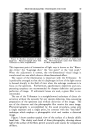
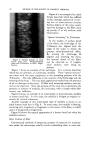
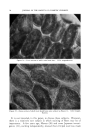
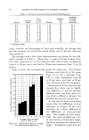
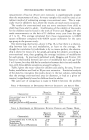
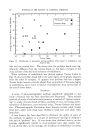
COMMENTS BY MORRIS J. ROOT--AEROSOLS 107 tion of space insecticide aerosols has been adopted by the C.S.M.A. The aerosol is drawn into a wind tunnel so that the individual particles deposit on a rotating microscope slide. The particles on the slide are counted and classified by size. A suitable correction is applied in order to calculate the particle sizes in the original spray. Another method previously described,* which is adaptable to all types of products, is now being checked by the Personal Products Committee of the Scientific Section of the C.S.M.A. and the Aerosol Standard Methods Committee of the Society of Cosmetic Chemists. This method gives a spray pattern rather than a particle size distribution. The method is based on the impingement of the spray on a piece of paper that has been treated with a dye-talc mixture. A 5 per cent mixture of the dye in talc is brushed onto a 60-pound Vellum paper stock. A small, but known, burst of spray is allowed to impinge upon the treated paper. Wherever the particles strike the paper the dye goes into solution and is absorbed'. The size of the dye spots are in direct relation to the size of the liquid particles when they come into contact with the paper. The dye used must be soluble in the spray particles. In the case of alcoholic sprays such as hair lacquers. a water-soluble dye such as DuPont Crystal Violet must be used in the case of oil soluble sprays such as insecticides, an oil soluble dye, for example, DuPont Oil Red Powder, must be used. This spray pattern technique is particularly useful for comparing spray characteristics obtained with differ- ent valves, actuators and formulations. The method is rapid, easily done and a visual record is obtained. 1t z. Spray/Ingle. Of importance in many aerosol products is the angular projection of the spray from the orifice. This may vary with different actuators from an 18 degree angle to one of over 50 degrees. An adaptation of the previously described spray pattern technique is used. Paper treated with dye as described is held against the valve stem directly under the orifice of the button so that the paper forms a 90 ø angle with the valve stem. The valve is activated so that a quick burst of the spray is directed on the paper. The spray forms a triangular pattern from which the angle of spray can be obtained by measuring the angle of the triangle which has the orifice of the button as its vortex. Root, Morns J., Aerosol Spray Patterns," Proc., Sci. Sect., Toilet Goods .4ssoc., Number 24 (December, 1955).
Purchased for the exclusive use of nofirst nolast (unknown)
From: SCC Media Library & Resource Center (library.scconline.org)