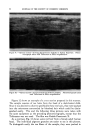
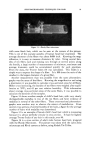
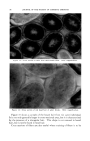
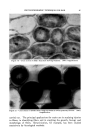
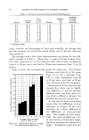
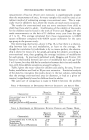
PHOTOMICROGRAPHIC TECHNIQUES FOR HAIR 99 measurement of load at 20 per cent extension is experimentally simpler than the measurement of area for many samples this could be used as an indirect method of estimating average cross-sectional area. This is espe- cially true for children's hair, where the results are much more consistent. The results for cross-sectional area are more consistent from child to child than from adult to adult. Confirmation of the validity of the results for the children may be found in the work of Trotter and Duggins (9) who made measurements on the hair of 11 children every year from the ages of 5 to 12. The average calculated from those measurements is 0.0032 square millimeter compared with 0.0034 square millimeter for the same age group in the present study. One interesting observation, shown in Fig. 18, is that there is a relation- ship between hair size and medulladon, at least on the average. Al- though the correlation by individuals is by no means perfect, the relation- ship is shown by means of a bar graph, grouping the subjects according to cross-sectional area, then graphing the average incidence of medullation for each group. In previously published work, Duggins and Trotter (13) found no relationship between per cent of medullated hair and age from 5 to 14 years, but they did find a correlation between hair size and medulla- tion, with three definite exceptions among 16 subjects. Table 3 gives the mean values for children and adults, for area, Trotter Index, medulladon and load at 20 per cent extension. Statistical analysis of the data by t-test gives the results shown in the last column, indicating that the average cross-sectional area (or diameter, or load at a given ex- tension) is significantly lower for children than for adults. The same sort of comparison is made in Table 4 between the problem TABLE 3--SIGNIFICANCE OF DIFFERENCES BETWEEN CHILDREN'S AND ADULTS' HAIR Level of Signifi- Mean for Mean for cance of Characteristic 10 Children 10 Adults Difference, % Cross-sectional area X l0 s, sq. in. 5.37 7.72 Trotter index 75.0 69.1 Medullation, % 29 53 Load, gm., per hair at 20% extension 16.9 23.9 99 9O 95 99 TABLE 4--SIGNIFICANCE OF DIFFERENCES BETWEEN PROBLEM AND NORMAL HEADS Characteristic Level of Mean for Mean for Signifi- 6 Problem !4 Normal cance of Heads Heads Difference, Cross-sectional area X 106, sq. in. 5.43 7.03 Trotter index 77.4 69.7 Medulladon, % 19 50 Load, gm., per hair at 20% extension 16.8 22.4 90 98 99 85

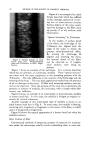
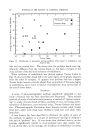
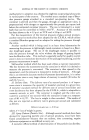
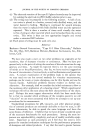
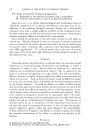
100 JOURNAL OF THE SOCIETY OF COSMETIC CHEMISTS lOO 8o-- 60-- 40-- 20 _ 0 60 © I "Problem" Hair Norraal Hair © ß © © ß ß ß ß 65 70 75 80 85 90 95 Trotter Index lOO Figure 19. Distribution of permanent waving problems with respect to medullation and shape of hair. hair and the normal hair. This shows that the problem heads were sig- nificantly different from the normal heads on the basis of shape of the cross sections of the hair and incidence of medullation. When incidence of medullation was plotted against Trotter Index in Fig. 19, all six problem heads fell in the same region of the graph, separate from the other 14 samples. It appears that problem hair has a higher Trotter Index (nearer a circular shape) than normal hair of the same degree of medullation, and a lower incidence of medullation than normal hair of the same Trotter Index. SUMMA RY A series of photomicrographic methods specifically applicable to the study of human hair has been described and illustrated. These include methods of study of cuticular scale patterns, a method of "optical section- ing" to study internal detail of fibers, methods of cross sectioning, deter- minations of diameters, cross-sectional areas, Trotter Indexes and densi- ties. Photomicrographs illustrating these features include adult female head hair, adult male head hair, children's head hair and adult male beard hair. A case history has been described to illustrate the utility of some of the methods as applied to a study of permanent waving of children's hair and of "problem" hair. It was shown that children's hair is, on the average, significantly smaller in cross-sectional area than adults' hair. It was shown that, on the average, the incidence of medullation increases
Purchased for the exclusive use of nofirst nolast (unknown)
From: SCC Media Library & Resource Center (library.scconline.org)