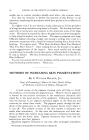
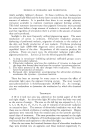
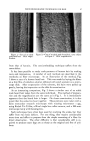
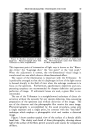
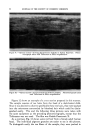
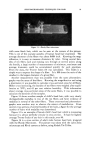
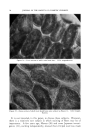
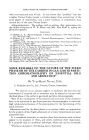
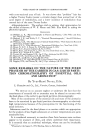
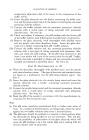
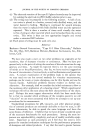
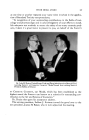
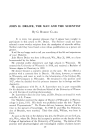
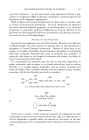
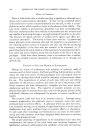
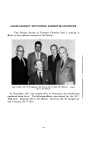
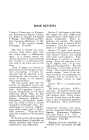
PHOTOMICROGRAPHIC TECHNIQUES FOR HAIR 89 Figure 4.--Surface structure of adult head hair. Photomicrograph taken with Trilineator at 500X magnification. .. 5:. .•:. Figure 5.--Surface structure of child's head hair. Photomicrograph taken with Trilineator at $00X magnification. This important point of intersection of light rays is known as the "Rams- den circle," the "Lagrange disc," the "eye point" or the "exit pupil." When the adjustment is correct, the two-dimensional visual image is transformed into one which shows a three-dimensional effect. The nature of the illumination is important with the Trilineator. It is preferably arranged so that the iris diaphragm in front of the light source is focused sharply in the field of view when the substage condenser is in focus on the specimen. Furthermore, apochromatic objectives and com- pensating eyepieces are recommended for sharper definition and greater perfection of image. If achromatic lenses are used, a green filter is rec- ommended. The use of the Trilineator is a straightforward technique of direct ob- servation without the necessity for any special, elaborate, time-consuming preparation of the specimen and without distortion of the image. The eye of the observer and the photographic film receive the same image. Photomicrography is accomplished by the usual procedure, using only a single exposure and a single print, by contrast with the "bas-relief" technique which employs a photographic trick and renders a distorted image. Figure 5 shows another typical view of the surface of a female child's head hair. The clarity and detail of these photographs, showing almost half of the surface of the fiber, permit accurate scale counts for comparison of fibers.

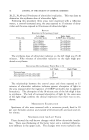
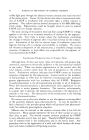
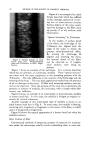
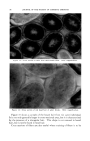
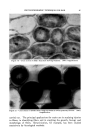
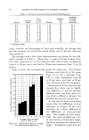
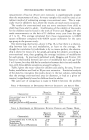
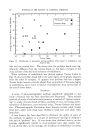
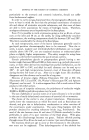
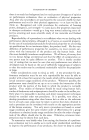
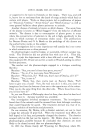
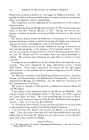
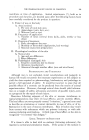
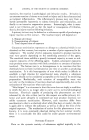
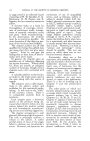
90 JOURNAL OF THE SOCIETY OF COSMETIC CHEMISTS Figure &--Surface damage on adult female head hair. Photomicrograph taken with Trilineator, at 500X magni- fication. Figure 6 is an example of an adult female head hair which has suffered surface damage, apparently involv- ing loss of some sections of scales. Surface defects of this type, result- ing from damage to the fiber, show up poorly, if at all, without relief illumination. "Optical Sectioning" by Trilineator In the studies of surface detail of the fibers, the knife-edge of the Trilineator was aligned with the edges of the scales to obtain the greatest three-dimensional effect. By turning the knife-edge 90 degrees and lowering the focus, the internal detail of the fibers can be observed as if longitu- dinal sections were being ex- amined. Figure 7 shows an example of this technique. It is a human head hair which has an unbroken, or continuous, medulla. These "optical sections" are taken with the same equipment as the preceding pictures with the Trilineator. The only difference is the rotation of the knife-edge and the lowering of the focus. The very dark appearance results from the presence of air or other gas in the canal. If filled with mounting medium, more de- tail can be observed. Since the purpose of this work was to determine the presence Or absence of medulla, this technique, with a simple whole fiber mount, was sufficient. Figure 8 shows an example of an interrupted, or discontinuous, medulla in human head hair. In this type, the medulla is bridged at irregular in- tervals by cortical substance. Another example of this interrupted type of medulla is shown in an adult human head hair in Fig. 9. In some cases, the medulla is fleeting, occurring only irregularly as fragments in the center of the fiber, in which case it is designated as fragmental. Figure 10 shows the typical appearance of a human head hair when the medulla is absent. Cross Sections of Hair Convkntional methods of Ereparing samples"0f materials for examina- tibn dhder the m•cx:oscope usually involve embedding them in some rrfk-
Purchased for the exclusive use of nofirst nolast (unknown)
From: SCC Media Library & Resource Center (library.scconline.org)