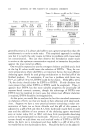
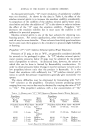
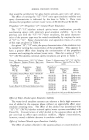
AEROSOL EMULSION SYSTEMS 285 system, "12"/"11"/water emulsions, caused no corrosion in the lacquer- lined containers under any of the storage conditions nor did they cause corrosion in the tin-plate containers at room temperature. After six months of 100øF., however, slight derinning on the can shoulders was observed. The general lack of corrosion observed with the emulsion systems is encouraging. It should be recognized, however, that the addition of active ingredients may introduce corrosive characteristics into the system. It is necessary, therefore, to shelf test any practical formulations. It has been proposed by Boe (15) that the water-in-oil systems would be expected to show less corrosion than the oil-in-water systems because in the former, the dispersed water has less tendency to come into contact with the container and valve. This may well be an important factor. On the other hand, the surface-active agent that is used also has an important bearing upon the corrosion that is observed. Some of the other water-in- oil emulsions prepared with agents other than the Emcol 14 were found to cause considerable corrosion. Pressures of zlerosol Fomulations The pressures resulting with the propellent/solvent/water emulsions are substantially those of the propellent/solvent mixture. The pressures of such mixtures will depend upon the ratio of the mixtures and the particular propellent and solvent that are used. Examples of the pressures of such mixtures are given in Reference 5 and need not be considered in more detail here. In cases where the proportion of propellent is low and the relative proportion of oil-soluble emulsifying agent is high, then the emulsifying agent will contribute to a lowering of the vapor pressure of the propellent. Flammability These propellents are nonflammable. As a result, all of the propellent/ water emulsions are also nonflammable. However, when a flammable auxiliary solvent, such as odorless mineral spirits, is used in the formulation then the flammability properties must be determined. The flammability characteristics of a series of emulsions with varying concentrations of odorless mineral spirits are given in Tables 8 and 9. The propellents were "12" and "12"/"11" (30/70), respectively. The flammability characteristics were evaluated by the flame extension and the flame sustaining tests. The flammability of the formulations appears to be a function of the concentration of auxiliary solvent, concentration of water, and spray characteristics. The data in Table 8, for example, indicate that emulsions with 20 per cent odorless mineral spirits are nonflammable, those with 30 per cent are flammable but do not sustain a flame, and those with 40 per cent are flammable and sustain a flame.

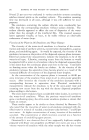
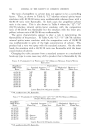
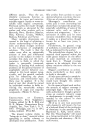
286 JOURNAL OF THE SOCIETY OF COSMETIC CHEMISTS The ratio of propellent to solvent does not appear to be a controlling factor. Thus, as shown in Table 8, "12"/odorless mineral spirits/water emulsions with 40/20/40 ratios were nonflammable whereas those with a 60/30/10 ratio were flammable. In both cases the propellent/solvent ratio is the same. This is also shown in Table 9 where the "12"/"11" (30/70)/odorless mineral spirits/water emulsion with the composition ratio of 60/20/20 was flammable but the emulsion with the lower pro- pellent/solvent ratio of 40/20/40 was nonflammable. The spray characteristics appear to play a role in determining the flammability of the product. In Table 9, the "12"/"11" (30/70)/odorless mineral spirits/water emulsion with the composition ratio of 50/40/10 was non flammable in spite of the high concentration of solvent. This product had a very wet spray with the standard actuator. On the other hand, the emulsion with a 60/30/10 ratio was flammable with the lesser concentration of solvent. Changing the valve actuator from a standard actuator to a mechanical break-up type in some cases may shift a product that is flammable by the TABLE 8 FLAMMABILITY OF PROPELLENT "12"/ODoRLESS MINERAL SPIRITS/WATER EMULSXO•S Propellent/ OMS/Water Ratio • , Flammability , • Standard Actuator --• ----Mechanical Break-tm-• Flame Ext. Flame Sust. Flame Ext. Flame Sust. 60/20/20 NF* NF NF NF 40/20/40 NF NF NF NF 20/20/60 NF NF NF NF 60/30/10 FI. NF NF Fl. 40/30/30 FL NF NF FL 20/30/50 FL NF NF NF 50/40/10 FL FL FL FL 40/40/20 FL FL NF FL 20/40/40 FL NF NF FI. 2 parts Emcol 14/102 parts emulsion * NF, nonflammable FL, flammable. TABLE 9 FLAMMABILITY OF PROPELLENTS "12"/"11" (30/70)/ODoRI,ESS MINERAl, SPIRITs/WATER EMULSIONS Propellent/ OMS/Water Ratio 60/15/25 6o/2o/2o 40/20/40 60/30/10 40/30/30 5o/4o/lo 40/40/20 Flammability • Standard Actuator .... Mechanical Break-up• Flame Ext. Flame Sust. Flame Ext. Flame Sust. NF* NF NF NF FI. NF NF NF NF NF NF NF FI. FL NF NF NF--Stream NF NF NF NF Very wet NF NF NF NF Stream NF NF NF 2 parts Emcol 14/102 parts emulsion * NF, nonflammable FL, flammable.
Purchased for the exclusive use of nofirst nolast (unknown)
From: SCC Media Library & Resource Center (library.scconline.org)