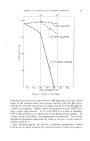
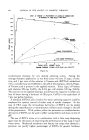
AEROSOL EMUI,SION SYSTEMS 287 flame extension test into the nonflammable class by widening the angle of spray. This may also convert a product that does not sustain a flame into one that does, probably by better aeration of the sprayed material. Po/en/ia/ •/pp/ica/ions of the lVa/cr-i,-Oi/ Emulsions Thc water-in-oil cn•ulsion systclns that have been prcsc•tcd are obviously basic formulations. By the addition of suitable active ingredients, formula- tions with practical applications will be developed. The active ingredients do not necessarily have to be soluble in the aqueous phase. Organic soluble materials can be dissolved in the auxiliary solvent and water alone added if an emulsion type is desired. Also, organic soluble and water- soluble active ingredients can be combined in the same formulation by dissolving the former in the auxiliary solvent and the latter in the aqueous phase. As discussed in the previous sections, the spray characteristics of the emulsion systems can be varied from very fine to very wet by suitable choice of the emulsion system. This wide range of available spray charac- teristics provides a variety of potential applications from topical products, such as antiseptics, antiperspirants, etc., where a wet spray is desired, to room deodorant and sanitizer sprays, where a fine mist is necessary. In formulating, factors such as the type of container to be used, the pressure of the systems, type of spray, flammability, emulsion stability, and corrosion must all be considered. For many products, such as sun tan sprays, a water-in-oil emulsion system with an auxiliary solvent is par- ticularly desirable since it adheres to the skin and is not readily removed by water. In other cases, where contact of the aqueous phase with the skin is desired, a high boiling organic solvent is not desirable and an emulsion prepared without an auxiliary solvent or with a lower boiling auxiliary solvent, such as propellent "113" would be preferred. Most of the emulsion sprays, particularly those with auxiliary solvents, do not have an undesirable chilling effect on the skin. This is a consider- able advantage for topical applications. In most cases, redispersion of the creamed aqueous layer occurs with ease. In some cases, particularly where the viscosity of the emulsion is high, redispersion takes place in the aerosol container but not in the stand- pipe. When this occurs, the initial spray consists of an aqueous stream followed by the normal spray. This is undesirable and it is generally necessary to reformulate the product. Of course, if the container is used in an inverted position without a standpipe, the problem does not exist. EXPERIMENTAL Preparation of Emulsions The method of preparation of the various emulsions depended upon the

288 JOURNAL OF THE SOCIETY OF COSMETIC CHEMISTS particular propellent and system involved. Water emulsions of "11" or "113" were prepared by dissolving the surface-active agent in this pro- pellent compound, adding the water, and shaking to form the emulsion. As "12" and "114" are gases at room temperature, they must be handled differently. Emulsions of either of the above with water were prepared either by dispersing the agent in the water and pressure loading the pro- pellent or by dissolving the agent initially in the propellent and pressure loading the propellent solution of the agent. The latter is the preferred procedure. Many of the emulsions were formulated with an auxiliary solvent, such as odorless mineral spirits. In such cases, the surface active agent was dissolved in the solvent and the aqueous phase added slowly with agitation. The resulting water-in-oil emulsion was then poured into a coated bottle. If "11" or "113" were used in the formulation, they were added at this time and the bottle was capped. The remainder of the propellent was pressure loaded. After loading was completed, the emulsions were shaken 20 times by hand to complete the dispersion and the separation times were determined within an hour after pressure loading the propellent. Determination of Emulsion Type Determination of emulsion type was generally carried out with the electrical conductivity apparatus described by Griffin (16). For emulsions under pressure the apparatus was modified by fitting the electric contacts into a glass pressure-tube as discussed in Reference 5. SUMMARY The various methods available for spraying water-based aerosol products are reviewed with emphasis upon the water-in-oil emulsion systems. By suitable choice of propellents and auxiliary solvents, nonfoaming sprays varying from very fine to very coarse may be obtained. The characteristics and properties of the emulsion systems, such as emulsion stability, flammability, viscosity, stability to electrolytes and alcohol, and particle size of the sprays are discussed. REFERENCES (1) Callans, L. D., and Griswold, J., Chem. Specialties Mfrs. ztssoc. Proc., ¾3rd ztnn. Meeting, Dec., 1956. (2) AterosolAtge, October (1956), p. 12. (3) Mina, F. A., U.S. Patent No. 2,702,957. (4) Genetron Technical Data Bulletin WBA-7-56, General Chemical Co. (5) "Kinetic" Technical Memorandum #21, E. I. du Pont de Nemours & Co., Inc. (6) McCutcheon, J. W., "Synthetic Detergents and Emulsifiers" (1955). (7) "Atlas Surface Active Agents," Atlas Powder Co. (8) "Kinetic" Technical Memorandum #3, E. I. du Pont de Nemours & Co., Inc. (9) Sherman, P., y. Soc. Chem. Ind., 69, S70, S74 (1950). (10) Clayton, "The Theory of Emulsions and Their Technical Treatment," 5th Ed., New York, The Blakiston Co., Inc.
Purchased for the exclusive use of nofirst nolast (unknown)
From: SCC Media Library & Resource Center (library.scconline.org)