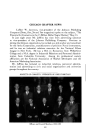
302 JOURNAl OF THE SOCIETY O1: COSMETIC CHEMISTS Scroll presented by Society of Cosmetic Chemists to Prof. William M. Montagna, Brown University, in connection with the Society's 1958 Special Annual Award of $1,000 for Dr. Montagna's Fundamental Research of The Biology of Skin and Its Appendages.

THE PARTICULARITY OF HUMAN SKIN WILLIAM MONTAGNA ALL MEDIA of communication warn us constantly that natural skin can be ugly and evil, and that to be civilized we must combat its natural attributes. Overly aware of the impression we make, we bathe our skin daily, we accentuate or depress its color with various artifices, we try to make it smoother, we attempt to depress the growth of hairs in some areas and to induce it in others. We wage a constant war against the natural odors from the secretion of skin glands. Yet, skin goes on unconcernedly, ignoring, tolerating or trying to overcome the ravages of these harassments. Man has survived because his skin is undaunted by countless centuries of iniquity, and has lost none of its sturdiness, and may even have gained some. In spite of all the pamperings, skin ages, as do all other organs. It loses tonus, it loses its youthful bloom and smoothness the scalp of some men undergoes curious involutional changes, and may become bald some women develop variable amounts of hirsutism. Wattles and dewlap form on the face and throat, and sun-baked cracked-clay patterns form on the back of the neck. Claims that the application of certain youth-restoring lotions can change this inexorable, genetically determined devastation are less than honest. We live in an unfriendly society, and we should use every conceivable device to make ourselves more acceptable the use of makeup can make us appear more attractive and younger, but we should not be hoodwinked into believing that we are restoring vigor and youth- fulness to our tired skin. The two main component parts of skin, dermis and epidermis, are each derived from a different germ layer. The epidermis and its appendages, being on the surface, have drawn, and will always draw, our greatest attention. Yet, the various expressions of the epidermal structures seem to be triggered and controlled by agents in the dermis. Since the dermis seems to be morphologically uninteresting, the biologist has cleverly avoided studying it now, he can no longer ignore it, because electron microscopists, biochemists, tissue culturists and experimental embryolo- gists are finding out that the dermis is far fi'om dull, and together, they will gradually squeeze its secrets out of it. When we understand the various evocating potencies of the dermis, we will begin to find intelligible 303
Purchased for the exclusive use of nofirst nolast (unknown)
From: SCC Media Library & Resource Center (library.scconline.org)