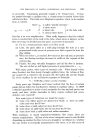
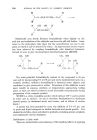
MODERN TRENDS IN COSMETIC FORMULATION 193 information which is established on a sound basis should be assimilated and the last quantum of energy extracted from it. LIMITATION OF UNDESIRABLE PROPERTIES Modification of acetic acid. We have all come across cosmetic raw materials possessing properties which we would like to utilise but which turn out to give rise to other undesirable characteristics in the cosmetic product. There are several instances in which the undesirable features have been masked by forming a derivative which, under the conditions of application, will slowly liberate the original compound at conce•trations below an undesirable level. An example of this is acetic acid, which has some desirable properties from a cosmetic point of view it is a fungistatic agent which has from time to time been used in the treatment of fungoid skin infections, yet it has irritant properties in other than low concentrations. Triacetin, a compound of acetic acid and glycerin is no new discovery, but it has recently been found that this glyceride is hydrolised by the esterases present very commonly on human skin surfaces and also produced by the fungi which are parasitic on the skin. The result is that a small amount of acetic acid is liberated and this reduces the pH to a point tolerated without any untoward effect by the skin but inactivating the enzyme and inhibiting development of the fungus. The liberated acetic acid disappears through evaporation and neutralisation on the skin surface, and when the pH rises as a consequence the esterase activity is renewed and the cycle is repeated. The advantage of the chemical combination of the acetic acid with the glycerin is that we can provide a substantial reserve of acid which is released as and when it is required to serve its purpose. Although triacetin has been recommended for its effect upon the fungold population of the skin there seems to be no reason why it should not also be added to cosmetic prepara- tions to deal at the same time with any spores of fungi which find their way into them. The Glycerin Producers Association of America initiated investigations on the subject and work has been carried out at the University of Wisconsin the Foundation responsible for the research has secured a number of patents covering chemotherapeutic uses of triacetin. • Modification of formaldehyde. Formaldehyde is a very effective preservative, but its use in cosmetic preparations is limited by its irritant action and distinctive odour. The restriction of these undesirable attributes was attempted some years ago by combining it with urea to form dimethylol urea. The reaction takes place on the lines of the familiar aidehyde-ammonia reaction.

194 JOURNAL OF THE SOCIETY OF COSMETIC CHEMISTS H H C=O + H•N-CO.NH2 +O=C H H H OH OH H C. HN.CO.NH.C H H ' Dimethylol urea slowly liberates formaldehyde when slightly on the acid side and oxidation of the aidehyde can lower the pH still further. Some losses to the atmosphere take place but the concentration can rise to the point at which it can be detected by odour. An improvement in this respect has been achieved by coupling formaldehyde with dimethyl hydantoin instead of urea to give monomethylol dimethylhydantoin (MDMH). CH• NH CN• NH C CO C CO OH / H / [ U CH• / CH• / C0--NH +0=C C0--N-- C H H The total potential formaldehyde content of the compound is 19 per cent and by incorporating 0.1 to 0-5 per cent of the methylol derivative in a cosmetic product, sufficient formaldehyde is liberated under slightly acid conditions to give preservative action. Liberation of the aidehyde occurs more rapidly in aqueous solutions at temperatures approaching boiling point, so that care must be taken to avoid detectable concentrations during preparation of the cosmetic product. MDMH is a white crystalline powder which melts at 110 ø C and is soluble in water and in alcohol its use is therefore foreshadowed in deodorant aerosol sprays, in deodorant sticks and creams, and in lotions of various kinds. • A patent has been granted • to cover the addition of 0.1-1.0 per cent to paste and liquid shampoos to inhibit bacterial and mould growth. It is claimed to stabilise colour and odour in products containing anionic sulphates and sulphonates used in shampoos. Stabilisation of fatty acids. There are undoubtedly some instances of the beneficial effects of applying
Purchased for the exclusive use of nofirst nolast (unknown)
From: SCC Media Library & Resource Center (library.scconline.org)