MODERN TRENDS IN COSMETIC FORMULATION 199 cation of a patent covering the addition of polydimethyl and polydiethyl siloxanes to shampoos containing synthetic detergents to act as hair conditioners. n It is claimed that the silicones leave the hair soft and silky by reason of the deposition of a thin film of silicone. "Cationic and anionic surface-active agents are incompatible." This is another ill-defined assertion it is true that these substances react together, in some cases forming a rather insoluble precipitate. It is not true that the compounds formed are without desirable properties as cosmetic raw materials. When the idea was frankly challenged, it was found that cationic-anionic compounds specially prepared can be used as thickening agents in such preparations as skin creams and that they are substantive towards skin and hair, and have a conditioning and emollient action. According to a patent •2, suitable compounds may be prepared by heating together equimolecular proportions of the free organic acid of the artionic part with the free amines of the cationic part. They may however be prepared in the conventional way by mixing a solution of the surface-active anionic compound with one containing a quaternary ammonium compound. The applications claimed are as thickeners and creaming agents for permanent waving solutions, hair-brightening (bleaching) solutions and hair tinting solutions as well as hair conditioners in shampoos. A later patent TM covers the use of cationic-anionic complexes as carriers for hormones, vitamins and therapeutically active agents in ointment bases and creams. It is claimed that the complexes promote fixation of the active agent on the skin and also give perfumes a greater permanence on the skin. "The higher esters of o-phosphoric acid are akin to the corresponding esters of sulphuric acid." The higher fatty alcohol esters of phosphoric acid have been known as emulsifying agents for many years, but the higher cost of producing them coupled with the idea that they are comparable with the sulphates led to their relegation to a secondary role in cosmetic formulation in this country. It is now emphasised •4 that whereas the phosphates occur and play an important part in the animal organism in the form of phosphatides, the sulphates do not so occur. The sulphuric esters are strong wetting and penetrating agents and would presumably be out of place in the living animal structure. The phosphates do not possess these properties unless they are built up by means of ethylene oxide condensation when they do become active wetting agents. Esters of o-phosphoric acid are now available as cosmetic materials some are dispersible in water and act as oil-in-water emulsifiers and some are

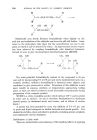
200 JOURNAL OF THE SOCIETY OF COSMETIC CHEMISTS dispersible in oil and act as water-in-oil emulsifiers. Some of their properties are quite distinct from those of the sulphates and it is certain that much attention will be paid to them. In the limited period during which they have been used there is no evidence of irritant or sensitising action and as the pH is adjusted to between 5.5 and 6-0 there is no a priori reason for anticipating any such action. Two comments may be made about these developments. Firstly it must be noted that with the phosphates we are introducing an important nutrient material for unwanted organisms, and care must be taken to ad9Pt appropriate preservatives. In the second place the commercial cosmetic grades are adjusted to a pH of 5.5-6.0 but more efficient emulsification can be achieved with those esters which are soluble or dispersible in fatty matter by adjusting the pH after admixture with such fatty matter as may be proposed for the formulation. "The bisulphites are unsatisfactory cold waving agents." When we examine this proposition we find that two important factors are neglected. The nature of the bisulphite is not defined and the means by which the bisulphite cross links of the hair, broken by the reducing action of the bisu!phite, are reunited is not mentioned. The bisulphites of the organic bases monoethanolamine and guanidine are more effective than the inorganic salts •5 but however efficient the reduction of the disulphide linkages may be they cannot effectively be rebuilt by using one of the conventional oxidising "neutralisers". One of the sulphur atoms has been converted into a thiosulphate group and cannot, by oxidation, be linked up again with the second sulphur atom which is left in the form of a mercapto group. R.S.S.R +MeH.SO• •- R.SH +R.S.SO•.Me Me ----- a cation. R.SH +R.S.SO3Me +Hm • MeH.SO•Hm +R.S.S.R. Hm = Hexamine. The solution of the rebuilding problem appears to lie with the investi- gation of Stricks and Kolthoff in which it was shown that the reaction between disulphides and sulphites is reversible and is governed by an equilibrium constant which has been measured for cystine. •6 By removing the excess bisulphite with hexamethylene tetramine the reaction reverses and a more efficient reformation of the bridges is achieved. •7 A small amount of bisulphite is left and prevents complete reversal of the reaction so that a weak oxidising rinse is necessary as a final step. DERIVATION OF HYPOTHESES FROM RELATED SCIENCES A number of recent developments in formulation have arisen from the investigations of physiologists, dermatologists and other workers in fields bordering upon cosmetic science. A study of the substances present in the
Purchased for the exclusive use of nofirst nolast (unknown)
From: SCC Media Library & Resource Center (library.scconline.org)