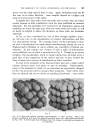
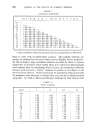
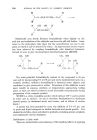
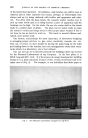
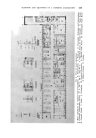
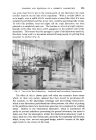
THE RHEOLOGY OF PASTES, SUSPENSIONS AND EMULSIONS stress over the yield-value if there is one). Again, deviations from the R 4 law may be in either direction some samples depend on a higher and some on a lower power of the radius. Examples have been taken from materials such as soils, clays and dairy creams because so little quantitative work has been published on cosmetic materials but the anomalies to be expected in all suspensions, pastes and emulsions are much the same and, when the work comes to be done, it will no doubt be helpful to follow the literature on these other not dissimilar materials. So far, we have considered the case of flow through capillary tubes we will now turn to the classification of complex deformations and flow in a more general setting. By a strange chance, the first attempts to draw up such a classification was made almost simultaneously during the war in England and in Holland, of course without any possibility of mutual con- sultation. In this country two versions of such a table of deformations were published 8, one of which is reproduced as Fig. 2. Though by no means complete, this classification, which we cannot discuss here in detail, gives a good idea of the complexity of the subject and has, in fact, formed the basis of many later systems of classification in other countries •. In most of the anomalies so far discussed there has been a single-valued relation between stress and strain or rate of straining. Unfortunately, many of the materials in which we are interested are appreciably changed by the very processes used to measure their properties. Some soften when they are sheared and recover slowly on standing (thixotropy) some soften •r•. 3 (•) shows 64 spheres a•ranged approximately in close packing. •¾hen this system is subjected to a shear the spheres nmst first move into open packing as sho•vn in Fig,. 3 (b). It will be seen from the figure that this change in packing has resulted in an expansion.

186 JOURNAL OF THE SOCIETY OF COSMETIC CHEMISTS but do not recover (rheodestruction). Some thixotropic materials recover more quickly when the vessel in which they are resting is slowly rotated (rheopexy). Others harden on shearing (shear-rate thickening or, if complete, blocking) and in some cases the cause of this hardening is known. Osborne Reynolds long ago pointed out that, if a number of spheres are close-packed and a shear is applied to them, they must first "dilate" into open packing before they can slide past one another. The term "dilatancy" should be used only when this increase in volume is known to exist (Fig. 3). When a thin cream is made from cornflour or starch so that it will readily flow when rocked in a small dish, if then an attempt is made to "throw" the paste out of the dish (which must obviously be held firmly !) it will not flow out. I'his is not only due to its rather high viscosity but also to some shear-thickening, possibly dilatancy. When a soft metal wire is stretched, it tends to "neck" in a number of places where there happen to be weaknesses. This necking causes a local concentration of stress and the wire would certainly break were it not for a compensatory mechanism known as "strain-hardening". This hardening takes place wherever necking starts and makes possible a much greater ductility without the wire losing its cylindrical shape. A somewhat similar mechanism is probably responsible for the capacity of a number of more or less liquid materials (egg white, some adhesives, a few honeys and many body secretions) to be drawn out into long threads. The Germans call this "Spinnbarkeit" and, since English-speaking rheologists have never been able to agree on a translation, the German term is generally used. Measuring Spinnbarkeit is not easy, especially when, as is so often the case, only very small samples of biological materials are available, but some progress has been made, by measuring the longest thread which can be drawn under standardized conditions. "Tack" or "tackiness" is a term used with rather different meanings in a number of industries and will not be discussed here but "stickiness" or "adhesivity" cannot pass without some comment. It is evident that stickiness, unlike such properties as viscosity, is a mutual characteristic of two materials. Early Russian work on the stickiness of field soils showed •ø that the relative adhesivity of different soils in ploughing depends on the materials from which the mould-board of the plough is made. While it is true that certain pastes are clearly more sticky than others, quantitative measurements must always be referred to some specific adhe- rend. The commonest method for measuring stickiness, recently used by Claassens TM for butter, is to allow a cylindrical weight of standard dimensions and made of a specified adhererid, to stand on the flat surface of the paste for a definite time and then to measure the force required to detach the weight, pulling very carefully in a vertical direction. The apparatus is called a
Purchased for the exclusive use of nofirst nolast (unknown)
From: SCC Media Library & Resource Center (library.scconline.org)